





Marcus Chen’s initial endeavor to print a precise gear as part of his robot design, with the help of a 3D printer resulted in a deformed structure with several layers detached. It was simple enough with POM filament; put it in the printer with a high temperature value – like it is done with PLA filament. They fledged by showing three prints gone wrong, a nozzle that jammed and the pains of many other uncounted attempting makers: the rules of POM 3D printing are absolutely different from those dealing with simple filaments.
And if someone masters how, yes, POM (polyoxymethylene, also called but not limited to acetal or Delrin®) can make useful and beneficial parts no other 3D printing material will provide. Indeed, the friction coefficient can be compared to that of Teflon. The thermal expansion exists to a lesser extent than in ABS. The water absorption (in the dry state) measures only a single digit percentage that of nylon. POM would offer a solution for gears, bearings and linear motion tools and assemblies – systems that are not just included in books but most importantly used in practice.
However, every property has its own set of disadvantages that cannot be overlooked. POM requires temperature control almost to perfection, a closed working space and therefore slicer profiles distinguished from those most manufacturers are used to. Within this guide is all the necessary information to ensure proficiency in POM 3D printing which would include the specification of the printer used, best temperature ranges, slicer configurations, checking the quality of the filament as well as where to find commercially available filament and raw pellets that can be turned into filament.
What Is POM and Why 3D Print With It

POM Material Properties
Polyoxymethylene (POM) is a high-performance engineering thermoplastic that sits in a performance tier well above commodity 3D printing materials. The polymer’s crystalline structure delivers an unusual combination of properties that make it indispensable for precision mechanical applications.
Key mechanical properties of POM:
- Coefficient of friction: 0.20–0.35 (self-lubricating, comparable to PTFE)
- Tensile strength: 60–70 MPa for printed parts (70–80 MPa for injection-molded homopolymer)
- Flexural modulus: 2,600 MPa (stiffer than ABS, comparable to nylon)
- Density: 1.41 g/cm³
- Shrinkage rate: 1.5–2.5% (higher than PLA, requires careful compensation)
In terms of POM 3D printing, there are two chemical varieties: POM-H, which is a homopolymer, and POM-C, which is a copolymer. POM-H is somewhat stronger in terms of mechanical characteristics, hardness, and wear resistance, however, it is not programmable over significant temperature ranges and is very extensible. POM-C exhibits better heat resistant, non-absorbent, and resistant to chemicals thus majority of 3D printing purposes fit the requirements of this material. The Revit versions of most POM filaments are copolymers.
Advantages for 3D Printing
Self-lubricating properties eliminate maintenance. POM’s naturally low friction means printed gears, bushings, and sliding components operate smoothly without grease or oil. This is particularly valuable for enclosed mechanisms where lubricant contamination is a concern, or for parts that will be deployed in clean-room or food-contact environments.
Dimensional stability surpasses hygroscopic alternatives. Unlike nylon (PA66), which absorbs 2–3% moisture and swells dimensionally, POM maintains tight tolerances with moisture absorption below 0.2%. A gear printed to fit a 10 mm shaft will still fit that shaft after weeks in humid conditions.
Chemical resistance opens application possibilities. POM copolymer resists fuels, oils, solvents, and most industrial chemicals. This makes it suitable for fuel system prototypes, chemical processing equipment components, and parts that must survive contact with automotive fluids.
Wear resistance enables functional longevity. POM components withstand cyclic loading and sliding contact far better than ABS or PETG. For mechanical prototypes that must survive thousands of cycles during testing, POM often outlasts the test itself.
Limitations to Consider
High shrinkage demands thermal management. POM’s crystallization during cooling produces significant shrinkage. Without a heated chamber and appropriate bed temperature, parts warp, corners lift, and large flat surfaces develop unacceptable distortion.
Bed adhesion is challenging. POM does not adhere well to common build surfaces. It requires specific surface preparation and often benefits from adhesive aids that would be unnecessary for PLA or PETG.
Processing temperatures are demanding. POM prints at 200–230°C with bed temperatures of 100–130°C. This requires an all-metal hotend and a heated bed capable of sustained high temperatures — stock hardware on many entry-level printers cannot reach these values safely.
Cost reflects performance. Quality POM filament costs 2–4x more than commodity materials. For production parts where POM’s properties are essential, this cost is justified. For cosmetic prototypes or non-functional models, less expensive materials make more sense.
Printer Requirements for POM 3D Printing
Essential Hardware
Heated bed: 100–130°C minimum. POM requires bed temperatures that exceed the capabilities of some entry-level printers. For small parts (under 100 mm), 100–110°C may suffice. For larger parts or those with significant flat surface area, 110–130°C is necessary to prevent warping during the critical first layers.
Heated chamber or enclosure: 50–70°C target. This is the requirement that disqualifies most open-frame printers for serious POM work. POM crystallizes as it cools, and differential cooling between layers creates internal stresses that warp the part. An enclosure that maintains 50–70°C ambient temperature dramatically reduces these stresses. Options range from DIY acrylic enclosures ($50–100) to professional heated chambers with active temperature control.
All-metal hotend: 200–230°C capability. POM prints at temperatures where PTFE-lined hotends risk degradation. An all-metal hotend (Micro Swiss, E3D V6, Mosquito, or equivalent) is essential for safe, consistent printing.
Hardened nozzle recommended. While not strictly required, POM’s abrasive fillers (in some formulations) and the material’s general wear characteristics make a hardened steel or ruby nozzle a worthwhile investment. Brass nozzles will degrade over extended POM printing.
Optional Upgrades
Bed surface preparation. PEI sheets work best for POM, but often require additional adhesion assistance. Nano-polymer adhesives, glue stick, or specialized POM bed adhesives improve first-layer reliability. Some users report success with blue painter’s tape, though this requires careful Z-offset adjustment.
Filament dry box. While POM absorbs less moisture than nylon, it is still hygroscopic enough to benefit from dry storage. A sealed dry box with desiccant, or an active filament dryer set to 80°C, ensures consistent extrusion.
Draft shield or enclosure baffle. For printers with enclosures that cannot maintain 50°C+ consistently, a draft shield (a thin wall printed around the part) creates a microclimate that reduces cooling rate and warping.
POM 3D Printing Temperature Settings

Nozzle Temperature
| POM Type | Temperature Range | Notes |
|---|---|---|
| POM-C (Copolymer) | 200–220°C | Easier processing, better for beginners, most common filament type |
| POM-H (Homopolymer) | 210–230°C | Higher mechanical properties, narrower processing window |
Start at the low end of the range and increase if you experience under-extrusion or poor layer adhesion. Higher temperatures improve interlayer bonding but increase stringing and oozing. For most POM-C filament, 210–215°C provides the best balance.
Bed Temperature
- Standard small parts (under 100 mm): 100–110°C
- Medium parts (100–200 mm): 110–120°C
- Large parts or flat surfaces: 120–130°C
Higher bed temperatures improve adhesion and reduce warping but increase energy consumption and thermal stress on the printer. If your bed cannot maintain 110°C+ consistently across its surface, consider printing smaller parts or using a brim to increase first-layer adhesion area.
Chamber/Enclosure Temperature
- Minimum acceptable: 40°C (passive enclosure, printer electronics contribute heat)
- Optimal range: 50–70°C
- Active heated chamber: 60°C provides excellent results for most parts
The chamber temperature matters because POM crystallizes rapidly as it cools. Rapid differential cooling between recently deposited layers and the bulk of the part creates internal stress. A warm chamber slows this cooling, allowing stresses to dissipate more evenly.
Cooling Settings
Part cooling fan: 0–30% maximum. This surprises many makers accustomed to PLA, where 100% cooling is standard. POM benefits from minimal cooling to allow layers to fuse completely and to reduce thermal shock. Many successful POM prints use 0% cooling for the first 5–10 layers, then 10–20% cooling for the remainder.
Layer cooling strategy: Minimal cooling preserves interlayer strength. Excessive cooling causes layer delamination — one of the most common POM print failures.
Slicer Settings and Print Parameters
Speed Settings
| Parameter | Recommended | Notes |
|---|---|---|
| Print Speed | 30–50 mm/s | Slower than PLA; prioritize quality over speed |
| First Layer | 15–25 mm/s | Critical for adhesion; slower is better |
| Travel Speed | 100–150 mm/s | Standard; faster travel reduces oozing |
| Outer Wall Speed | 20–30 mm/s | Slower outer walls improve surface finish |
POM’s viscosity and crystallization behavior reward patience. Printing at 30 mm/s rather than 60 mm/s produces noticeably better layer fusion and surface quality.
Retraction Settings
| Setup | Distance | Speed | Notes |
|---|---|---|---|
| Bowden | 3–6 mm | 25–40 mm/s | Start conservative, reduce if stringing persists |
| Direct Drive | 0.5–1.5 mm | 25–40 mm/s | Shorter distance due to reduced bowden tube lag |
Coasting: Enable coasting (in Cura) or equivalent features to reduce oozing. Coasting stops extrusion slightly before the end of a perimeter, allowing pressure to dissipate before travel moves.
Wipe distance: A small wipe distance (0.2–0.4 mm) helps clean the nozzle before travel moves.
Layer Height and Infill
Layer height: 0.1–0.2 mm for precision parts. POM benefits from finer layer heights that maximize interlayer contact area. For functional mechanical parts, 0.15–0.2 mm provides good strength with reasonable print times.
Infill: 20–40% for structural parts. POM’s stiffness means lower infill percentages often suffice where ABS or PETG would require denser infill. Gyroid or cubic infill patterns distribute stress well.
Wall thickness: 3–4 perimeters minimum for mechanical parts. POM’s layer adhesion is good when printed correctly, but additional perimeters improve torsional strength and wear resistance in bearing surfaces.
Top/bottom layers: 4–5 layers minimum to prevent pillowing and ensure surface quality.
POM Filament Brands and Quality

Premium Filament Brands
| Brand | Origin | Price Tier | Notes |
|---|---|---|---|
| Kimya (ARMOR) | France | $$$$ | Industrial quality, ±0.02mm diameter tolerance, excellent consistency |
| 3DXTECH | USA | $$$ | Engineering grade, good tolerance, strong US technical support |
| Filamentum | Czech Republic | $$$ | European quality, tight tolerances, good reputation in EU maker community |
| ProtoPasta | USA | $$$ | High-quality specialty filaments, smaller batch production |
| Generic/No-name | China | $$ | Variable quality, requires testing, COA verification essential |
When evaluating POM filament, price often correlates with quality control. Budget POM filament may have diameter variations that cause extrusion inconsistencies, or may blend recycled material that affects printability and final part properties.
Filament Specifications to Verify
Diameter tolerance: ±0.02 mm or better. POM’s viscosity makes it sensitive to diameter variations. A filament that varies from 1.75 mm to 1.80 mm will cause visible extrusion inconsistencies.
Roundness: ±0.02 mm or better. Oval filament creates uneven extrusion pressure and inconsistent layer deposition.
Moisture content: <0.2% at packaging. POM is less hygroscopic than nylon but still benefits from dry storage. Quality filament is packaged with desiccant in moisture-barrier bags.
Virgin vs. recycled content: Virgin POM provides the most consistent processing behavior. Some budget filaments incorporate recycled content that can vary batch-to-batch. For critical applications, specify virgin material.
COA Verification for Filament Quality
For industrial or commercial applications, request a Certificate of Analysis from your filament supplier:
- Melt flow index consistency: Published MFI should match the virgin resin specification
- Diameter measurement data: Spot-check measurements from the production run
- Lot traceability: Ability to trace filament back to resin batch for quality tracking
At Yifuhui, we supply virgin Hostaform® C 9021 pellets to filament manufacturers with full COA documentation — ensuring the raw material consistency that quality filament depends on.
POM vs Other Engineering Filaments
Comparison Table
| Property | POM | Nylon (PA66) | PETG | ABS |
|---|---|---|---|---|
| Moisture Absorption | Very Low (<0.2%) | High (2–3%) | Low (0.1%) | Low (0.2%) |
| Friction Coefficient | Very Low (0.2–0.35) | Medium (0.3–0.5) | Medium (0.4–0.6) | Medium (0.5–0.6) |
| Tensile Strength | High (60–70 MPa) | Very High (80–85 MPa) | Medium (50 MPa) | Medium (45 MPa) |
| Printability | Difficult | Moderate | Easy | Moderate |
| Cost | High ($60–100/kg) | Medium ($40–60/kg) | Low ($20–30/kg) | Low ($20–30/kg) |
| Bed Adhesion | Poor | Good | Good | Moderate |
| Enclosure Required | Yes (50–70°C) | Recommended | No | Recommended |
When to Choose POM
Low-friction moving parts. Gears, bearings, bushings, and sliding mechanisms benefit from POM’s self-lubricating properties. A POM gear running against a metal or POM mating surface requires no grease and generates minimal noise.
Precision mechanical components. Applications requiring tight dimensional tolerances and minimal moisture-related dimensional change favor POM over nylon.
Chemical-resistant applications. Fuel system prototypes, chemical processing equipment, and parts exposed to oils or solvents.
Wet or humid environments. POM’s low moisture absorption makes it superior to nylon for outdoor or high-humidity applications where dimensional stability matters.
When to Choose Alternatives
Maximum structural load: Nylon’s higher tensile strength and toughness make it preferable for parts that must absorb impact or carry heavy loads.
Cost-sensitive applications: PETG or ABS provide adequate performance for many functional parts at significantly lower material cost.
Large flat parts: ASA or PETG warp less and are more forgiving for large, flat geometries.
Food contact with regulatory requirements: While food-safe POM grades exist, PETG is often preferred for food-contact 3D printed parts due to simpler regulatory documentation and lower printing temperatures.
Sourcing POM for 3D Printing

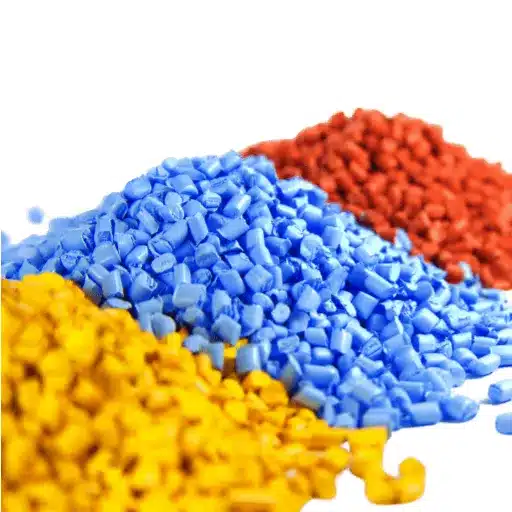
Virgin POM Pellets for Filament Extrusion
For filament manufacturers and makers with filament extruders, sourcing quality virgin pellets is the foundation of consistent filament production.
Hostaform® C 9021 Features and Benefits. Hostaform® C 9021 is a general purpose POM copolymer grade which is preferred for the extrusion of filaments. Its MFI is about 9 g/10 min (ISO 1133, 190°C/2.16 kg). It ensures adequate flow for production of 1.75 mm and 2.85 mm filament. The grade is consistent from lot to lot providing stable extrusion parameters and reliable printing behavior.
Acceptable minimum for order. Virgin branded pellets of POM are usually supplied in containers starting with 25 kilograms bags for research and development and small production campaigns, and can be delivered in the truck or container load for businesses dealing with filaments. A whole 25 kg bag of pellets makes out about 12 kilo to 15 kilos of 1, 75 mm filament after losses during extrusion of plastic.
Consistent quality between batches must be ensured by means of the information file referred to as COA. A Certificate of Analysis detailing the melt flow index, density, moisture and mechanical properties must accompany every batch of pellets delivered by the manufacturer. The purpose of this documentation is to allow filament manufacturers to tweak their extrusion settings as needed and support the quality assurance mainly with record keeping.
Since POM 3D printin
Pre-made Filament Sourcing
Industrial suppliers vs. consumer brands. Industrial filament suppliers (Kimya, 3DXTECH, Filamentum) typically offer tighter tolerances, better documentation, and more consistent quality than consumer-focused brands. For production parts or commercial applications, the price premium is justified by reduced print failures and better part consistency.
Port of Shanghai logistics for bulk filament. For international buyers sourcing filament in bulk, Shanghai-based suppliers can consolidate filament with other material shipments, reducing per-unit freight costs. Yifuhui’s Suzhou location provides efficient access to Port of Shanghai for global export.
Documentation requirements. Request COA, MSDS, and applicable compliance documentation (FDA, RoHS, REACH) with your filament order. Professional suppliers provide this documentation as standard practice.
Yifuhui Advantage
Yifuhui supplies virgin Hostaform® pellets to filament manufacturers and industrial users worldwide:
- Virgin Hostaform® C 9021 pellets for filament production
- Consistent MFI (9 g/10 min) for extrusion stability
- Technical grade selection guidance — we help identify the right grade for your extrusion equipment and target filament specifications
- 25 kg MOQ for R&D and small-batch production
- Full COA documentation with every shipment
- FOB Shanghai export with established international logistics
Troubleshooting POM 3D Printing
Warping
Symptoms: Corners lifting from the bed, parts detaching mid-print, curved bottom surfaces.
Cause: High shrinkage (1.5–2.5%) combined with inadequate bed or chamber temperature.
Solutions:
- Increase bed temperature to 110–130°C
- Verify enclosure is maintaining 50°C+ ambient
- Use a brim (10–15 mm) to increase first-layer adhesion
- Add a draft shield in slicer settings
- Ensure bed is clean and properly prepared with adhesive
Poor Bed Adhesion
Symptoms: First layer not sticking, parts detaching early in print.
Cause: POM’s low surface energy makes it resistant to adhesion on common build surfaces.
Solutions:
- Use PEI sheet with nano-polymer adhesive or glue stick
- Increase first layer temperature (nozzle 220°C, bed 120°C)
- Slow first layer speed to 15–20 mm/s
- Increase first layer flow rate 5–10%
- Consider a textured PEI sheet for mechanical adhesion
Stringing and Oozing
Symptoms: Fine strands between travel moves, blobs on surface, degraded print quality.
Cause: POM’s viscosity and melt behavior require careful retraction tuning.
Solutions:
- Optimize retraction distance (Bowden: 3–6 mm, Direct: 0.5–1.5 mm)
- Enable coasting in slicer settings
- Reduce travel speed slightly
- Lower nozzle temperature 5–10°C (if layer adhesion remains adequate)
- Increase travel speed to minimize ooze time
Layer Separation and Delamination
Symptoms: Visible gaps between layers, parts splitting along layer lines, weak interlayer strength.
Cause: Inadequate layer bonding from excessive cooling or insufficient temperature.
Solutions:
- Reduce or disable part cooling fan (0–20% max)
- Increase nozzle temperature 5–10°C
- Reduce print speed to improve layer fusion time
- Verify filament is dry (dry at 80°C for 4 hours if uncertain)
- Increase flow rate slightly to ensure adequate material deposition
Moisture-Related Issues
Symptoms: Popping sounds during extrusion, visible bubbles in print, inconsistent extrusion, degraded surface finish.
Cause: Moisture absorbed by filament vaporizes in the hotend, creating steam bubbles.
Solutions:
- Dry filament at 80°C for 4 hours before printing
- Store filament in sealed dry box with desiccant between prints
- Check desiccant packets in original packaging — replace if saturated
- For humid environments, use an active filament dryer during printing
Conclusion
To begin with, POM 3D printing entails more experience to operate, more nuances in the very effort of printing, and also much more wear patience than commercial type filaments; however you get the results which one printing material is able to provide capabilities where the others fall short. Only POM can balance the low friction, dimensional stability, chemical resistance and wear properties such that functional gears, bearings and precision mechanical components can be constructed.
POM printing is only possible if three factors are met: a hot bed of at least 100°C+ is available, there is an enclosure kept at 50°C+, and the slicer parameters are tuned to the rather crystallization characteristics of the material. Do not hurry the print. And also, don’t cool it too much. And make sure, that your filament is alright.
For filament cops and commercial customers, how well your POM processes will determine how stable your production will be. Because manufacturing of stable printed items involves capable extrusions of filaments, using virgin pellets from credible and Certification of Analysis (COA) documented manufacturers only.
Located in Yifuhui and operating out of Suzhou, we provide only virgin Hostaform® C 9021 pellets with the supporting documentary evidence, from the very modest 25 kg research amounts or the working manufacturing quantities. Additionally, we are less than an hour away from one of the world’s busiest ports, the Port of Shanghai, which enables us to supply our overseas exports in volumes and with the requisite logistics documentation.
Frequently Asked Questions
What is the optimal temperature for POM printing?
The optimal temperature for printing with POM-C (copolymer) is 200–220°C, with 210–215°C being perfect for most types of filament. Printing with POM-H (homopolymer) would need to be done at 210–230 degrees Celsius. Start initially at the lower temperature and then in case of under-extrusion or poor adhesion across layers, raise the temperature.
Do I have to use an enclosure for POM 3D printin
Indeed as POM possesses shrinkage up to 2% warping can occur without the presence of a suitable temperature enclosure. It is also very advisable for over 100mm or flatter than that to have the temperature of the enclosure raised to 50–70°C. Passive enclosures – those stemming from the residual heat from the printer – generally reach 40–50°C which is useful but not hot enough.
Which bed surface is recommended on POM?
Let’s start with the foundations: PEI sheet is by far easier, yet its use mostly results in the employment of other adhesive solutions. Most useful for smooth and reliable first layers with advanced engineered filaments are nano-polymer based adhesives, glue stick or POM beds that do not allow wrap-up. Z-offset turned accurately blue painter’s tape can be used. All this works its work on a plain surface at 110-130°C.
Does POM outperform nylon in gears?
If the application is without lubrication and involves low friction, then the answer is yes – POM fares better because of its self-lubricating properties and lower coefficient of friction. In paticularly stresful conditions requiring high tensile strength and resilience against impacts, nylon might be more suitable. POM 3D printin is better also in humid conditions as it preserves the shape better.
Can POM be printed without a heated chamber?
Printing in small objects below 50 mm is easier in heated bed as long as the temperature is more than 110°C and in absence of chamber temperature control though deformation cannot be avoided in some cases. If a larger printer is required, it is recommended that the area be heated or well ventilated for consistent and predictable printing. You may want to consider building one if your printer does not have one.
What are the best places to buy quality POM filament?
Among premium brands are Kimya (ARMOR) (France), 3DXTECH (United States), and Filamentum (Czech Republic). These suppliers of industrial use filament have closer tolerances and better reliability levels as opposed to consumer brands. On demand of composite filament in large quantities and bagged raw material for filament making, one may contact industrial companies such as YiFuHui, where they have Hostaform® C 9021 Pellets along with a full certificate of analysis (COA).
How to prevent warping in POM 3D printin
Warping comes about as a result of inadequate bed temperature, hidden temperature of the enclosure, or poor bed adhesion. Raise the bed temperature to 120-130°C, check to see if the enclosure remains at least 50°C, consider using a brim to aid first layer installation, make sure that your bed surface is finished using adhesive.
In 3D printing what specific differences exist between POM 3D printing Types (POM-H and POM-C)?
The homopolymer grade of Acetal i.e., POM-H has more mechanical strength and rigidity than its copolymer POM-C. It however, has low processing temperature range and cannot withstand acidic conditions. The copolymer grade of acetals, i.e., POM-C is more convenient for use during the printing mainly because in this since the connection bejarmos is not very clean, this means that in the end doesnt break while what is of the by-products does. The majority of POM extrusion filament on the other hand is copolymer (POM-C) as it is friendly for 3D printing.
Is it possible to 3D print POM filament using a stock Ender 3 printer?
In order to print POM filament on a stock Ender 3, some modifications are necessary: an all-metal hotend (Helps with 200°C+ temperatures), heating bed particularly when current one doesn’t go 110°C, and an enclosure which can be self-made. By default POM 3D printin hotends come with PTFE-liners; this makes it difficult to print at such temperatures.
What filament management practices are required for POM filaments?
Place POM in a dry box with silica gel or an anti-moisture filament dryer. POM is less moisture sensitive than nylon; however, it also does absorb water which alters the prints. Hearing a pop sound while extruding or observing bubbling on the surface means that the filament needs to be ‘healed’ at 800 C, for 4 hours prior to printing.


