

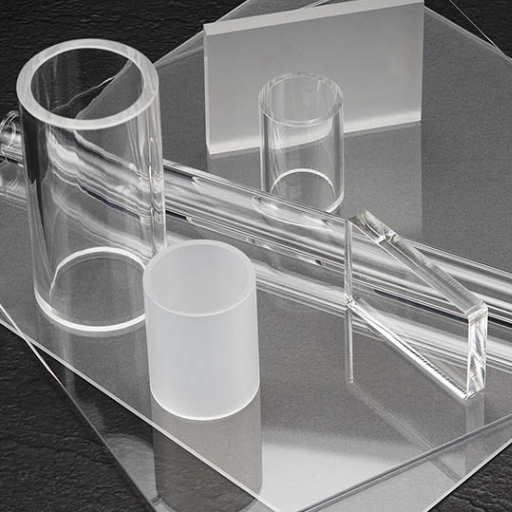



A drawing calls out M95, a supplier quote returns R124, a shop blog says Mohs 3, and an impact-modified sheet datasheet reads M65. Every one of those figures describes PMMA hardness, and none of them contradicts the others.
That’s the problem. PMMA hardness isn’t a single number. It’s a grade, a test method, and a scale, and most datasheets publish the number without the other three. Buyers then compare values that were never meant to be compared, or reject a correct lot because it reads ten points away from a figure copied off a reference site.
This guide fixes that. You will see what hardness measures and what it does not, where PMMA sits on every common scale, why legitimate grades span M44 to M105, whether a higher number actually prevents scratches, how PMMA compares with polycarbonate and glass, and how to keep a specified hardness band stable from lot to lot. If you already have a hardness callout and need the matching datasheet, request a PMMA datasheet and our team replies within 24 hours.
What PMMA Hardness Actually Measures
Hardness is resistance to indentation under a defined load and indenter. That is the whole definition. It says nothing directly about scratch resistance, abrasion resistance, stiffness, or toughness, even though buyers use the word for all four.
A diamond scribe, a spinning abrasive wheel, and a steel ball pushed into a plaque are three different tests with three different results. PMMA can rank high on one and ordinary on another, and it does. Keep the mechanisms separate and most of the confusion disappears.
Why Rockwell M is the specification scale. Rockwell M uses a 6.35 mm steel ball and a 100 kg major load, with a 10 kg minor load, and reads hardness from the depth of penetration. It was designed for hard plastics, which is why acrylic datasheets use it. The M value is the number to put on a drawing or a purchase specification.
The test methods behind the numbers. Rockwell M and R are defined by ASTM D785 and ISO 2039-2. Ball indentation follows ISO 2039-1. Shore D follows ASTM D2240 and ISO 868.
Pencil hardness follows ASTM D3363, and Taber abrasion follows ASTM D1044. Barcol (ASTM D2583) exists but is rarely reported for PMMA. Our plastics hardness guide covers how the methods differ in more depth.
Two rules follow from that list. A number without its standard is incomplete, and values from different standards aren’t interchangeable. ASTM D785 and ISO 2039-2 are separate procedures, and the same grade can move by a few points between them. No fixed conversion applies.
Acrylic Hardness Scale: Every PMMA Scale Explained
The table below is the fastest way to place any PMMA number you encounter. It gives the typical value, the range across standard grades, the method, and what the scale is actually good for.
| Scale | Typical PMMA | Range | Test method | What it tells you |
|---|---|---|---|---|
| Rockwell M | M93 | M80–M100 standard; M44–M77 impact-modified | ASTM D785 / ISO 2039-2 | The specification scale for acrylic |
| Rockwell R | R124 on a grade that reads M93 | Grade-specific | ASTM D785 / ISO 2039-2 | A reading on a softer scale, not convertible to M |
| Ball indentation | 175 MPa | 175–195 MPa | ISO 2039-1 | ISO hardness, common on European datasheets |
| Shore D | ~80–90 | ~80–90 | ASTM D2240 / ISO 868 | Quick screening only |
| Pencil | 2H–4H | 2H–5H uncoated; 4H–6H coated | ASTM D3363 | Surface scratch resistance, heavily method-dependent |
| Mohs | ~3 | ~3 | Mineral scratch comparison | Context against glass and minerals, not a polymer spec |
| Taber abrasion | 25–35% Δhaze | 2–6% with hard coat | ASTM D1044 | Abrasion and haze, not hardness |
PMMA Rockwell Hardness (M Scale)
M93 is the typical figure for general-purpose PMMA. Standard injection-molding and sheet grades usually fall between M80 and M100, with M95 common on extruded sheet and molding compounds. Impact-modified grades sit far lower, from M44 to M77, because the rubber phase that adds toughness also softens the surface. Plexiglass hardness sits on the same scale, because Plexiglas is a brand name for PMMA, not a separate material.
Rockwell R
Rockwell R uses a larger ball and a lower load, so it produces a higher number on the same material. Arkema’s V825-100 is listed at M93 and R124. Those are not two materials and not a disagreement. They are one grade read on two scales.
Rockwell M and R can’t be converted, and a supplier who offers a conversion table is guessing. For the procedure in detail, see our Rockwell hardness of plastics article.
Ball Indentation
ISO 2039-1 reports hardness as a stress in megapascals. PMMA typically reads 175 MPa, and grades run from 175 to 195 MPa. Röhm lists the same 175 MPa for both PLEXIGLAS GS (cast) and XT (extruded), which corrects the common claim that cast sheet is always harder. The number is a different measurement from Rockwell and should not be mapped onto an M value.
PMMA Shore D Hardness
Shore D for PMMA is roughly 80 to 90. Treat it as an approximation. Shore D is a screening scale, rarely reported on acrylic datasheets, and not precise enough to write into a resin specification. Specify Rockwell M and use Shore D only for a quick shop-floor comparison.
Pencil Hardness
Standard uncoated acrylic reads 2H to 4H on ASTM D3363. Röhm reports 5H for PLEXIGLAS sheet under its 45-degree pencil test, and polycarbonate reads around HB on the same type of test. Hard-coated surfaces reach 4H to 6H. The result depends on the pencil, the angle, the load, and the surface, so report the method whenever you quote a pencil grade.
Mohs Hardness
PMMA sits around 3 on the Mohs scale, polycarbonate around 2, and window glass around 5.5. A fingernail is about 2.5. Mohs is a mineralogical scratch comparison, not a polymer specification, but it explains the everyday experience: acrylic scratches more easily than glass and less easily than polycarbonate.
Barcol hardness is occasionally mentioned in general plastics literature. No authoritative PMMA reference value is published, so treat any specific Barcol figure for acrylic with suspicion, including one from a supplier.
Why the Same PMMA Reads M44 to M105
The biggest lever is the impact modifier. Standard PMMA is a rigid, brittle polymer. Manufacturers add rubbery particles to raise notched impact strength, and those particles lower surface hardness.
A grade that reads M65 hasn’t failed a test or drifted in production. It belongs to a different family, and it trades hardness for toughness by design.
Among standard grades, formulation still moves the number. High-flow injection grades give up a few points of hardness and heat resistance to fill thin walls. High-heat and high-surface-hardness grades move the other way.
| Grade | Form | Rockwell M | Standard | Trade-off |
|---|---|---|---|---|
| ACRYLITE 8N | Injection molding | M95 | ASTM D785 | Balanced general-purpose |
| LG MMA / LX MMA IF850 | Injection, high flow | M91 | ASTM D785 | Flow versus hardness |
| Acrypet VH001 | Injection molding | M101 | ISO 2039-2 | High hardness and heat |
| Altuglas V825-100 | Injection, heat-resistant | M93 (R124) | ASTM D785 | Heat resistance |
| LGMMA HI855M | Impact-modified | M65 | Datasheet | Toughness, lower hardness |
| Acrypet IR D50 | Impact-modified | M50 | Datasheet | High toughness |
| PLEXIGLAS GS / XT | Cast / extruded sheet | 175 MPa ball indentation | ISO 2039-1 | Sheet form, optical quality |
| PLAZCRYL S25–S100 | High-impact extruded sheet | M44–M77 | Datasheet | Impact sheet |
Look at the standard injection grades first: IF850 at M91, ACRYLITE 8N at M95, and Acrypet VH001 at M101 span ten M points. A high-flow grade is not a drop-in replacement for a high-hardness grade, even though both are “PMMA.” For the broader material overview, see our PMMA material guide.
Then look at form. Cast sheet is often at the upper end and is more consistent, but the ranges overlap. Industrial Plastics gives cast M92–M100 and extruded M85–M95, while several extruded sheet datasheets list M95. Röhm’s identical ball indentation figure for cast and extruded points the same way.
Grade and standard matter more than whether the material was cast or extruded. Our PMMA properties reference covers the full property set behind these numbers.
A datasheet’s single number covers four things that are usually left implicit: the grade, the specimen, the standard, and the conditioning. Ask for all four. Without them, you cannot tell whether M93 and M95 are a real difference or test noise.
Priya, a process engineer at a medical device molder, had a validated part running on IF850 at M91. A substitute lot arrived with a COA showing M65. The supplier called it “slightly softer PMMA.” It was not.
The lot was an impact-modified grade, and the change would have altered toughness, clarity, and scratch behavior at once. She rejected the lot and added a Rockwell check to incoming inspection. The check cost one molded plaque per shipment and caught the next substitution before it reached the line.
Acrylic Scratch Resistance: Does Higher Hardness Help?
Partly, and less than most buyers assume. Hardness measures how well the surface resists a loaded indenter. Scratch resistance depends on friction, the viscoelastic recovery of the polymer behind the stylus, and, above all, the coating.
PMMA is harder than polycarbonate on Rockwell M, typically M80–M100 against M70–M80, and it does scratch less in practice. Pencil hardness tells the same story: 2H–4H for uncoated acrylic, around 5H on PLEXIGLAS sheet, and roughly HB for polycarbonate. Mohs puts PMMA at 3 and PC at 2. Röhm’s scratch resistance data is the clearest manufacturer source on that comparison.
Abrasion is where the story changes. Under ASTM D1044 Taber testing, uncoated PMMA and uncoated polycarbonate both haze by roughly 25 to 35%. A hard coating cuts that to 2 to 6%, and the best coatings go below 1%.
Coating also lifts pencil hardness from 2H–4H to 4H–6H. If scratch is a critical requirement, the coating decision matters more than the choice between standard acrylic grades.
That has a cost. Hard coats add price, can shift optical performance slightly, and depend on adhesion quality that varies by supplier. They also don’t change bulk Rockwell M at all. The bulk stays PMMA; the surface becomes something else.
A display fabricator in Poland shipped a run of clear covers that customers reported as easily scratched. The assumption was that the sheet was soft. A pencil test on the delivered material read 3H, right in the normal uncoated range.
The scratches came from wiping with a dry cloth during installation, not from the resin. The fix was a protective film during handling and a hard coat on the next order. No material change was needed.
So “scratch-proof acrylic” is a claim to challenge. PMMA is scratch-resistant relative to polycarbonate. It isn’t scratch-proof, and no uncoated transparent thermoplastic is.
If scratch performance is the deciding requirement, tell us the application and we will quote the grade and discuss the coating route. Our PMMA resin page lists the standard and impact-modified grades we stock.
PMMA Hardness vs Polycarbonate, Glass, and Other Plastics

Is acrylic harder than polycarbonate? Yes, on Rockwell M. Standard PMMA reads M80–M100 and PC reads roughly M70–M80. PMMA also scratches less.
But PC is far tougher: notched Izod is 640–850 J/m for PC against 16–21 J/m for PMMA. Hardness and toughness pull in opposite directions here. Our PMMA vs polycarbonate comparison covers the full trade-off.
Is acrylic harder than glass? No. PMMA is about 3 on Mohs and window glass is about 5.5, so glass resists scratching better. Acrylic is roughly half the weight, far less brittle under impact, and thermoplastic, which is why it replaces glass in signage, displays, and lighting covers despite the softer surface.
| Material | Hardness | Mohs | Note |
|---|---|---|---|
| PMMA | M80–M100 | ~3 | Hardest common uncoated transparent thermoplastic |
| Polycarbonate | M70–M80 | ~2 | Tougher, softer |
| POM | M78–M94 | n/a | Crystalline; homopolymer reads higher |
| PA66 | M79–M85 dry | n/a | Falls when conditioned |
| ABS | R105–R115 | n/a | Reported on the R scale, not comparable to M |
| Glass | Not applicable | ~5.5 | Harder, heavier, brittle |
Two cautions on that table. ABS on the R scale is a reminder that the scale letter is part of the value, and a number without it cannot be compared. Cross-material values also move with grade, so use the table for orientation, not for specification. The engineering plastic hardness comparison goes deeper across materials.
The “hardest clear plastic” claim needs a qualifier. Uncoated PMMA is the hardest of the common transparent thermoplastics. Hard-coated PMMA and hard-coated polycarbonate exceed it, and polycarbonate remains tougher by a wide margin.
What Changes a PMMA Hardness Reading
Six factors explain most of the variation between two reports on the same material.
- Grade and impact modifier: the largest lever by far, moving the number from M105 down to M44. Identify the grade family before comparing values.
- Form: cast, extruded, and molded parts overlap in hardness. Cast sheet tends to sit at the upper end and varies less lot to lot; extruded sheet can still read M95.
- Temperature: hardness holds up to about 100°C and then falls as the material approaches its glass transition at 105–110°C. At 110°C the sample deforms and the test cannot run.
- Moisture: PMMA absorbs only 0.2–0.6% water, so humidity moves hardness far less than it moves nylon. Conditioning still belongs in the test report.
- Standard and specimen: ASTM D785 and ISO 2039-2 are different procedures, and specimen thickness and surface finish affect the reading. Compare only values produced the same way.
- Annealing and orientation: annealing relieves molded-in stress and can shift the reading slightly without changing the grade. Machined specimens and molded plaques can also differ.
Sourcing PMMA with a Stable Hardness Specification
A hardness callout is only useful if the delivered lot matches it. That makes sourcing a documentation exercise.
A PMMA Certificate of Analysis should identify the grade designation, the production lot, the melt flow index, the density, and the optical values such as transmission and haze. If hardness is specified, the COA should state the result and the standard used. It should be issued by the manufacturer against that lot, not generated by the trader from their own records.
For an incoming check, mold or machine a plaque and run Rockwell M to the same standard as the specification. A pencil test works as a faster screen when Rockwell equipment is not available. If neither is practical, verify grade, MFI, and density against the datasheet, because a substitution usually shows up in more than one property.
A “soft” PMMA is almost always an impact-modified grade rather than a defective standard grade. That distinction matters. Rejecting it as out of spec is correct if you ordered standard PMMA. Accepting it as “close enough” is not, because the hardness and toughness balance has changed.
Regrind is the other hidden variable. Blended regrind can shift flow, color, and surface properties, and it should be declared. Ask for virgin material and lot traceability in writing.
Marcus, a procurement manager at a European converter, compared two quotes for “PMMA M100.” One supplier meant ISO 2039-2 and the other meant a marketing round number. Neither quote named a grade, a standard, or a lot.
He asked both for the grade designation, the test standard, and a manufacturer-issued COA for the lot that would ship. One supplier produced all three within a day. The other stopped replying. The documented quote was a few percent higher and removed the incoming-inspection risk entirely.
We supply branded prime PMMA with manufacturer-issued COAs and lot traceability, including Mitsubishi Acrypet, LG MMA, and Altuglas grades. Minimum order is 25 kg, terms are FOB Shanghai, and standard lead time is 7 to 14 days. The small minimum is deliberate: qualify a sample from the same lot your production order will use before you commit to volume.
Request a quote for certified PMMA resin with your grade, hardness callout, and standard, and we will confirm availability and documentation.
Frequently Asked Questions
What is the hardness of PMMA?
PMMA hardness is typically Rockwell M93. Standard grades range from M80 to M100, impact-modified grades from M44 to M77, and ball indentation is about 175–195 MPa. Shore D is roughly 80–90, but it is only an approximation.
What is the Rockwell hardness of acrylic?
The same values, because acrylic and PMMA are the same polymer. Rockwell M is the correct scale: M93 typical, M80–M100 for standard grades. Ignore any answer given only on the R scale without the paired M value.
Is PMMA harder than polycarbonate?
Yes on Rockwell M, where PMMA reads M80–M100 and PC reads about M70–M80. PMMA also scratches less. Polycarbonate is far tougher, with notched Izod of 640–850 J/m against 16–21 J/m for PMMA.
Is acrylic harder than glass?
No. Acrylic is about 3 on Mohs and glass about 5.5. Acrylic is lighter, tougher under impact, and thermoplastic, which is why it still replaces glass in many applications.
What is plexiglass hardness?
Plexiglass is a brand name for PMMA, so the values are identical: M93 typical, M80–M100 for standard grades, and about 175 MPa ball indentation.
What is the Shore D hardness of acrylic?
Approximately 80–90. Shore D is a screening scale and rarely appears on PMMA datasheets, so use Rockwell M for specifications and purchase orders.
Does acrylic scratch easily?
It scratches more than glass and less than uncoated polycarbonate. Uncoated PMMA reads 2H–4H on the pencil test, and hard-coated surfaces reach 4H–6H. Handling and cleaning practice matter as much as the material.
What is the hardest clear plastic?
Uncoated PMMA is the hardest of the common transparent thermoplastics, at M80–M100. Hard-coated acrylic and polycarbonate can exceed that surface hardness, and polycarbonate is tougher.
Does hard coating increase acrylic hardness?
It raises surface pencil hardness from 2H–4H to 4H–6H and cuts Taber haze from 25–35% to 2–6%. Bulk Rockwell M does not change, because the coating is a surface layer.
Can I compare Rockwell M and R values?
No. They use different ball sizes and loads, and no conversion applies. The same grade can read M93 and R124, as Arkema’s V825-100 does.
Does PMMA hardness change with temperature?
Yes. It falls gradually toward the glass transition at 105–110°C and cannot be measured at about 110°C because the specimen deforms. Never apply a room-temperature value to a hot part.
How do I verify PMMA hardness on a COA?
Match the grade designation, the test standard, and the lot number, then confirm with an incoming Rockwell or pencil test run to the same standard. If hardness is not on the COA, verify MFI and density against the datasheet.
Conclusion
PMMA hardness is one property with several correct answers. M93 is the typical standard-grade figure, M80–M100 is the normal range, and M44–M77 describes impact-modified grades that trade surface hardness for toughness. M93 and R124 can be the same material. M95 and M65 never are.
The practical rules are simple. Name the scale and the standard with every number. Separate hardness from scratch, abrasion, and toughness.
Expect a coating, not a harder grade, to solve a scratch problem. And treat the grade designation and lot-specific COA as part of the specification, not as paperwork that arrives after the decision.
PMMA is the hardest of the common uncoated transparent thermoplastics, and it is also brittle, notch-sensitive, and softens near 105°C. Both halves of that sentence belong in the selection decision.
Tell us your hardness callout, the standard behind it, and what the part must survive, and we will confirm the right grade from our stocked PMMA range or say plainly if another material fits better. Request a quote for certified PMMA resin and we will include the datasheet and lot documentation with the response.