


Mariana Chen, a product engineer at a lighting manufacturer in Shenzhen, had a problem. The team selected PC material for their new LED housing design because of its strong reputation for delivering durability and transparent performance. The first production run of the product failed because the material broke during thermal cycling tests. The issue was not that polycarbonate was the wrong material family. She used general-purpose material specification because her application needed heat-deflection performance above 140 degrees Celsius.
A 30-minute conversation with her supplier about grade-specific property profiles would have prevented six weeks of rework.
People selecting new products which use polycarbonate must validate supplier materials and compare PC against other engineering plastics through specific testing which exceeds standard property testing.
You need grade-specific data which shows how each property connects to actual application needs together with a dependable method to check whether the resin you receive conforms to your ordered specifications.
The guide shows precise property information for Covestro Makrolon grades while providing explanations of how every polycarbonate characteristic relates to your specific use case and showing you how to confirm material specifications through your supplier’s Certificate of Analysis. The user will gain the ability to choose appropriate PC grades while understanding which shipment values to verify when products arrive at their location.
What Is Polycarbonate? A Quick Technical Overview
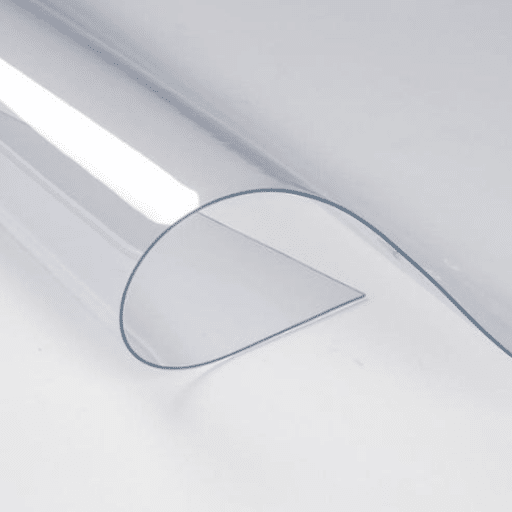
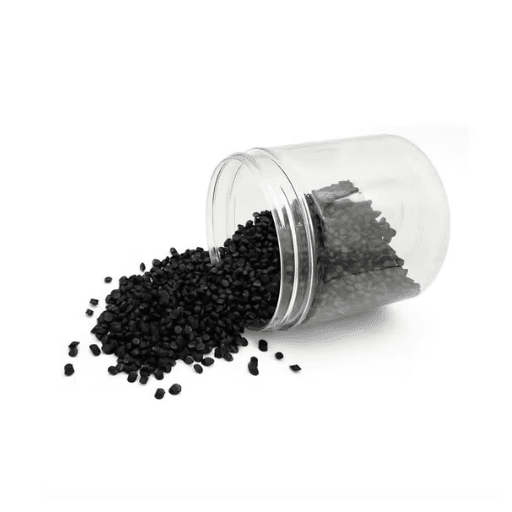
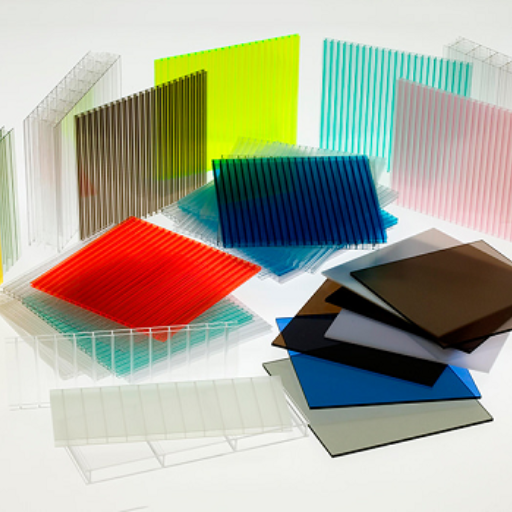
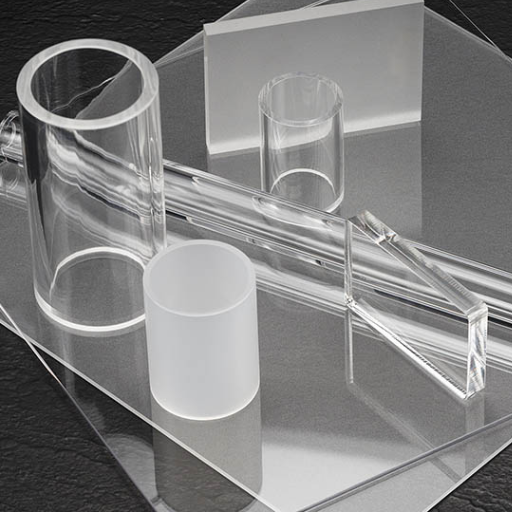
Polycarbonate exists as an amorphous engineering thermoplastic which manufacturers produce through a chemical reaction between bisphenol A and phosgene or through transesterification. The material’s molecular structure contains rigid aromatic rings which connect through flexible carbonate linkages. The combination of these two components generates a material which exhibits multiple performance capabilities that include high impact resistance and excellent optical clarity and good dimensional stability and a glass transition temperature which ranges between 145 and 150 degrees Celsius.
Polycarbonate lacks a distinct melting point which characterizes semi-crystalline polymers such as POM and PA66. The material begins to soften when temperatures exceed its glass transition temperature, which creates a broad processing range but results in a slower decline of its mechanical properties compared to crystalline materials.
The global market for polycarbonate has an estimated worth between 22 billion and 25 billion dollars, while Covestro’s Makrolon brand accounts for approximately 25 percent of the worldwide market. For engineers and procurement managers, this market concentration means that specifying by brand and grade number, Makrolon 2407, 6555, 8035, is both practical and common practice. To learn about polycarbonate density, please read this article: Polycarbonate Density: Grade-Specific Values, Standards, and Sourcing Verification
If your qualification process also includes safety, handling, or food-contact concerns, this companion guide provides a useful next step: Is Polycarbonate Toxic? A Safety Guide for Engineers and Procurement Buyer.
Mechanical Properties of Polycarbonate
Tensile Strength and Flexural Modulus
The tensile strength of general-purpose unfilled polycarbonate reaches 65 to 70 MPa while its flexural modulus measures approximately 2,300 MPa. The tensile strength of PC reaches mid-level engineering thermoplastics because it exceeds ABS strength and stiffness yet falls short of glass-filled PA66 and POM homopolymer tensile strength.
The Makrolon range shows only slight variations in grade-specific properties. The two most commonly used general-purpose grades Makrolon 2407 and 2805 demonstrate tensile strength values that range between 65 and 68 MPa.
The glass-filled grades establish new benchmarks for these properties. Makrolon 8025 achieves 85 MPa tensile strength through the inclusion of 20 percent glass fiber. The tensile strength of Makrolon 8035 with 30 percent glass fiber reaches 95 MPa which represents a 40 percent increase compared to unfilled grades.
Procurement teams should note that every Certificate of Analysis contains tensile strength as their standard testing measurement. The tensile strength value for Makrolon 2805 COA should match Covestro’s published specification range. The production process requires material investigation when it shows quality issues that extend beyond the approved testing range.
Impact Strength
Polycarbonate’s notched Izod impact strength of 800 to 900 joules per meter presents the highest value among transparent engineering plastics. For context, PMMA acrylic registers approximately 80 joules per meter under the same test conditions. PC performs ten times better than acrylic when it comes to impact resistance.
PC serves as the primary material for safety glazing and protective equipment and automotive lighting lenses because of its exceptional properties. A Makrolon 2407 headlight lens can withstand stone-chip impact at highway speeds without cracking. The same application in PMMA would require significantly thicker walls or protective coatings to achieve equivalent durability.
The impact strength of materials depends on their temperature and the design of their components. PC exhibits increased brittleness when exposed to temperatures that drop below minus 20 degrees Celsius. The performance of a design will decline because of internal corners and stress concentrators that exist in the part.
Datasheet impact values are measured on standardized test specimens. The actual performance of your part depends on three factors which are wall thickness and gate location and mold design. If impact resistance is one of your main selection criteria, see this deeper guide: Polycarbonate Impact Resistance: Properties, Grades, and How to Specify the Right Resin.
Hardness and Wear Resistance
Polycarbonate registers a Rockwell hardness of M70 to M80. This level of hardness meets requirements for most building construction work and enclosure usage but presents one major drawback which makes PC material more susceptible to damage than PMMA. For optical surfaces subject to handling or cleaning, hard coatings are standard practice. Display and lens applications receive optical grades of Makrolon 2407 together with other optical grades because manufacturers apply hard coatings at the factory level.
PC material does not suit applications that need moving mechanical parts. The material exhibits higher frictional resistance than POM and PTFE while missing the self-lubricating properties that make acetal the preferred choice for gear and bearing applications. The combination of POM and POM-PC hybrid materials provides better performance than pure PC for applications that require sliding or rotating contact.
Creep Resistance and Fatigue
Polycarbonate material exhibits a creep behavior that develops at a moderate rate when it experiences continuous mechanical pressure. The PC material will show permanent deformation at 20 MPa static stress throughout multiple months of continuous loading at room temperature. Structural components which need to support continuous loads require glass-filled grades because they serve as the standard solution. The combination of 30 percent glass fiber with Makrolon 8035 and 8325 results in a 60 to 70 percent reduction of creep deformation compared to their unfilled counterparts.
The material demonstrates good fatigue resistance although it does not reach exceptional levels. The PC material can withstand cyclic loading during elastic strain periods but it shows less capacity to endure high-strain cyclic deformation compared to POM and PA66. The material choice process should use finite element analysis with PC-specific fatigue data for spring-loaded and flexural snap-fit designs that will experience thousands of cycles.
Thermal Properties of Polycarbonate

Glass Transition Temperature
Polycarbonate shows a glass transition temperature that ranges from 145 to 150 degrees Celsius. The polymer begins to change from its glassy state into a rubbery state at this temperature, which causes its mechanical properties to decrease at an accelerated rate. Engineers use Tg as the maximum theoretical capacity for load-bearing applications.
This property is frequently confused with heat deflection temperature, which is lower and more practically relevant. If you need a deeper explanation of how Tg is measured and what it means for processing, see our dedicated guide to polycarbonate glass transition temperature.
Heat Deflection Temperature
The heat deflection temperature, which ASTM D648 and ISO 75 testing require at 1.8 MPa fiber stress shows, defines the point where a test bar begins to bend through 0.25 millimeters under weight. The HDT values for general-purpose PC grades range between 125 and 140 degrees Celsius because the different grades and testing standards produce various results.
The standard general-purpose grade of Makrolon 2805 has an HDT measurement of about 130 degrees Celsius. The high-heat grades provide extended performance beyond this point. The glass-filled grades, which include Makrolon 8325, reach HDT values near 150 degrees Celsius because their glass fibers maintain their shape when the polymer matrix begins to melt.
HDT serves as the primary criteria for selecting materials used in automotive underhood applications and LED housings which operate at temperatures above 120 degrees Celsius. Mariana Chen’s LED housing failure was exactly this problem: she had specified Makrolon 2805 with an HDT of 130 degrees Celsius for an application where localized temperatures reached 135 degrees Celsius during thermal cycling. The problem disappeared after switching to Makrolon 8325.
If thermal load is the main selection risk in your project, this article gives a more detailed breakdown of grade-by-grade performance: Polycarbonate Heat Deflection Temperature: HDT Values, Grades & Selection Guide.
Continuous Service Temperature
Unfilled polycarbonate material maintains its performance range from minus 40 degrees Celsius to plus 115 degrees Celsius during continuous operation. Short-term excursions above this range are tolerable, but prolonged exposure above 115 degrees Celsius causes progressive oxidation and property degradation.
The UV-stabilized grades of Makrolon RE6717 material are used for outdoor electrical enclosures and automotive lighting applications because both high temperatures and UV exposure. The UV stabilizer package provides color stability and surface integrity protection but does not make significant changes to mechanical properties.
Thermal Expansion
Polycarbonate material expands linearly at a rate of 65 to 70 times 10 to the minus 6 per Kelvin temperature change. This material expands three times more than aluminum and ten times more than steel. The temperature differential between metal and plastic components makes it difficult to design metal-plastic hybrid assemblies that include PC lenses mounted on aluminum housings.
The industry commonly uses snap-fit retention features together with compliant mounting interfaces as basic design solutions. The thermal cycling process causes rigid bolted attachments to fail between PC and metal components because plastic material expands and contracts differently compared to metal, which produces internal stress.
Optical Properties of Polycarbonate
Light Transmission and Clarity
Unfilled polycarbonate transmits approximately 88 to 90 percent of visible light. This material competes with glass because it transmits light at a rate that falls between glass and PMMA, which transmits approximately 92 percent. The 2 percent difference between PC and PMMA for most optical and lighting applications shows no practical importance because PC provides better performance during impacts.
Makrolon 2407 is Covestro’s high-optical-clarity grade, formulated for lens and light-guide applications. The product maintains low haze levels while displaying a stable refractive index throughout all manufacturing batches. Optical-grade PC demands more precise control over its dimensional attributes and optical characteristics compared to standard grades which results in higher costs and more detailed certification documents for procurement teams.
For a more complete review of light transmission, haze, optical-grade selection, and sourcing considerations, see Transparent Polycarbonate: Optical Properties, Grade Selection, and Sourcing Guide.
Refractive Index
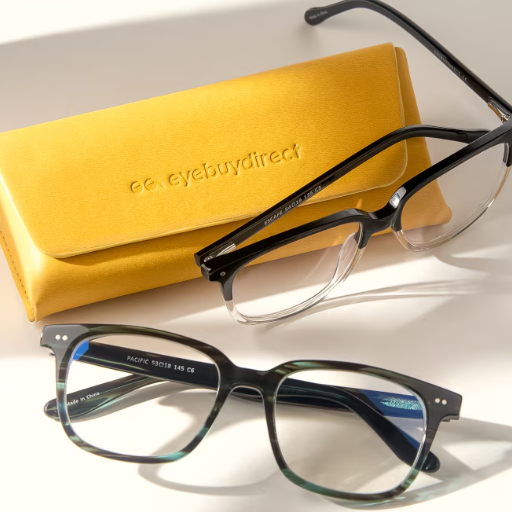
Polycarbonate has a refractive index of approximately 1.58 to 1.59. The value exceeds PMMA, which has a refractive index of 1.49, while approaching the refractive index of crown glass, which measures at 1.52. The elevated refractive index of PC allows optical designers to create thinner PC lenses which provide equivalent optical power to glass counterparts. The primary reason prescription eyewear manufacturers switched from glass to polycarbonate material for safety and sports lenses lies in this specific characteristic of polycarbonate.
UV Resistance and Stability
Standard polycarbonate material demonstrates yellowing and brittle behavior when exposed to ultraviolet light for extended periods. The polymer backbone material exhibits vulnerability to photo-oxidation through its carbonate linkage structure. The requirement for outdoor usage mandates the use of UV-stabilized grades.
Covestro has developed Makrolon RE6717 as a UV-stabilized optical grade which automotive lighting and exterior applications require. Makrolon 6557 provides UV stabilization together with UL94 V-0 fire retardant protection for outdoor general use. The UV stabilizer absorbs UV-B and UV-C radiation before it reaches the polymer backbone, extending service life from months to years in direct sunlight.
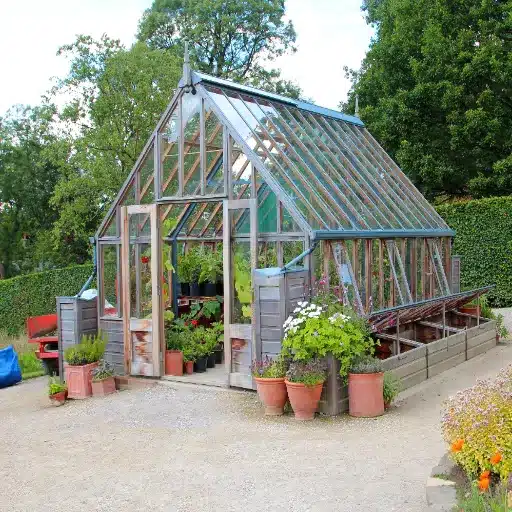
It is worth distinguishing between UV-resistant grades and UV-filtering grades. The UV-resistant grades provide protection against polymer degradation which affects the material. UV-filtering grades which protect greenhouse and protective glazing materials block all UV radiation to safeguard contents or people who stay behind the sheet. The two formulations present different characteristics which lead to material failure when one specifies the incorrect type or to insufficient protection.
Electrical Properties of Polycarbonate
Polycarbonate provides superior electrical insulation properties. The material exhibits dielectric strength values that range between 15 and 30 kilovolts per millimeter depending on the specific part thickness and test procedure. The material demonstrates volume resistivity measurements that exceed 10 to the 15th power ohm-centimeters which makes PC appropriate for usage in high-impedance electronic systems. The combination of these characteristics with its ability to maintain shape and its transparent nature gives Polycarbonate material properties that make it the preferred choice for connector housings and switch components and circuit breaker enclosures. Engineers can create transparent or see-through electrical enclosures that permit users to examine their internal parts while preserving complete electrical safety.
The UL94 V-0 flame retardancy standard applies to Makrolon 6555 and 6557 materials which manufacturers use for electronics applications that need flame protection. The flame-retardant additive package maintains dielectric performance at its original level which enables these materials to achieve widespread use in power distribution systems and consumer electronic devices. If you are comparing V-0 grades, compliance expectations, and sourcing checks, this guide is worth reviewing: Polycarbonate Flame Retardant: UL94 V-0 Grade Selection and Sourcing Guide.
Chemical Resistance of Polycarbonate
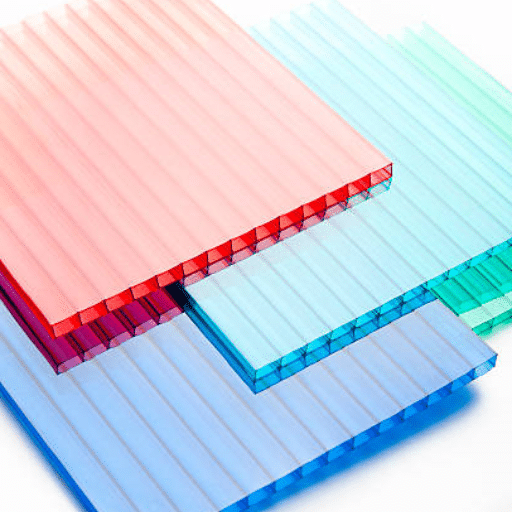
Polycarbonate provides strong protection against acidic substances and alcohols and oil products. The material maintains its integrity when exposed to aliphatic hydrocarbons and typical household and industrial cleaning products which have average strength. The chemical profile of this material enables its application in medical device housings and food processing equipment and automotive fluid reservoirs.
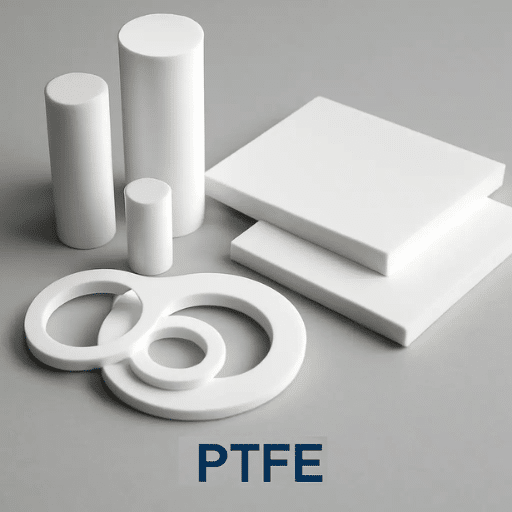
The material PC exhibits multiple serious chemical weaknesses. The polymer material gets attacked by strong bases and ketones and esters and chlorinated hydrocarbons. Stress cracking and surface crazing occur in materials which contain ammonia-based cleaners and acetone and methylene chloride even at their lowest concentrations. The best options for handling extreme chemical conditions are PTFE and PPS and PFA.
The process of stress cracking requires dedicated examination. The presence of mechanical stress on polycarbonate components creates an increased risk of chemical damage compared to their unstressed counterparts. The application of snap-fit preload to a PC enclosure causes it to develop cracks from alcohol-based cleaning while the same material without stress shows no signs of harm. The chemical exposure design process needs to include both chemical elements and stress level factors.
Consult Covestro’s chemical resistance charts for the specific Makrolon grade you are considering if your application requires fuel contact or chemical processing or repeated sterilization cycles. The statement about “PC chemical resistance” cannot support fundamental needs in critical applications. For a more detailed compatibility-focused reference, see Polycarbonate Chemical Resistance: Compatibility Chart, Grades, and Sourcing Guide.
Grade-Specific Property Comparison: Covestro Makrolon
Yifuhui maintains in its inventory the Makrolon grades which the following table documents by showing their main physical attributes. The values represent standard measurements which require validation through current manufacturer datasheets to meet specification standards.
|
Grade |
Type |
Tensile Strength |
HDT (1.8 MPa) |
UL94 |
Primary Applications |
|---|---|---|---|---|---|
|
2407 |
General-purpose, high-flow, optical |
~65 MPa |
~127°C |
HB |
Lighting lenses, displays, optical components |
|
2805 |
General-purpose |
~66 MPa |
~130°C |
HB |
General engineering, housings, medical devices |
|
6555 |
Flame-retardant V-0 |
~60 MPa |
~125°C |
V-0 |
Electronics enclosures, electrical equipment |
|
6557 |
Flame-retardant V-0, UV-stabilized |
~60 MPa |
~125°C |
V-0 |
Outdoor electrical, EV charging stations |
|
RE6717 |
UV-stabilized, optical |
~65 MPa |
~128°C |
HB |
Automotive lighting, exterior lenses |
|
8025 |
20% glass-filled |
~85 MPa |
~142°C |
HB |
Structural brackets, industrial components |
|
8035 |
30% glass-filled |
~95 MPa |
~145°C |
HB |
High-stiffness structural parts |
|
8325 |
30% glass-filled, high-heat |
~90 MPa |
~150°C |
HB |
Automotive underhood, high-temperature structural |
|
9415 |
10% glass-filled, FR V-0 |
~70 MPa |
~135°C |
V-0 |
Precision electrical, thin-wall enclosures |
The procurement teams use this table for their double purpose. The first purpose of this table assists engineers in selecting grades through quick reference. The second purpose of this table establishes benchmark values which must appear on a Certificate of Analysis.
The COA for Makrolon 6555 should show a tensile strength value of 60 MPa and it must display a flame rating which demonstrates compliance with UL94 V-0 standards. You should discuss the supplier relationship when the COA shows different values and does not include flame-rating information because you need to assess material before it enters your warehouse.
PC vs. Other Engineering Plastics: Property Selection Guide
PC vs. PMMA (Acrylic)
PMMA provides better light transmission to a greater extent than PC, while its scratch resistance performance exceeds that of PC. PMMA exhibits impact strength that reaches only 10 percent of polycarbonate strength. PC serves as the primary material for safety glazing, automotive lighting, and protective equipment that requires protection against impacts. Display covers and cosmetic applications where scratch resistance matters more than impact protection should use PMMA as their preferred material.
PC vs. ABS
The injection molding process for ABS proves simpler, while PC materials provide less processing flexibility. It is also less expensive per kilogram. The heat deflection temperature for ABS reaches approximately 85 to 100 degrees Celsius, which falls short of PC’s 125 to 140 degrees Celsius range.
PC performs better than ABS for use in electronics enclosures located in high-temperature outdoor settings and for all load-bearing elements that exceed 90 degrees Celsius. The PC/ABS polymer blends provide automotive interior components with advantages from both material types. If you need a more detailed side-by-side comparison for engineering and sourcing decisions, review Polycarbonate vs ABS: Complete Material Selection and Sourcing Guide.
PC vs. POM (Acetal)
The engineering thermoplastics POM and PC serve distinct application requirements which establish their unique purposes. The low coefficient of friction and excellent dimensional stability of POM enable its superior performance in low-friction and wear-resistant and precision mechanical applications. PC performs best in applications which require transparent materials that can withstand impacts while providing electrical insulation.
POM serves as the superior material choice for gear and bearing applications. PC serves as the superior material choice for transparent housings and lenses. The overlap occurs in structural clips and fasteners, where either material may work depending on temperature and chemical exposure requirements.
PC versus PA66 (Nylon 66)
PA66 provides superior glass-filled tensile strength which exceeds PC while delivering better oil resistance properties. The material absorbs moisture, which leads to dimensional changes and property shifts. The material maintains its dimensional stability during humid conditions because PC exists as a hydrophobic substance.
PC provides superior moisture stability which benefits outdoor electrical enclosures and water-contact applications. PA66 serves as the preferred material for automotive underhood components which function in environments with high oil contamination.
Material Selection Decision Matrix
|
Requirement |
Best Choice |
Why |
|---|---|---|
|
Highest impact + transparency |
PC (Makrolon 2407) |
Unmatched combination among transparent thermoplastics |
|
Flame retardant + electrical |
PC (Makrolon 6555/6557) |
UL94 V-0 with maintained dielectric properties |
|
High stiffness + heat resistance |
PC GF30 (Makrolon 8035/8325) |
Glass fiber reinforcement extends structural performance |
|
Lowest friction + wear |
POM |
PC has poor self-lubricating characteristics |
|
Food contact + repeated sterilization |
PTFE or PPS |
PC has limited steam sterilization cycle tolerance |
|
Moisture stability + outdoor use |
PC |
PA66 absorbs water; PC does not |
Processing Properties and Considerations
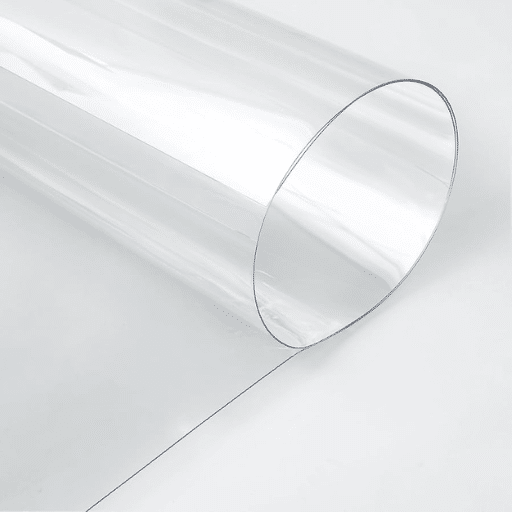
Polycarbonate processes through three methods which include injection molding and extrusion and blow molding. The melt temperature range starts at 260 degrees Celsius and ends at 320 degrees Celsius while most injection molding work operates between 280 and 300 degrees Celsius. The melt viscosity reaches excessive levels at temperatures below 260 degrees Celsius which prevents complete cavity filling. Thermal degradation becomes a risk when temperatures exceed 320 degrees Celsius.
Different grades exhibit distinct melt flow index values. The MFI of Makrolon 2407 which engineers thin-wall optical components exceeds that of Makrolon 2805. Glass-filled grades show decreased MFI values because the fiber content increases viscosity. The MFI value on your COA is one of the most important process validation checkpoints: it confirms that the lot will fill your mold consistently with your established cycle parameters.
PC requires drying before its processing because it absorbs moisture from the environment. The recommended drying conditions require 120 degrees Celsius drying for 3 to 4 hours to reach moisture content below 0.02 percent. Hydrolytic degradation during melt processing occurs because of improper drying which results in splay marks and lower molecular weight and brittle components. The first suspect for production parts which show silver streaking or lower impact performance appears to be insufficient drying.
Unfilled PC exhibits mold shrinkage which ranges from 0.5 percent to 0.8 percent. The amorphous nature of PC results in more predictable isotropic shrinkage behavior while semi-crystalline materials like POM and PA66 exhibit directional shrinkage behavior which depends on flow direction and wall thickness. The predictable nature of this process enables easier mold design while decreasing the chances of warpage occurring in parts that require tight tolerances.
Verifying Polycarbonate Properties on Your COA
Every shipment of branded polycarbonate resin should arrive with a Certificate of Analysis issued by the manufacturer. For Covestro Makrolon grades, the COA should list the following properties measured against the manufacturer’s specification for that grade:
- Melt volume rate or melt flow index, with test temperature and load
- Density
- Tensile strength or tensile modulus
- Moisture content
- Color specification (L*, a*, b* values for natural grades)
- Lot number and production date
- Flame rating declaration for FR grades
The most efficient verification process requires comparing the MVR or MFI value on the COA with Covestro’s published datasheet range for the grade. The published MVR of Makrolon 2805 shows a value of 10 cubic centimeters per 10 minutes at 300 degrees Celsius and 1.2 kilograms. The COA which shows 8 to 12 cubic centimeters per 10 minutes operates within normal lot-to-lot variation. A value of 18 would indicate either a testing error, a mislabeled grade, or a material issue that requires investigation before production use.
Flame-retardant grades require their COA to include UL94 V-0 compliance certification. This property exists as a measured property like MVR. It serves as a compliance declaration that results from batch testing. You should request clarification about the V-0 declaration in the Makrolon 6555 COA before accepting the shipment. The documentation serves as a requirement for regulatory audits and OEM supplier qualification processes.
Yifuhui provides every Makrolon grade shipment with a manufacturer-issued COA that customers can trace to their production lot. We provide COA samples on request for buyer qualification processes, and we respond to property verification questions within 24 hours.
Request a sample COA for the Makrolon grade you are qualifying, contact us with your grade and application requirements.
Conclusion
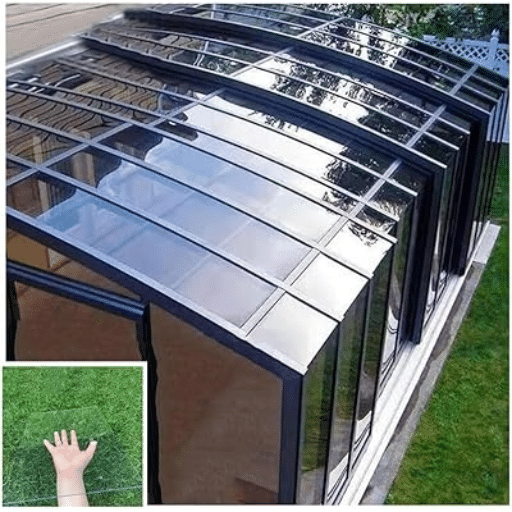
Polycarbonate delivers a rare combination of properties that include glass-like transparency and tenfold greater impact protection than acrylic and heat deflection above 125 degrees Celsius and superior electrical insulation. The main properties of the material serve only to provide basic information about its performance capabilities. The Makrolon family contains five grades which include general-purpose 2805 and optical 2407 and flame-retardant 6555 and UV-stabilized RE6717 and glass-filled 8035 which you must choose to determine the success or failure of your part during its operational life.
The key takeaways for engineers and procurement managers:
- Match the grade to the application’s critical requirement: optical clarity, flame retardancy, UV stability, or structural stiffness
- Verify COA properties against manufacturer datasheets before accepting production material
- Account for PC’s limitations: chemical sensitivity to bases and ketones, scratch susceptibility, and thermal expansion differential with metals
- Consider glass-filled grades for sustained load applications where creep resistance matters
The first step of your process requires you to execute a trial order which consists of one lot when you need to qualify a new PC grade or change your suppliers. Your team must conduct process validation while verifying the COA and creating a default measurement standard. The production process achieves consistent output because it uses established measurement standards which have undergone validation.
At Yifuhui we maintain an inventory of Covestro Makrolon grades 2407 2805 6555 6557 RE6717 8025 8035 8325 and 9415 which all come with official COA documentation from the manufacturer. The minimum order quantity begins at 25 kilograms which we deliver from our Suzhou location according to standard FOB Shanghai shipping procedures.
Tell us your operating temperature, load conditions, and any regulatory requirements, and we will identify the right Makrolon grade for your production line, with full documentation, from our warehouse to your facility.
Frequently Asked Questions
What is the difference between Makrolon 2407 and Makrolon 2805?
The two materials Makrolon 2407 and Makrolon 2805 serve as unfilled polycarbonate materials which share equivalent mechanical properties and thermal performance. The optical application of Makrolon 2407 requires testing which confirms its ability to produce thin-wall molded products through its enhanced flow capacity. The standard general-purpose material of Makrolon 2805 contains higher viscosity which makes it suitable for use in thicker engineering components. The 2407 specification applies to optical lenses and light guides. The 2805 material serves as a cost-effective option for general housing and structural component production.
Can polycarbonate be used for food-contact applications?
Certain PC grades meet FDA food-contact standards which established their requirements under 21 CFR 177.1580. The compliance requirements depend on the specific grade rather than the entire material family. The grade level must be confirmed for your food-contact certification requirement which also requires you to obtain the FDA compliance letter from your supplier. The production batch and regional formulation of Makrolon grades determine whether they possess food-contact documentation which explains their general-purpose nature.
What causes the stress cracks in my polycarbonate part after it has been assembled?
The combination of internal molded-in stress and chemical exposure to PC leads to stress cracking which almost always occurs with this material. The presence of sharp internal corners and uneven wall thickness and inadequate annealing process results in residual stress development. The contact with ketones and esters and strong bases and high-concentration alcohols leads to crack formation at points of stress concentration. The design solutions require stress reduction through design changes and stress relief through molding annealing and PC compatibility testing of cleaning products and adhesives.
How does glass fiber reinforcement affect polycarbonate properties?
The glass fiber reinforcement system shows complete results for tensile strength and flexural modulus and heat deflection temperature. Makrolon 8035 with 30 percent glass fiber achieves roughly 95 MPa tensile strength and 145 degrees Celsius HDT, compared to 66 MPa and 130 degrees Celsius for unfilled 2805. The system operates through three essential trade-offs that include lower impact strength and higher mold wear and complete loss of optical transparency. The glass-filled PC material remains opaque because it is designed for structural purposes instead of optical applications. To learn about the glass transition temperature of polycarbonate, please read this article: Polycarbonate Glass Transition Temperature: Why 147°C Matters for Grade Selection
What Incoterms does Yifuhui offer for polycarbonate resin exports?
Our company provides three Incoterms which include EXW Suzhou and FOB Shanghai and CIF destination port. Our international buyers prefer FOB Shanghai as their standard term of shipping. CIF enables first-time importers to obtain necessary shipping services through Yifuhui who will handle all ocean freight and marine insurance requirements until their goods reach their destination port.