






Three quotes for Celanese Hostaform POM arrived in Elena’s inbox in October. Elena buys POM for a European Tier 2 supplier. All three quotes named C9021. One came in at US$3,180 per tonne, one at US$3,520, and one at US$3,750.
The cheapest quote included a COA that listed MVR 12. The most expensive could not name the plant that made the lot. The middle quote named a producer but not the country.
If you are looking for a Celanese Hostaform POM supplier, the grade code is only the first question. The suffix sets the formulation. The plant sets the origin.
The origin and producer set the anti-dumping rate at the Chinese border: 34.5% for German-origin Celanese material, 74.9% for US-origin Ticona material. A one-line quote usually omits all three.
This guide decodes the grade system, verifies the core grades, separates Hostaform from Celcon and Amcel, and shows how origin and duty change your landed cost. If you are sourcing rather than specifying, the POM resin page carries the stocked range and quote form. For the wider qualification checklist, the POM resin supplier guide covers documentation, Incoterms and audits.
Buyer examples in this article are composites based on typical enquiries, not individual customer records.
Send us the grade code → and we will decode the suffix and the origin.
What Hostaform Is, and What It Is Not
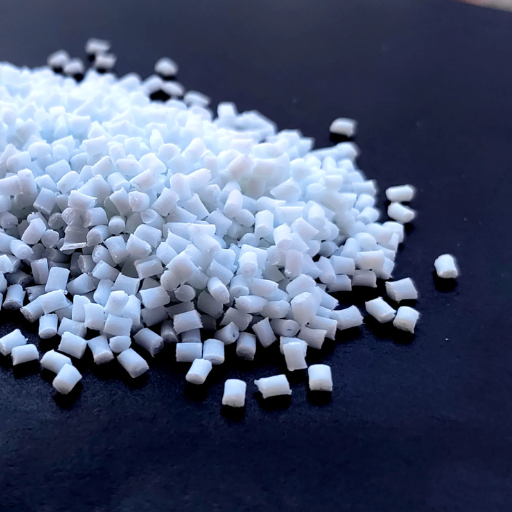
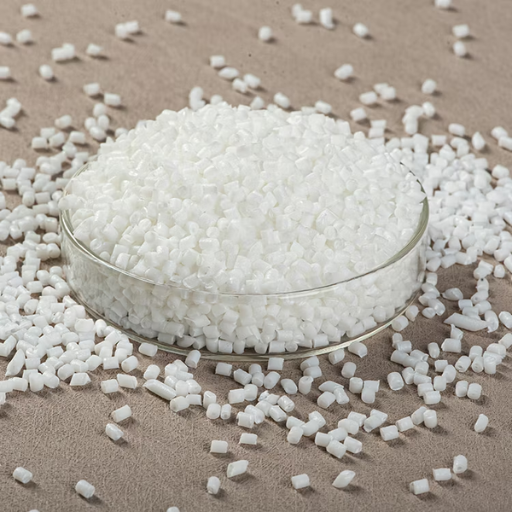
Hostaform is Celanese’s trade name for polyoxymethylene copolymer, written POM-C or acetal copolymer. It isn’t a homopolymer. It isn’t a synonym for POM in general, and it isn’t Delrin. The Celanese Hostaform brand page is the manufacturer’s own reference.
The distinction matters because three other names sit close to it:
- Celcon is Celanese’s sibling brand for the same copolymer chemistry. It has a different grade history, mostly in the Americas, and its grade names don’t map one-for-one to Hostaform.
- Amcel is Celanese’s commodity acetal copolymer series, sold under KP and CE codes. It isn’t a Hostaform grade family, even though both are Celanese POM-C.
- Delrin is a POM homopolymer. DuPont sold 80.1% of the business to TJC, and the sale closed on 1 November 2023. Delrin is an independent company, not a Celanese brand.
Ticona is the fourth name buyers still see. It is Celanese’s legacy engineering-plastics brand, folded into the company around 2013. A COA may still name Ticona Polymers as the producer, especially for US-origin material. That is a producer name, not a separate owner.
Hostaform is always POM-C. If your application needs the higher stiffness of POM-H, the switch is a different material decision, and the POM homopolymer vs copolymer guide covers the trade-offs.
How to Read a Hostaform Grade Code
A Hostaform designation is a compressed specification. Read it left to right: series, flow number, then suffix.
| Element | What it tells you | Examples | Common misreading |
|---|---|---|---|
| C | Standard copolymer series | C9021, C13031, C2521, C27021, C52021 | C does not mean homopolymer. All Hostaform grades are copolymer. |
| S | Impact-modified or toughened series | S9363, S9364 LPT | S is not “standard.” |
| MT | Medical Technology series | MT2U06, MT24U01, MT SlideX | MT grades carry medical documentation; standard C grades do not. |
| XGC | Glass-coupled series | XGC-series | Not the same as GV glass-fibre grades. |
| LM | Laser-marking series | LM-series | A marking attribute, not a flow class. |
| 9021, 13031, 2521, 27021, 52021 | Flow and formulation family | C9021 standard, C13031 easy-flow, C2521 extrusion, C27021 high flow, C52021 very high flow | The digits are not a universal MFI. C27021’s MVR is 24, not 27. |
| GV1/10, GV1/30 | Glass-fibre reinforcement, nominal 10% or 30% | C9021 GV1/10, C9021 GV1/30 | The nominal percentage may not equal the measured glass content. |
| GV3/30 | Glass-bead reinforcement, nominal 30% | C9021 GV3/30 | GV3 is not the same as GV1. |
| TF | PTFE-modified wear grade | C9021 TF, C27021 TF | Not a general-purpose grade; impact strength drops. |
| LS | UV-stabilised | C9021 LS, C13031 LS | Not the same as XAP low-emission. |
| XAP, XAP2, XAP3 | Low-emission, low-formaldehyde | C9021 XAP3, C27021 XAP | A formulation generation, not a flow class. |
| ECO-B | Bio-based or mass-balance | C9021 ECO-B, C27021 ECO-B | A sustainability attribute; confirm property equivalence. |
| FC | Food-contact designation | C9021 FC | Food contact is grade-specific. |
| 10/1570 | Color or formulation code | C9021 LS 10/1570 | Not a grade code. |
| BK | Black color code | C9021 BK | Color, not grade. |
The flow ladder is the part buyers misread most often. Hostaform C9021 is the standard injection grade at MVR 8. C13031 moves to MVR 12 with higher rigidity. So a C9021 COA that lists MVR 12 is not a standard C9021 lot, whatever the invoice says.
Hostaform C27021 is MVR 24 for thin walls and fuel-system parts. C52021 is MVR 39 for long flow paths and multi-cavity tools. C2521 sits on the other side of the ladder at MVR 2.5, because it is the extrusion grade.
Three grade claims to reject:
- “Hostaform KP20” or “Hostaform CE66.” KP20, KP25, KP30 and CE66 are Amcel codes. A seller who puts them under Hostaform is mixing two product lines.
- “C27021 is the same as Celcon M90.” C27021 is MVR 24. Celcon M90 is MFR 9 g/10 min. The units differ, and so does the flow.
- “GV1/30 means exactly 30% glass.” The grade name is nominal. One Celanese sheet designates the material POM-GF26. Don’t state an exact glass percentage without the current datasheet.
A moulder in Zhejiang, call him Chen, replaced Celcon M90 with C27021 after a trader told him the two were equivalent. The higher-flow C27021 filled the tool faster and flashed at the parting line. He spent two weeks re-cutting the tool. The grade he needed was a medium-flow copolymer, not the highest-flow one on the quote.
Hostaform vs Celcon vs Amcel: Same Chemistry, Different Brands

All three are Celanese POM-C. That doesn’t make them interchangeable in a quote.
| Brand | Owner | Chemistry | Grade codes | What it is not |
|---|---|---|---|---|
| Hostaform | Celanese | POM copolymer | C9021, C13031, C2521, C27021, C52021, MT, XGC, LM, S | Not a homopolymer; not Delrin; not Amcel |
| Celcon | Celanese | POM copolymer | M25, M90, M270, M450 | Not a different material; not a Hostaform grade name |
| Amcel | Celanese | POM copolymer | KP10, KP20, KP25, KP30, CE66, CE67 | Not a Hostaform grade family; not a premium brand |
| Delrin | Delrin (independent) | POM homopolymer | 100, 500, 900, 1700 series | Not Celanese; not a copolymer |
| Ultraform | BASF | POM copolymer | N2320, W2320, H4320, N2640 Z | Not Celanese; not Hostaform |
Hostaform and Celcon share the same copolymer chemistry, and Celanese has been unifying some grades under the Hostaform name. The grade names still don’t translate by substitution. C27021 and Celcon M90 are both unfilled POM-C on paper, but their flow values sit at different points on the ladder.
Amcel POM is the more common source of confusion in Chinese distribution. It is a commodity series with KP and CE codes, and it is not a premium grade family.
That doesn’t make a KP20 lot a Hostaform lot. If a quote says “Hostaform KP20,” ask for the TDS and the COA. One of the two names is wrong.
The BASF Ultraform POM page covers the other copolymer brand buyers quote against Hostaform. The comparison is useful, but the grade codes don’t cross-reference either.
Where Hostaform Is Made, and Why Origin Matters
Celanese has documented POM polymerization at Frankfurt, Germany, and Bishop, Texas. Those are the two plants that matter for origin.
Nanjing is a different story. Celanese announced a 15,000 t/y POM compounding unit there in 2008, for startup in 2009. A 2025 environmental filing adds 19,200 t/y of POM compound capacity.
Public documents describe compounding, not polymerization. That distinction matters because a compound made in China from imported polymer may still carry a foreign origin for customs purposes.
So the phrase “made in China” isn’t enough. Ask for three things:
- The country of origin on the commercial invoice.
- The producer name on the COA.
- The anti-dumping declaration, if the goods are imported into China.
Marketplace labels are not documents. A listing that says “CELANESE GERMANY” or “CELANESE USA” is a seller’s description. It may be right. It isn’t a COO.
The producer name can also change the rate. A COA that names Ticona Polymers points to the US producer. A COA that names Celanese Production Germany points to the German producer. Those two names carry different anti-dumping rates, which is the next section.
China Anti-Dumping Duty on Celanese Hostaform POM
China’s 2025 final determination on POM copolymer imports took effect on 19 May 2025 and runs for five years. The product scope is POM copolymer under HS codes 39071010 and 39071090.
The rates in the 2025 determination:
| Origin | Producer | Rate |
|---|---|---|
| EU | Celanese Production Germany GmbH & Co. KG | 34.5% |
| EU | All other EU companies | 34.5% |
| US | Ticona Polymers, Inc. | 74.9% |
| US | All other US companies | 74.9% |
| Taiwan | Polyplastics Taiwan | 3.8% |
| Taiwan | Formosa Plastics | 4.0% |
| Taiwan | All other Taiwan companies | 32.6% |
| Japan | Polyplastics | 35.5% |
| Japan | Asahi Kasei | 24.5% |
| Japan | All other Japan companies | 35.5% |
The scope has an exclusion that buyers miss. Homopolymer POM and modified POM under the same HS codes are not within the investigation scope.
That doesn’t automatically exempt a glass-filled or impact-modified Hostaform grade. “Modified POM” is a classification question, and the answer depends on the product and the broker’s written view. Don’t assume an exemption because the grade has a GV or TF suffix.
The duty is a China import duty. It applies when goods are imported into China. It doesn’t apply to a buyer in Germany, the US, India or Vietnam importing China-origin resin into their own market.
If your company buys from a Chinese distributor and ships outside China, the Chinese anti-dumping duty isn’t your border charge. Your own country’s tariff may still apply.
Decision table for a shipment into China:
| What the documents say | Rate to check | Document to verify |
|---|---|---|
| COO Germany, producer Celanese Production Germany | 34.5% | COO, COA producer, AD declaration |
| COO US, producer Ticona Polymers | 74.9% | COO, COA producer, AD declaration |
| COO another EU country | 34.5% (other EU) | Producer name and COO |
| COO China, domestic sale | Not an import | COO and origin rules if imported resin was compounded in China |
| Glass-filled, mineral-filled or impact-modified grade | “Modified POM” may be out of scope | Written classification view from the broker |
| Goods entered a bonded zone or processing trade | 2025 No. 83 ledger rules | Broker confirmation before you quote a landed cost |
A QA engineer at a European importer, call her Priya, checked a COA against the supplier’s invoice and found two different stories. The invoice said “Celanese Germany.” The COA named Ticona Polymers.
The rate changed from 34.5% to 74.9%, and the landed cost moved by more than the buyer’s entire freight budget. The material was genuine. The paperwork wasn’t aligned.
This is not legal or customs advice. Confirm the treatment with your broker before you commit to a landed cost.
Hostaform Properties, Processing and Grade Selection
The table below covers the grades buyers ask about most. Values are typical datasheet values, not purchase specifications. MVR is measured at 190 °C and 2.16 kg. MVR and MFR are different measurements and can’t be compared directly.
| Grade | Family | MVR / MFR | Density (g/cm³) | Tensile modulus (MPa) | HDT (°C, 1.8 MPa) | Typical use |
|---|---|---|---|---|---|---|
| C9021 | Standard injection | MVR 8 | 1.41 | 2,850 | 104 | General injection, load-bearing parts |
| C9021 FC | Food contact | MVR 8 | 1.41 | 2,850 | 104 | Food processing and packaging parts |
| C9021 GV1/30 | Glass fibre | MVR 4.0 | 1.60 | 9,200 | 160 | Structural, high-stiffness parts |
| C9021 TF | PTFE wear | MVR 6.0 | 1.51 | 2,500 | 98 | Gears, bearings, sliding parts |
| C13031 | Easy-flow, high rigidity | MVR 12 | 1.41 | 3,050 | 107 | Fuel-resistant thin-wall parts |
| C13031 XF | Fuel-blend resistant | n/v | n/v | n/v | n/v | Fuel-system parts; confirm datasheet |
| C2521 | Extrusion | MVR 2.5 | 1.41 | 2,450 | n/v | Rod, sheet, profile |
| C27021 | High flow | MVR 24 | 1.41 | 2,900 | 106 | Thin-wall, fuel-system parts |
| C52021 | Very high flow | MVR 39 | 1.41 | 2,750–3,000 | 106 | Thin-wall, multi-cavity, long flow path |
| MT2U06 | Medical | MVR 2.1 | 1.41 | 2,460 | 91 | Medical devices, drug-delivery parts |
| Amcel KP20 | Commodity, general purpose | MFR 9 | 1.41 | n/v | n/v | Drawer slides, bushings, fasteners |
| Amcel KP30 | Commodity, high flow | MVR 27 | 1.41 | n/v | n/v | Thin-wall parts |
| Celcon M90 | Sibling brand, general purpose | MFR 9 | 1.41 | n/v | n/v | General injection |
Three notes before you use the table.
First, C9021 GV1/30 is nominal 30% glass, but one Celanese sheet designates it POM-GF26. Confirm the current datasheet before you specify a glass percentage.
Second, C13031 XF and the Amcel rows are included for identification; their mechanical values weren’t independently verified for this guide.
Third, the Amcel and Celcon rows aren’t Hostaform grades. They are in the table because buyers quote them in the same conversation.
The processing window is narrow, and the ceiling matters. Melt temperature runs 190–210 °C, with 230 °C as the ceiling. Above that, the polymer starts to degrade and release formaldehyde.
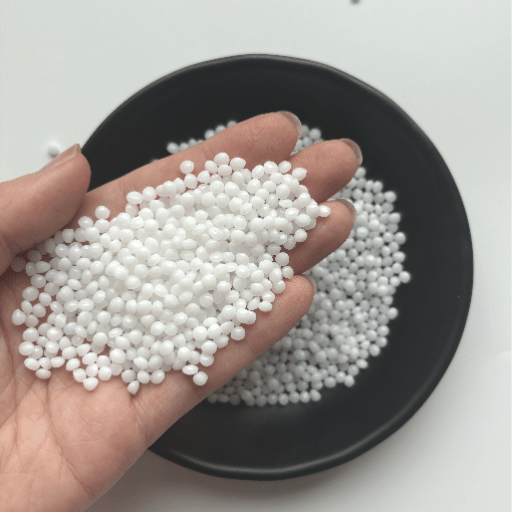
Mold temperature runs 80–120 °C. Drying is generally not required, but if the pellets have absorbed moisture, dry at 100–120 °C for 3–4 hours and keep moisture below 0.15–0.2%.
Shrinkage is typically 1.9–2.0% for unfilled grades. Glass-filled grades move to about 0.6% in the flow direction and 1.0% across it.
| Parameter | Standard and high-flow | Glass-filled | Extrusion (C2521) |
|---|---|---|---|
| Melt temperature | 190–210 °C, max 230 °C | 190–220 °C, max 230 °C | 190–210 °C |
| Mold temperature | 80–120 °C | 80–120 °C | Not applicable |
| Drying | Generally not required; if needed 100–120 °C / 3–4 h | 100–120 °C / 3–4 h | 100–120 °C / 3–4 h |
| Maximum moisture | 0.15–0.20% | 0.15–0.20% | 0.15–0.20% |
| Shrinkage | 1.9–2.0% | 0.6% flow / 1.0% cross-flow | About 2.0% |
Grade selection follows the part, not the brand:
- Fuel systems: C27021, C13031 XF, S9364 LPT. Confirm the OEM specification before substituting.
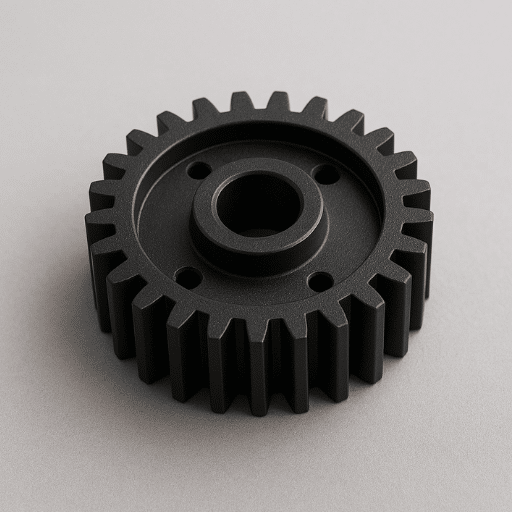
- Gears, bearings, bushings: C9021, C9021 TF, MT SlideX for medical sliding parts.
- Thin-wall electrical and electronic parts: C52021, C13031.
- Extrusion, rod and sheet: C2521, not C27021 or C52021.
- Food processing: C9021 FC, C27021.
- Medical: MT2U06, MT24U01, MT SlideX.
The POM injection molding grade page goes deeper on the flow ladder and the cross-brand equivalents.
Celanese Hostaform POM Supplier Documentation: COA, TDS and Authorization

A Hostaform lot should arrive with a package, not a single document:
- COA with the lot number, MVR, density and tensile values.
- TDS for the exact grade, not the grade family.
- SDS for handling and customs.
- COO for the origin.
- AD declaration if the goods are imported into China.
- Packing list that matches the lot and the invoice.
Verification is straightforward. Compare the COA’s MVR and density to the TDS at the same test condition. Check the lot number against the bag label. Check the producer name on the COA, not the trader’s letterhead.
If the COA says Ticona Polymers and the invoice says Germany, stop and reconcile the documents before you pay.
Food contact is grade-specific. C9021 and C27021 carry declarations under 21 CFR 177.2470 and EU Regulation 10/2011. The conditions matter: the declaration typically excludes use with alcohol content of 15% or more, limits use to 250 °F, and may exclude repeated use. Read the declaration, not the marketing line.
Medical is also grade-specific. The MT grades carry USP Class VI and ISO 10993 documentation. Celanese’s medical POM file includes DMF 11559 and MAF 1079. A standard C9021 lot doesn’t become a medical grade because the seller says “medical grade.”
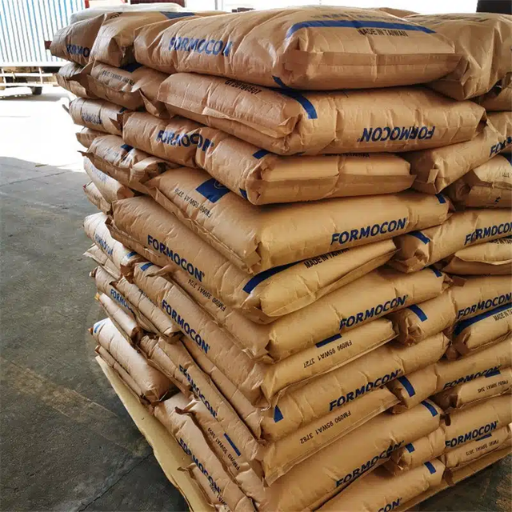
Now the authorization question. Suzhou Yifuhui supplies Hostaform grades from Suzhou stock and through established channels. We aren’t Celanese, and we don’t claim to be an authorized distributor. If your qualification process requires a brand authorization letter, tell us at inquiry and we will confirm exactly what documentation we can provide for that brand.
That wording is deliberate. A supplier who says “authorized distributor” without a current letter is asking you to take a risk that belongs on their side of the table.
Celanese Hostaform POM Supplier: Price, MOQ and Lead Time
Hostaform quotes spread for six reasons: the suffix, the origin, the duty treatment, the packaging, the lot size, and whether the seller owns the stock or is brokering it.
Observed listings on 5 November 2026:
- C9021, labeled “Celanese Germany,” US$3,520 per tonne FOB Guangzhou.
- C27021, labeled “Celanese USA,” US$3,750 per tonne FOB Guangzhou.
- Chinese domestic commodity POM listings, ¥15–20 per kg.
- Specialty grades, up to ¥47 per kg.
These are seller listings, not market prices. The origin labels are seller claims. Don’t average them into a single “Hostaform price.” A German-origin lot and a US-origin lot carry different anti-dumping exposure, and that difference can be larger than the spread between two traders.
Yifuhui’s standard terms:
- 25 kg trial quantity.
- Stock grades ship in 7–14 days.
- Indent grades run 30–45 days, confirmed at quotation.
- EXW, FOB Shanghai or CIF.
The POM resin price guide explains the cost drivers in more detail. If you are buying more than a trial, the bulk POM resin page covers volume terms and packaging.
Celanese Hostaform POM Supplier FAQ

Is Hostaform a homopolymer or a copolymer?
Hostaform is a POM copolymer, POM-C. It isn’t a homopolymer. Delrin is the common POM-H reference. The two families differ in stiffness, chemical resistance and hydrolysis performance, so don’t substitute one for the other without checking the application.
Is Hostaform the same as Celcon?
They share the same copolymer chemistry and the same owner, Celanese. They have different grade histories and grade names. C27021 isn’t a drop-in replacement for Celcon M90, and the MVR and MFR values aren’t directly comparable.
Is Hostaform the same as Delrin?
No. Hostaform is a copolymer. Delrin is a homopolymer, and since 1 November 2023 it has been an independent company after DuPont sold 80.1% to TJC. They are different materials from different owners.
Who owns Hostaform?
Celanese. Hostaform, Celcon and Amcel are Celanese brands. Ticona is a legacy Celanese name, not a separate owner. No sale of Celanese’s Engineered Materials segment has been announced.
Is Hostaform made in China?
Celanese documents POM polymerization in Frankfurt, Germany, and Bishop, Texas. Nanjing is a POM compounding site, not a confirmed polymerization site. A Chinese-compounded lot may still carry a foreign origin, so check the COO and the producer name.
What is the difference between C9021 and C27021?
C9021 is the standard injection grade at MVR 8. C27021 is a high-flow grade at MVR 24, used for thin walls and fuel-system parts. The higher flow fills long, thin sections more easily, but it can also flash a tool that was cut for C9021.
What does GV1/30 mean?
GV1/30 is a glass-fibre grade with a nominal 30% loading. The nominal name doesn’t always equal the measured content; one Celanese sheet designates it POM-GF26. Check the current datasheet before you state an exact percentage.
What is Amcel?
Amcel POM is Celanese’s commodity acetal copolymer series, sold under KP and CE codes such as KP20, KP25, KP30 and CE66. It isn’t a Hostaform grade family. A quote that mixes the two names is a documentation problem.
Which Hostaform grades are food-contact approved?
C9021 and C27021 carry food-contact declarations under 21 CFR 177.2470 and EU 10/2011. The declaration is grade-specific and carries conditions. A general “FDA-approved POM” statement isn’t enough for a compliance file.
Which Hostaform grades are medical grades?
MT2U06, MT24U01 and MT SlideX are the medical series. They carry USP Class VI and ISO 10993 documentation. Celanese’s medical file includes DMF 11559 and MAF 1079. Standard C grades don’t carry that package.
Does China’s anti-dumping duty apply to Hostaform?
It depends on origin and producer. German-origin material from Celanese Production Germany is 34.5%. US-origin material from Ticona Polymers is 74.9%. Homopolymer and modified POM are outside the 2025 scope, but a glass-filled grade is a classification question, not an automatic exemption.
What is the MOQ and lead time?
Yifuhui’s MOQ is 25 kg. Stock grades ship in 7–14 days. Indent grades run 30–45 days, confirmed at quotation. FOB Shanghai is the standard export term, with EXW and CIF available.
Request a Quote from a Celanese Hostaform POM Supplier
Send us four things and we can quote without a round of questions:
- The grade code on your drawing or quote, including the suffix.
- The quantity and whether it is a trial or a production order.
- The destination port and Incoterm.
- Any documentation your quality team needs: COA, COO, food-contact declaration, AD declaration.
As a Celanese Hostaform POM supplier, we will confirm the grade, the origin we can document, the lead time and the price. If the grade on your quote doesn’t exist, or the suffix belongs to another brand, we will tell you before you order.
Hostaform®, Celcon® and Amcel® are registered trademarks of Celanese Corporation. Delrin® is a trademark of its respective owner. Ultraform® is a registered trademark of BASF SE. This article uses the names to identify the materials and isn’t endorsed by the brand owners.