



When Marcus, a process engineer at a mid-size consumer goods molder in Ohio, switched his crate production line from a generic Asian HDPE to a branded prime grade in early 2026, his scrap rate dropped from 7.2% to 1.8% in the first month. Same mold. Same machine. Same operator. The only variable that changed was the resin, specifically, the lot-to-lot MFI consistency that a manufacturer-issued Certificate of Analysis guaranteed.
That single number captures the entire promise and the entire pitfall of HDPE injection molding. The process is forgiving on paper: a wide melt window, a forgiving mold temperature range, and a material that flows easily at the right MFI. In practice, warpage, sink marks, and lot-to-lot process drift make HDPE one of the most scrap-prone commodity resins in high-volume shops.
This guide covers the full HDPE injection molding workflow, process parameters, grade selection by MFI, mold design considerations, defect troubleshooting, and how to verify that delivered resin actually matches the spec your mold was tuned to. Whether you run process engineering, mold design, or procurement, you’ll leave with the numbers you need to stabilize production and the verification framework to keep it stable across reorders.
Why HDPE for Injection Molding
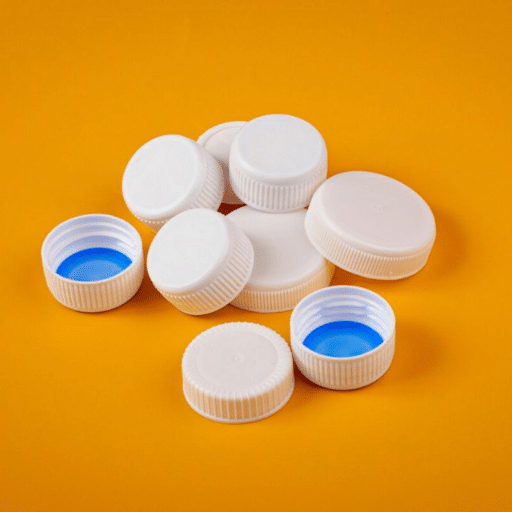
HDPE is the world’s most produced plastic by volume, and injection molding accounts for roughly 25–30% of total HDPE consumption. The combination of properties that drives this share is straightforward. If you want a broader look at the material beyond molding, our High Density Polyethylene (HDPE): Complete Material Guide covers the full picture, from chemistry to end-use applications.
Material Advantages
- Stiffness and chemical resistance at a price point well below engineering plastics like POM or PA66
- Easy flow at high MFI, enabling thin-wall parts and high-cavitation molds with fast cycles
- Wide melt processing window (200–280°C) that accommodates most general-purpose injection machines without specialized screws
- Recyclability (resin code #2) and a deep supply chain for recycled-content blends where spec allows
- FDA-compliant food-contact grades from most major branded manufacturers
Limitations to Acknowledge
HDPE injection molding also carries well-documented trade-offs that matter for part design and supplier selection:
- High mold shrinkage of 1.5–4.0%, with anisotropic behavior (higher in flow direction) that drives warpage on unbalanced parts
- Lower heat deflection temperature than engineering plastics, HDPE tops out around 70–100°C at 0.45 MPa, which rules it out for many automotive underhood and high-temperature applications where POM or PA66 are the right choice
- Environmental stress cracking (ESC) sensitivity in parts exposed to detergents, fuels, or cleaning agents over long service lives
- Limited UV resistance in unstabilized grades, outdoor applications require UV-stabilized or black-pigmented variants
For applications where these limitations conflict with the design brief, we typically redirect buyers to POM (higher stiffness and HDT), PA66 (better heat resistance), or PP (better living-hinge fatigue). HDPE earns its place when stiffness, chemical resistance, and cost discipline align. For a deeper technical breakdown of the mechanical, thermal, and chemical numbers behind these trade-offs, see our HDPE Properties: A Technical Guide for Engineers and Buyers.
HDPE Injection Molding Process Parameters
The processing window for HDPE is wider than most commodity resins, which is why it’s popular with contract molders running multi-material shops. The parameters below reflect typical production settings for general-purpose injection-molding-grade HDPE in the 4–20 MFI range.
Parameter Snapshot
| Parameter | Typical Range | Notes |
|---|---|---|
| Melt temperature | 200–280°C | 230–260°C typical; 280°C upper limit before degradation risk |
| Mold temperature | 20–60°C | 30–40°C typical; higher for surface finish, lower for cycle speed |
| Injection pressure | 70–140 MPa | Thin-wall parts at upper end |
| Back pressure | 0.3–1.0 MPa | Higher for color masterbatch dispersion |
| Injection speed | Moderate to fast | Fast for thin walls, slower for thick sections |
| Cooling time share | 60–70% of total cycle | HDPE’s high crystallinity drives long cooling |
| Total cycle time | 15–60 seconds | Part geometry and cavitation dependent |
| Mold shrinkage | 1.5–4.0% | Anisotropic; higher in flow direction |
| Screw type | General-purpose PE | L/D ratio 20:1 to 24:1; compression ratio 2.5:1 to 3:1 |
Melt Temperature and Residence Time
HDPE’s melting point sits around 130°C, but practical processing requires melt temperatures of 200–280°C to achieve the flow needed for cavity fill. Most general-purpose molders run 230–260°C as a stable operating point. Because the right melt setpoint shifts with grade and density, our HDPE Melting Point: A Grade-by-Grade Guide for Processors and Buyers breaks down how these values change across the grades you’re likely to run.
The upper limit matters. Above 280°C, thermal degradation accelerates, visible as yellow streaking, reduced impact strength, and molecular weight breakdown that shifts MFI upward. Residence time in the barrel should stay under 8–10 minutes at processing temperature; longer residence combined with high barrel temperature is the most common root cause of unexpected MFI drift in production.
Mold Temperature Effects
Mold temperature drives two competing outcomes in HDPE injection molding:
- Higher mold temperature (40–60°C) reduces residual stress, improves surface finish, and lowers warpage risk, at the cost of longer cooling time
- Lower mold temperature (20–30°C) shortens cycle time but increases residual stress and the risk of warpage in unbalanced geometries
For thick structural parts (pails, crates, pallets), we recommend starting at 35–45°C mold temperature and adjusting based on measured shrinkage. For thin-wall caps and closures where cycle time drives economics, 25–35°C with conformal cooling is the typical setup.
HDPE Grade Selection for Injection Molding

The single most important grade selection variable for HDPE injection molding is Melt Flow Index (MFI), measured per ASTM D1238 at 190°C/2.16 kg. MFI determines flow behavior, cavity fill capability, cycle time, and, indirectly, mechanical properties like toughness.
MFI-to-Application Mapping
| MFI Range (g/10 min) | Typical Applications | Cycle Profile |
|---|---|---|
| 0.2–1.5 | Heavy structural parts, large containers | Rarely injection molded; typically extrusion/blow molding |
| 4–8 | Thick-wall industrial parts, pails, pallets | Slower cycles, higher toughness |
| 8–20 | General-purpose housewares, buckets, toys | Balanced cycle and properties |
| 20–35 | Thin-wall caps, closures, food containers | Fast cycles, high cavitation |
| 35+ | Ultra-thin-wall packaging, high-cavitation closures | Very fast cycles, lower impact strength |
Selecting MFI outside the optimal range for your geometry is one of the most common causes of scrap in HDPE injection molding. A thin-wall closure designed for MFI 25 resin will short-shot or flash on an MFI 8 resin. A structural crate designed for MFI 6 resin will run brittle and warp on an MFI 20 resin.
Branded Grade Examples
For buyers sourcing injection-molding-grade HDPE from a branded prime supplier, these are the widely referenced grades in 2026:
- SABIC HDPE B1054 (MFI ~10): Crates, pails, industrial containers; strong Middle East and Asian supply chain
- LyondellBasell Hostalen GD7255 (MFI ~8): Structural parts requiring stiffness and impact balance
- Formosa HDPE 8001 (MFI ~5): Pails, drums, heavy-duty containers
- Dow HDPE DMDA-8920 (MFI ~20): Caps, closures, thin-wall packaging
- ExxonMobil HDPE HMA-025 (MFI ~8): General-purpose molding, housewares
[Want a specific branded HDPE grade with COA documentation? Yifuhui stocks SABIC, Basell, Formosa, Dow, and ExxonMobil injection-molding grades from 25 kg MOQ → Request a Quote]
Density Selection
HDPE density ranges from 0.941 to 0.965 g/cm³, and the density choice trades stiffness against impact:
- 0.950–0.965 g/cm³ for stiffness-critical parts: crates, pallets, structural components
- 0.941–0.950 g/cm³ for impact-critical parts: toys, housewares, consumer goods
Most general-purpose injection-molding grades sit in the 0.945–0.960 g/cm³ band. Density shifts of 0.005 g/cm³ produce measurable differences in flexural modulus and shrinkage, which is why grade consistency across reorders matters for production stability.
Mold Design Considerations for HDPE
HDPE’s high shrinkage and anisotropic flow behavior create specific mold design requirements that differ from PP or ABS tooling.
Shrinkage and Warpage
HDPE shrinks 1.5–4.0% during cooling, with shrinkage 30–50% higher in the flow direction than transverse. This anisotropy is the root cause of warpage on asymmetric or unbalanced parts.
Design mitigations:
- Uniform wall thickness wherever geometry allows; thickness transitions should be gradual (no more than 25% step change)
- Generous draft angles of 1–2° minimum on all vertical surfaces
- Generous internal radii of at least 0.5× wall thickness at corners
- Symmetric gating where possible to balance flow-induced shrinkage
Wall Thickness and Flow Length
Typical HDPE injection-molded parts run 0.8–6.0 mm wall thickness. Flow-length-to-thickness ratios of 200–280:1 are achievable with high-MFI grades (20+), but drop to 120–180:1 for general-purpose grades (MFI 8–15).
When Priya, a mold designer at a Pune-based tier 2 supplier, was tasked with tooling a new 0.9 mm thin-wall food container in Q2 2026, she initially specified MFI 15 resin based on prior project experience. Trial shots short-shot at the corners. Switching to MFI 28 resin with the same mold delivered complete fill at 12-second cycles, a reminder that MFI selection should drive mold validation, not the other way around.
Gate Placement and Weld Lines
HDPE weld line strength typically runs 60–80% of base material strength, which matters for load-bearing parts.
- Edge gates for general parts and single-cavity molds
- Pin gates or diaphragm gates for thin-wall caps and closures
- Submarine/tunnel gates for high-cavitation consumer goods molds
- Position gates to push weld lines into non-load-bearing or non-cosmetic areas
Cooling Channel Layout
Because cooling time dominates the HDPE injection molding cycle (60–70% of total), cooling channel design has the largest single influence on cycle economics. Conformal cooling or baffled channels typically deliver 15–25% cycle time reduction over straight-drilled layouts on complex geometries. Mold temperature control units (TCUs) are strongly recommended for production molds.
Common HDPE Injection Molding Defects
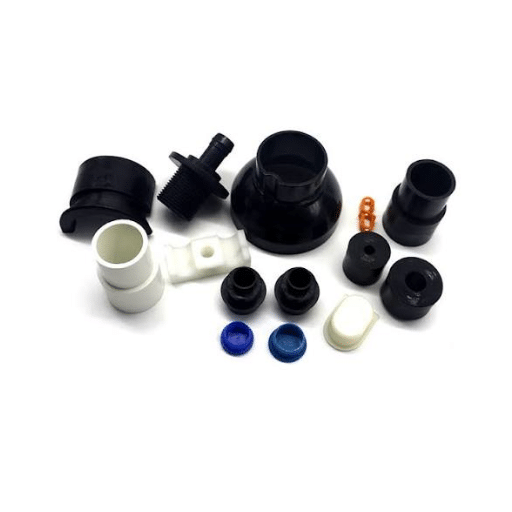
Most HDPE injection molding defects fall into seven categories. The matrix below maps each defect to its most likely root cause and the typical process or material fix.
Defect → Root Cause → Fix Matrix
| Defect | Most Likely Root Cause | Process Fix | Material Fix |
|---|---|---|---|
| Sink marks | Insufficient packing; thick sections | Increase pack pressure/time | Lower MFI grade for thick sections |
| Warpage | Uneven cooling; high shrinkage | Balance cooling; raise mold temp; anneal | Higher density grade |
| Short shots | Low MFI for geometry; cold melt | Raise melt temp; enlarge gates; increase injection speed | Higher MFI grade |
| Weld lines | Multiple flow fronts; low melt temp | Reposition gates; raise melt/mold temp | Higher MFI grade |
| Flash | Worn mold; excessive pressure | Reduce injection pressure; service mold | , |
| Burn marks | Trapped air; excessive shear | Add vents; reduce injection speed | , |
| Brittleness/cracking | Over-drying; excessive residence; wrong MFI | Reduce residence time; verify grade MFI | Confirm MFI matches spec |
ESCR and Stress-Cracking in Service
Environmental stress cracking is the silent long-term failure mode for HDPE injection-molded parts exposed to detergents, fuels, alcohols, or surfactants. It doesn’t show up in initial quality checks, it appears 6–36 months into service as slow crack propagation from stress concentrators.
Mitigations:
- Specify high-ESCR grades for parts with known detergent, fuel, or cleaning-agent exposure
- Avoid sharp internal corners; use radii of at least 0.5× wall thickness
- Reduce residual stress through higher mold temperature and adequate packing
- Test under accelerated ESCR conditions (ASTM D1693) during material qualification for critical applications
HDPE vs PP for Injection Molding
The HDPE vs PP decision is one of the most common material selection questions in commodity injection molding. Both are polyolefins; both are low-cost; both process on the same equipment. The differences matter at the application level.
| Property | HDPE | PP |
|---|---|---|
| Density | 0.941–0.965 g/cm³ | 0.895–0.920 g/cm³ |
| Tensile strength | 20–37 MPa | 25–40 MPa |
| Stiffness (flexural modulus) | 0.8–1.4 GPa | 1.1–1.6 GPa |
| Heat deflection temperature | 70–100°C | 90–110°C |
| Chemical resistance | Excellent (acids, bases, alcohols) | Excellent (slightly broader solvent resistance) |
| Mold shrinkage | 1.5–4.0% | 1.0–2.5% |
| Low-temperature impact | Better (to -50°C) | Limited (brittle below 0°C) |
| Living hinge fatigue | Poor | Excellent |
| Cost (July 2026) | $950–1,250/MT | $850–1,150/MT |
Choose HDPE when chemical resistance to fuels and cleaning agents, low-temperature impact, or stiffness-to-cost ratio drives the decision.
Choose PP when living hinges, higher heat deflection, lower density, or better fatigue performance matters more than HDPE’s chemical and low-temperature advantages.
If your comparison is between polyethylene grades rather than PP, our HDPE vs LDPE: Material Selection Guide for Engineers and Buyers walks through how the two differ in stiffness, flexibility, and typical molding applications.
HDPE Injection Molding in 2026: Market Context
July 2026 pricing for injection-molding-grade HDPE reflects a market split between Asia-origin commodity supply and branded prime import.
Mid-2026 Supply Snapshot
- China-origin injection-grade HDPE: ~USD 950–1,050/MT, soft on domestic oversupply from new coal-to-olefins capacity in Inner Mongolia
- SABIC B1054 FOB Shanghai: ~USD 1,150–1,250/MT, firm on Middle East feedstock costs and steady Asian demand
- LyondellBasell Hostalen GD7255: ~USD 1,200–1,300/MT, premium reflects European-origin brand positioning
- Formosa HDPE 8001: ~USD 1,100–1,200/MT, competitive Taiwan-origin alternative
The USD 100–200/MT premium for branded prime HDPE over commodity China-origin material is typically recovered within 3–6 months through lower scrap rates, fewer process adjustments between lots, and the elimination of incoming-inspection rejections. For molders running OEM-qualified programs, the COA documentation is non-negotiable regardless of price.
Sourcing Injection-Molding-Grade HDPE

The sourcing decision for HDPE injection molding grade resin determines whether your process baseline holds across reorders or drifts with every new lot.
Branded Prime vs. Compound Grades
Compound and recycled-content HDPE carries lot-to-lot MFI swings of ±30% or more. For injection molding, that swing translates to:
- Cavity fill variation causing short shots or flash
- Cycle time drift as melt viscosity shifts
- Shrinkage variation driving dimensional rejects
- Weld line strength variation on multi-gate parts
Branded prime HDPE from SABIC, LyondellBasell, Formosa, Dow, or ExxonMobil carries manufacturer-controlled MFI distributions, typically ±10% within grade. That consistency is what production molders pay for.
How to Verify HDPE via Certificate of Analysis
Every lot of injection-molding-grade HDPE should ship with a manufacturer-issued COA containing:
- Grade designation (e. g., “SABIC HDPE B1054”, not “HDPE injection grade”)
- MFI with test condition (190°C/2.16 kg per ASTM D1238 or ISO 1133)
- Density (g/cm³ per ASTM D792)
- Tensile strength at yield (MPa per ASTM D638)
- Compliance statements (FDA, RoHS, REACH where applicable)
- Lot number and date of manufacture traceable to manufacturer records
Cross-reference the COA values against the manufacturer’s published datasheet within published tolerance. A COA showing MFI 18 on a grade specified at MFI 10 is either mislabeled or off-spec, either way, it will run differently than your process baseline.
Red Flags in Unverified HDPE Supply
- Missing or generic grade designation (“HDPE injection molding resin” without brand and grade)
- Supplier-generated COA without manufacturer letterhead or lot traceability
- Lot-to-lot MFI swings beyond ±15% on reorder
- Price significantly below market benchmark (30%+ below branded prime pricing)
- No physical sample availability for trial qualification
[Ready to qualify a branded prime HDPE grade? Yifuhui ships trial quantities from 25 kg with full manufacturer COA → Request Sample Documentation]
Conclusion
HDPE injection molding rewards precision at three decision points. First, match grade MFI to part geometry, thin-wall closures need MFI 20–35, structural crates need MFI 4–8, and forcing a mismatch guarantees scrap. Second, design the mold for HDPE’s high shrinkage and anisotropic flow, uniform walls, generous draft, balanced cooling. Third, source resin that will run the same way next quarter as it runs today, backed by a manufacturer-issued COA you can verify against published specifications. To gain a deeper understanding of HDPE Supplier China: How to Source Certified Resin Without the Guesswork, please refer to our accompanying guide.
Most production problems in HDPE injection molding trace back to one of these three decisions made loosely. Marcus’s scrap rate didn’t drop because he changed his process, it dropped because he stopped accepting resin he couldn’t verify.
Get started with branded prime HDPE injection-molding grade:
- Request a Quote for SABIC, Basell, Formosa, Dow, or ExxonMobil HDPE →, response within 24 hours, COA samples available
- Trial quantities from 25 kg with FOB Shanghai standard export
- Full documentation package, manufacturer COA, MSDS, commercial invoice, packing list, compliance certificates
Frequently Asked Questions
What is the typical melt temperature for HDPE injection molding?
The typical melt temperature range for HDPE injection molding is 200–280°C, with 230–260°C as the standard operating point for general-purpose grades. Temperatures above 280°C risk thermal degradation, which shows as yellow streaking, reduced impact strength, and upward MFI drift. Residence time in the barrel should stay under 8–10 minutes at processing temperature.
What MFI should HDPE be for injection molding?
The optimal MFI for HDPE injection molding depends on part geometry. Thin-wall caps and closures require MFI 20–35 g/10 min for complete cavity fill and fast cycles. General-purpose housewares run MFI 8–20. Thick-wall structural parts like crates and pails use MFI 4–8 for higher toughness. Selecting MFI outside the range matched to your geometry is a leading cause of short shots, flash, and warpage.
Why does HDPE warp after injection molding?
HDPE warps primarily because of high, anisotropic mold shrinkage, typically 1.5–4.0% with 30–50% higher shrinkage in the flow direction than transverse. Uneven wall thickness, unbalanced cooling, and residual stress amplify the effect. Mitigations include uniform wall design, generous draft angles, higher mold temperature (40–50°C), and in critical cases post-mold annealing.
What is the shrinkage rate of HDPE in injection molding?
HDPE mold shrinkage in injection molding runs 1.5–4.0%, with the exact value depending on grade density, wall thickness, and cooling rate. Higher density grades (0.960–0.965 g/cm³) shrink more than lower density grades (0.941–0.950 g/cm³). Thicker sections shrink more than thin sections. Shrinkage is anisotropic, running 30–50% higher in the flow direction.
How does HDPE compare to PP for injection molding?
HDPE offers better chemical resistance to fuels and cleaning agents, superior low-temperature impact strength (to -50°C), and a lower cost baseline than PP. PP offers better stiffness, higher heat deflection temperature (90–110°C vs HDPE’s 70–100°C), lower density, and excellent living-hinge fatigue performance. Both are widely used in injection molding; the choice depends on the specific application’s chemical, thermal, and mechanical requirements.
What defects are most common in HDPE injection molding?
The most common HDPE injection molding defects are sink marks (from insufficient packing or thick sections), warpage (from high anisotropic shrinkage), short shots (from MFI-geometry mismatch), weld lines (from multiple flow fronts), flash (from worn molds or excessive pressure), burn marks (from trapped air), and brittleness (from excessive residence time or wrong MFI). Most defects have both process-side and material-side fixes.
How do I verify that HDPE resin matches the injection molding grade I specified?
Verify HDPE injection molding grade resin by requesting a manufacturer-issued Certificate of Analysis (COA) that lists the specific grade designation, MFI (with test condition), density, tensile strength, and compliance statements. Cross-reference the MFI and density values against the manufacturer’s published datasheet within published tolerance. Lot-to-lot MFI variation beyond ±15% on reorders, missing grade designations, or supplier-generated COAs without manufacturer letterhead are red flags requiring investigation before production commitment.