



Acetone dissolves PMMA in minutes. Dilute acid, household bleach, salt water, and motor oil barely touch it. Both statements are true, and together they explain why PMMA chemical resistance is one of the most misread properties in engineering plastics.
Most charts rate an unstressed coupon at room temperature and publish a single letter. Real parts have machined edges, fastener holes, molded-in stress, and a cleaning crew. That gap is where failures happen.
This guide gives you the practical answer first, then the conditions behind it. You will get the consolidated chart, the chemicals that attack acrylic, the stress cracking mechanism, cast versus extruded behavior, cleaning rules, alternatives, and a way to verify a supplier’s data before you buy. If you need a grade-specific answer now, request a PMMA datasheet and our team will confirm the data within 24 hours.
What Is PMMA Chemical Resistance?
PMMA chemical resistance is the ability of polymethyl methacrylate to retain its properties after exposure to a chemical at a defined concentration, temperature, time, and stress state. Standard PMMA resists water, dilute acids and alkalis, salts, aliphatic hydrocarbons, and mineral oils at room temperature. It is attacked by ketones, esters, chlorinated and aromatic hydrocarbons, concentrated acids, and gasoline.
The polymer structure explains the pattern. PMMA is amorphous, so there is no crystalline barrier to slow solvent diffusion.
Its ester side groups are also vulnerable to hydrolysis under hot or concentrated acids and bases. Chemicals that resemble the polymer’s polarity, such as acetone, ethyl acetate, and methylene chloride, penetrate and dissolve it. Water and aliphatic hydrocarbons do not.
Two failure modes matter, and they are often confused:
- Chemical attack changes the polymer itself. The surface swells, clouds, crazes, or dissolves.
- Environmental stress cracking (ESC) combines a chemical with tensile stress. The chemical plasticizes a stressed surface, starts a craze, and the craze grows into a crack.
Most published tables test the first mode on unstressed samples. Your part usually fails by the second. The PMMA properties reference covers the broader property set and test conditions behind these ratings.
The common test methods are ASTM D543 and ISO 175. ASTM Practice A covers immersion, while Practice B adds stress. ISO 22088-3 covers environmental stress cracking, and GB/T 11547 is used for Chinese supplier qualification. Results from ASTM and ISO methods are not directly comparable, so compare only values produced the same way.
PMMA Chemical Resistance Chart
Use this table as a screening tool, not an approval. R means suitable for the stated condition. LR means limited or conditional, so test first. N means not resistant or not recommended.
Ratings assume an unstressed immersion coupon at 20 to 23 °C. The second temperature column shows how fast the answer changes.
| Chemical family | Examples | 20 to 23 °C | 50 to 60 °C | Notes |
|---|---|---|---|---|
| Water and salt solutions | Water, seawater, NaCl, CaCl₂ | R | R | Ultra-pure water can cause ESC under tensile stress |
| Soaps and mild detergents | Dish soap 10%, washing agents | R | LR | Concentrated surfactants and dried residue can craze stressed parts |
| Dilute mineral acids | 5 to 10% HCl, 10 to 20% H₂SO₄, ≤20% HNO₃ | R | LR | Sources disagree at 10 to 35%; concentrated acids are N |
| Concentrated mineral acids | 35%+ HCl, 70% H₂SO₄, 70% HNO₃, HF | N | N | Oxidizing acids and HF attack |
| Organic acids | Vinegar 5%, citric 20%, lactic 3% | R | LR to N | Glacial acetic acid is N; hot vinegar and oil blends are N |
| Dilute alkalis | 5 to 10% NaOH, 10% ammonium hydroxide | R | LR | Hot or concentrated alkaline cleaners hydrolyze ester groups |
| Concentrated alkali | 45% NaOH, hot caustic | LR at room temperature | N | Supplier charts list 45% NaOH at room temperature; verify the grade |
| Salts and bleach | NaCl, CaCl₂, 1 to 5% NaOCl | R | LR | 1% NaOCl is generally compatible; 5% can roughen; rinse |
| Hydrogen peroxide | 3% | R | LR | 30% and above is C/D; 90% is N |
| Aliphatic hydrocarbons | Hexane, heptane, kerosene, diesel | R to LR | LR | Specific ratings vary; kerosene A/C, hexane C/C |
| Aromatic hydrocarbons | Benzene, toluene, xylene | N | N | Vapors can craze; gasoline belongs in this group |
| Ketones | Acetone, MEK, MIBK | N | N | Dissolve or cause severe crazing |
| Esters | Ethyl acetate, butyl acetate | N | N | Dissolve; solvent cements use this behavior |
| Chlorinated hydrocarbons | Methylene chloride, chloroform, trichloroethylene | N | N | Dissolve; solvent welding |
| Ethers | Diethyl ether, THF | N | N | Dissolve or craze |
| Alcohols | Methanol, ethanol, IPA | LR | N | 30% ethanol is LR, 95% is N; IPA is A at 20 °C and D at 50 °C in one chart |
| Glycols | Ethylene glycol, propylene glycol | R | LR to N | Glycol is A at 20 °C and D at 50 °C |
| Mineral oils and greases | Motor oil, grease, lubricating oils | R | LR | ASTM #1 oil is B/D; ASTM #3 oil is A |
| Vegetable oils | Olive, sunflower | LR | N | C at 20 °C and D at 50 °C |
| Fuels | Gasoline, diesel, jet fuel | Gasoline N; diesel R to LR | N | Gasoline is D because of aromatics; ethanol blends are worse |
| Brake fluid | DOT 3/4 | N | N | D; do not confuse with aviation Skydrol |
| Washer fluid | Water, alcohol, glycol mix | LR | N | Short ambient exposure only; verify the formulation |
| Ammonia and cleaners | 10 to 25% ammonium hydroxide, ammonia glass cleaner | R at room temperature | N | Ammonia itself rates A/B; formulated additives and stress can still craze |
| Alcohol-based consumer products | Perfume, sunscreen, hand sanitizer | LR to N | N | Standard PMMA crazes; use a chemical-resistant grade |
| Hidden attackers | DOP/DBP plasticizers, solvent cements | N | N | Plasticizer from PVC gaskets or packaging is a common cause of crazing |
| Silicone oil and grease | Silicone lubricants | R | R | Generally compatible |
| Aviation hydraulic fluid | Skydrol (phosphate ester) | R to LR | Verify | Reported good to excellent; confirm with the airframe spec |
Values are typical published ratings. Confirm the exact grade, concentration, temperature, time, and stress condition against the manufacturer datasheet before you specify.
Why Published Charts Disagree
Charts disagree because they answer different questions. One source rates 5% hydrochloric acid A at 20 °C, 10 to 35% as C, and 50 °C as D. Another treats dilute hydrochloric acid as resistant. A third rates aliphatic hydrocarbons as both resistant and severe.
Mitsubishi’s Acrypet PMMA table lists 30% hydrochloric acid, 30% sulfuric acid, 30% nitric acid, and 45% sodium hydroxide as usable at room temperature. Industrial Specialties’ A to D chart is more conservative and shows the 20 °C versus 50 °C cliff.
The lesson is that a family-level letter cannot be carried into a specification. Match the exact chemical, concentration, temperature, duration, and stress state.
What PMMA Withstands

Water, Salt Water, and Aqueous Solutions
PMMA is rated excellent against fresh, salt, and sea water at room temperature. It absorbs only about 0.3 to 0.4% water in 24 hours. Ultra-pure water is the stressed-state exception because it can leach additives and promote ESC.
Dilute Acids and Alkalis
Dilute mineral acids and dilute alkalis are generally compatible at room temperature. Vinegar, citric acid, 5 to 10% sodium hydroxide, and 10% ammonium hydroxide are typical examples. Hot vinegar drops to D at 50 °C, and hot or concentrated alkaline cleaners hydrolyze the ester group.
Salts, Bleach, and Hydrogen Peroxide
Salt solutions, aqueous hypochlorite, and 3% hydrogen peroxide are generally compatible. A 1% sodium hypochlorite solution is used in long-term acrylic disinfection studies. A 5% solution can roughen the surface, so rinse after contact.
Aliphatic Hydrocarbons, Oils, and Greases
Kerosene, diesel, hexane, heptane, mineral oils, and greases are generally compatible at room temperature. Gasoline is not in this group because it contains aromatics.
Foods and Beverages
Vinegar, citric acid, milk, beer, wine, and whiskey are rated compatible at room temperature. Olive oil and vegetable oil are only C at 20 °C and D at 50 °C, so a sneeze guard handles a salad bar but not a hot fryer splash.
What Attacks PMMA
Ketones, Esters, and Ethers
Acetone, MEK, MIBK, ethyl acetate, butyl acetate, diethyl ether, and THF attack PMMA. Ketones and esters often dissolve it outright, which is why solvent cements based on methylene chloride or ethylene dichloride weld acrylic edges.
Chlorinated and Aromatic Hydrocarbons
Methylene chloride, chloroform, trichloroethylene, benzene, toluene, and xylene swell, craze, or dissolve the polymer. Vapors matter too. A closed display case with fresh paint, adhesive, or solvent vapor can craze acrylic without a liquid spill.
Alcohols
Alcohols are the most misunderstood group. Evonik rates 30% ethanol as limited, 95% ethanol as not resistant, 15% methanol as limited, and 100% methanol as not resistant. One compatibility chart rates 70% isopropyl alcohol A at 20 °C but D at 50 °C.
That does not mean an IPA wipe will destroy every acrylic part. It means the answer depends on concentration, temperature, contact time, and stress.
Maya, a fabrication supervisor at a sign shop in Rotterdam, cleaned a 5 mm extruded acrylic panel with 70% IPA before installation. The panel had been flame-polished and tightened to a steel frame.
Two days later, fine white crazes radiated from the fastener holes. The IPA was rated excellent on an unstressed coupon at room temperature. The finished part was neither unstressed nor uniformly at room temperature at the clamp points.
Gasoline and Fuels
Gasoline is rated D at 20 °C and 50 °C because of its aromatic content. Diesel and kerosene are more forgiving, but both drop at elevated temperature, and ethanol blends are worse. Do not specify standard acrylic for fuel contact or fuel-vapor exposure.
Hidden Attackers: Plasticizers, Perfume, Sunscreen, and Hand Sanitizer
Flexible PVC gaskets, packaging film, and rubber seals can release DOP or DBP plasticizers that craze PMMA. Perfume, sunscreen, and 60 to 70% alcohol hand sanitizer are also common attackers that rarely appear in a chemical-resistance chart.
Environmental Stress Cracking: The Real Failure Mode
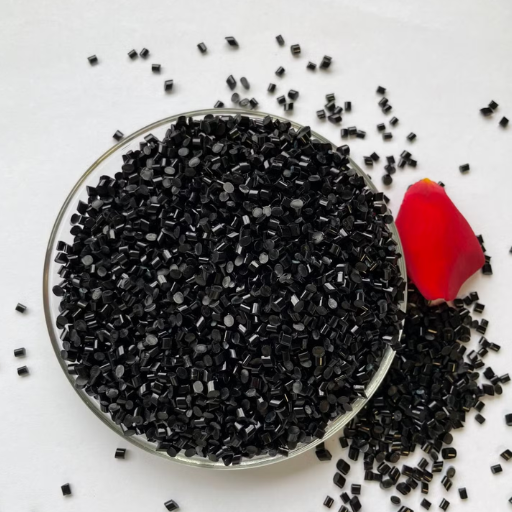
Environmental stress cracking needs a chemical and tensile stress at the same time. The chemical plasticizes the stressed surface, creates a craze zone, and the craze grows into a crack.
Curbell Plastics estimates that ESC causes 15 to 25% of all plastic part failures. For glassy polymers such as PMMA, polycarbonate, ABS, and polystyrene, the share is more than 40%. PMMA is especially exposed because it is amorphous, notch-sensitive, and often machined or flame-polished after molding.
The visual signature is fine white or silvery lines, usually at edges, holes, clamp points, or solvent-bonded joints. Mechanical cracks tend to run in one direction. Chemical cracks branch.
Priya, a medical device engineer in Singapore, validated a clear PMMA housing that was wiped twice per shift with 70% IPA. The unstressed coupon passed. The molded snap fits crazed within three weeks. Her team moved to a medical PMMA grade with documented antiseptic resistance and tested the assembled device, not a flat plaque.
Prevention is mostly design and process discipline:
- Anneal machined, bent, or flame-polished parts to relieve residual stress.
- Radius corners and holes instead of leaving sharp stress concentrators.
- Use compliant mounting so thermal expansion does not load the sheet in tension.
- Specify the cleaning chemistry in the work instruction, not just the material.
- Test the finished geometry under the real chemical, temperature, and stress.
PMMA Chemical Resistance by Grade and Form
Standard optical PMMA is the baseline, but the grade changes the answer. Use the datasheet for the exact grade, not a generic acrylic chart.
| Grade or form | Typical use | Chemical-resistance notes | What to verify |
|---|---|---|---|
| Standard optical / GP cast | Lenses, displays, signage | Baseline; cast generally best against ESC due to higher molecular weight and lower residual stress | Grade datasheet, annealing, cleaner compatibility |
| Standard GP extruded | Signage, thermoforming, cost-sensitive sheet | Lower molecular weight and higher residual stress; more ESC-prone | Stress state, cleaner compatibility, annealing |
| Impact-modified | Housings, medical, durable sheet | Similar general profile; rubber phase and grade-specific data; some medical grades are tested for IPA and antiseptics | Grade-specific chart, medical disinfectant data |
| Heat-resistant | Automotive, lighting | Similar chemical profile; confirm additive effects | Datasheet and temperature ratings |
| Flame-retardant | Electronics, construction | FR additives can change chemical behavior | Grade-specific chart and UL rating |
| Cross-linked chemical-resistant | Cosmetics, perfume, sunscreen, displays | Altuglas Essential claims 60 times the resistance of extruded and 5 times cast PMMA to a perfume diluent | ISO/CD 22088-3 data and post-fabrication validation |
| Hard-coated | Optical, automotive, displays | Coated side resists acetone, toluene, and acetates for more than 24 hours; edges and back remain unprotected | Coating coverage and abrasion test |
| Medical-grade | Device housings, labware | PLEXIGLAS SG7-type grades are cited for IPA, antiseptic, and lipid resistance | Disinfectant protocol and sterilization validation |
Cast vs Extruded Acrylic
Cast acrylic generally resists chemicals and ESC better than extruded acrylic. Cast sheet has longer chains and lower locked-in stress; extruded sheet has lower molecular weight and more orientation, so a solvent starts a craze more easily.
The difference is a tendency, not a guarantee. An annealed extruded part can perform well, and a badly machined cast part can still fail. Density cannot tell the two forms apart.
Chemical-Resistant and Coated Grades
Cross-linked grades such as Altuglas Essential and Plaskolite OPTIX Chemical-Resist are formulated for perfume, cosmetic, and cleaning-agent exposure. They reduce crazing but do not make PMMA solvent-resistant. Hard coats protect the coated face only, so edges, holes, and the back still need protection.
If you are comparing grade families for a chemical exposure, our PMMA resin supplier page lists the stocked grades and documentation we can provide. The broader PMMA material guide explains how cast, extruded, and molded forms differ in production. To learn more about Acrylic PMMA Resin: Complete Grade Selection and Sourcing Guide for Injection Molding, please refer to our accompanying guide.
Cleaning and Disinfecting Acrylic
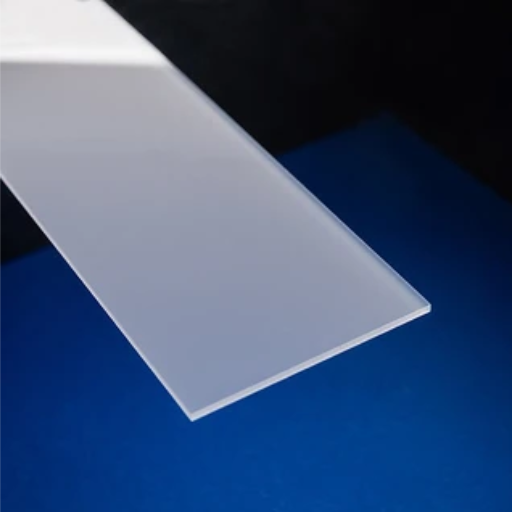
Most acrylic failures blamed on bad material start with the wrong cleaner. The safe default is lukewarm water, mild dish soap, and a soft microfiber cloth, and never wipe the surface dry.
For specific cleaners:
- 70% isopropyl alcohol: short contact at room temperature only. It is rated excellent at 20 °C and severe at 50 °C in one chart. Test stressed and extruded parts first.
- Ammonia-based glass cleaners: ammonia itself is rated well at room temperature, but formulated cleaners contain surfactants and solvents. Test on an inconspicuous area, and avoid them on stressed or flame-polished parts.
- Bleach and hydrogen peroxide: dilute, short contact, and rinse. A 5% hypochlorite solution can roughen the surface over time.
- Hand sanitizer: 60 to 70% alcohol gels are a real crazing risk on standard PMMA. Use a chemical-resistant or medical grade and validate the assembled part.
- Never use: acetone, MEK, lacquer thinner, chlorinated degreasers, abrasive pads, or paper towels.
Residue matters as much as the chemical. A cleaner that evaporates concentrates its active ingredients on the surface. Rinse with clean water and dry promptly with a soft cloth.
When PMMA Is the Wrong Choice
PMMA is an optical and appearance polymer, not a chemical-tank polymer. When the exposure is aggressive, change the material instead of stretching the acrylic grade.
| Exposure | PMMA | PC | PETG | POM | PTFE |
|---|---|---|---|---|---|
| Water and salt water | R | R, short-term | R | R | R |
| Dilute acids | R | R | R | LR | R |
| Dilute alkalis and ammonia | R | LR to N | R | R | R |
| Alcohols | LR | LR | R | R | R |
| Ketones | N | N | LR to N | R | R |
| Aromatics and chlorinated solvents | N | N | N | R to LR | R |
| Gasoline and fuels | N | N | LR | R | R |
| Hot water and steam | LR, softens | N, hydrolysis | LR | LR | R |
| ESC risk | High | High | Moderate | Moderate | Low |
PETG often handles cleaning agents and alcohols better than PMMA, though it gives up heat resistance, UV stability, and scratch resistance. POM is the better choice for fuels, oils, and many solvents, but it is attacked by strong acids. PTFE is the honest answer for aggressive chemicals when you do not need transparency.
Polycarbonate is not the fix. It is also ESC-prone, weaker against dilute bases and ammonia, and hydrolyzes in hot water. Our PMMA vs polycarbonate comparison covers the full trade-off, and the polycarbonate chemical resistance guide covers PC media by media.
For signage, displays, automotive lighting, medical housings, laboratory guards, food service, and aquarium windows, PMMA can be the right material. For chemical tanks, fume hoods, solvent vapor enclosures, and fuel systems, it is usually the wrong one. If POM looks closer to your exposure, the POM chemical resistance guide covers that material in depth.
How to Verify PMMA Chemical Resistance Before You Buy
A chemical-resistance claim is only as good as the documentation behind it. A grade datasheet should name the grade, test method, chemical, concentration, temperature, time, stress condition, and result. A table that says “acrylic is resistant to acids” without those details is marketing, not engineering data.
A Certificate of Analysis is a different document. It ties lot properties to a specific batch: grade designation, lot number, melt flow index, density, residual monomer, and optical data. It usually does not certify chemical resistance. If a supplier says the COA proves chemical compatibility, ask for the grade datasheet and the test report instead.
The tests to request are ASTM D543, ISO 175, ISO 22088-3, or GB/T 11547. Then test a finished part. A flat coupon does not reproduce machined edges, molded-in stress, clamp loads, or the way a cleaner dries in a corner.
Lukas, a procurement manager at an industrial enclosure maker in Poland, received three quotes for “chemical-resistant PMMA.” One quoted a standard grade. One quoted a flame-retardant grade. Only one supplied an ISO 175 report for the actual cleaning agent, and that quote won the order because the data matched the exposure.
Red flags are easy to spot once you know them:
- A generic compatibility chart with no grade or conditions.
- “Chemical resistant” with no test method or report.
- A COA presented as chemical-resistance certification.
- A supplier who cannot name the grade or the manufacturer.
- A price that is far below the branded grade it claims to be.
We supply branded PMMA with manufacturer-issued COAs and lot traceability, including ACRYLITE, PLEXIGLAS, Acrypet, LG MMA, and Chi Mei grades. Send us the chemical, concentration, temperature, contact time, and stress state, and we will confirm which grade fits and what documentation comes with the lot. Request a PMMA datasheet or quote and our team will respond within 24 hours.
Frequently Asked Questions
Is PMMA chemical resistant?
Yes, conditionally. Standard PMMA resists water, dilute acids and alkalis, salts, aliphatic hydrocarbons, and mineral oils at room temperature. It is not resistant to ketones, esters, chlorinated or aromatic hydrocarbons, concentrated acids, or gasoline.
What chemicals is PMMA not resistant to?
Acetone, MEK, ethyl acetate, methylene chloride, chloroform, toluene, xylene, benzene, concentrated hydrochloric or sulfuric acid, hydrofluoric acid, gasoline, brake fluid, and DOP/DBP plasticizers. Alcohols are limited, not broadly compatible.
Is acrylic resistant to acetone?
No. Acetone is a ketone, and PMMA is rated D or “not resistant.” It dissolves or severely crazes the surface. Never use acetone to clean acrylic.
Is acrylic resistant to isopropyl alcohol?
Only conditionally. One compatibility chart rates 70% IPA A at 20 °C and D at 50 °C. Short contact on an unstressed part is usually fine. Prolonged contact, heat, or tensile stress can craze it.
Can I clean acrylic with alcohol?
Use diluted alcohol sparingly, at room temperature, and test first. Do not use it on stressed, extruded, or flame-polished parts without validation. Mild soap and water are safer for routine cleaning.
Is acrylic resistant to bleach?
Dilute sodium hypochlorite is generally compatible. A 1% solution is used in long-term acrylic disinfection studies. A 5% solution can roughen the surface, so keep contact short and rinse.
Is acrylic resistant to gasoline?
No. Gasoline is rated D at 20 °C and 50 °C because of its aromatic content. Diesel and kerosene are more forgiving, but they still need verification for the actual exposure.
Is acrylic resistant to hand sanitizer?
Standard PMMA is at risk from 60 to 70% alcohol gels, especially on stressed parts. Use a chemical-resistant or medical grade and validate the assembled device with the actual product.
Does cast acrylic resist chemicals better than extruded?
Generally, yes. Cast acrylic has higher molecular weight and lower residual stress, so it resists solvent crazing better. The difference is a tendency, not a guarantee, and annealing and fabrication still matter.
What causes crazing in acrylic?
Crazing needs a chemical plus tensile stress. Common triggers are machining and flame polishing, tight fasteners, thermal expansion, alcohol or solvent cleaners, and plasticizer migration from gaskets or packaging.
Conclusion
PMMA chemical resistance has a clear core and a wide conditional edge. Standard acrylic handles water, dilute acids and alkalis, salts, aliphatic hydrocarbons, and mineral oils at room temperature. It does not handle acetone, toluene, chlorinated solvents, concentrated acids, gasoline, or brake fluid.
The conditions decide the rest. Temperature turns an A into a D, and stress turns a compatible cleaner into a craze. Cast sheet, annealing, chemical-resistant grades, and hard coats improve the odds, but none of them makes PMMA a solvent-resistant polymer.
Use the chart to screen, the datasheet to specify, and a finished-part test to approve. If you are choosing a grade for a real exposure, send us the chemical, concentration, temperature, contact time, and stress state. We will confirm the grade, documentation, and lot before you commit. Request a quote for certified PMMA resin and we will include the datasheet and lot COA with the reply.