




Maria’s irrigation project looked perfect on paper. She specified rigid PVC pipe for a commercial nursery system because it was stiff, familiar, and cheaper per meter than the alternative. After the first hard freeze, the maintenance crew found longitudinal cracks running through half the runs. The pipe had become brittle at -5°C and failed under soil movement that a more ductile material would have absorbed. The repair cost more than double the original material savings.
This is the practical reality behind the HDPE vs PVC decision. Both are commodity thermoplastics with enormous global production volume, and both serve piping, packaging, construction, and industrial applications.
Their mechanical behavior, chemical tolerance, processing characteristics, and lifecycle economics diverge widely. Substituting one for the other without analysis can lead to field failures, warranty claims, and production rejects.
This guide compares HDPE and PVC on the properties that actually drive specification decisions. It also covers cost, sustainability, and the practical side of sourcing certified HDPE resin from China. By the end, you will know which material fits your application and what documentation to demand from your supplier.
What Is the Difference Between HDPE and PVC?
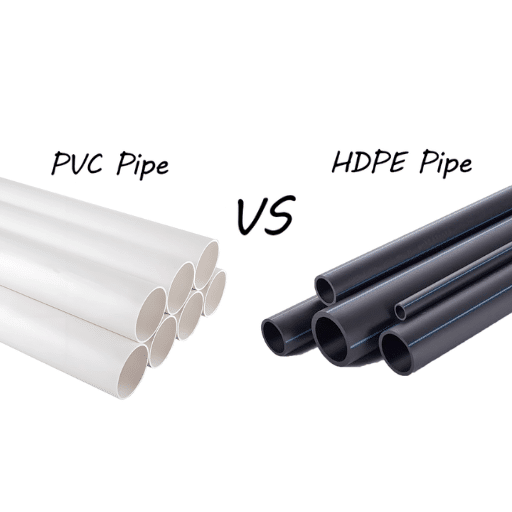
The core HDPE vs PVC difference comes down to chemistry and structure. HDPE is a semi-crystalline polyolefin built from ethylene monomers, giving it low density, high ductility, and broad chemical resistance. PVC is a vinyl polymer that contains chlorine, making it denser, stiffer, and naturally flame retardant, but also more brittle at low temperatures and less compatible with many solvents.
In practical terms, the high density polyethylene vs polyvinyl chloride decision is a trade-off between toughness and stiffness. HDPE absorbs impact and handles extreme cold. PVC resists deflection under load and self-extinguishes when exposed to flame. For a quick side-by-side view, see the comparison table below after the individual material profiles.
What Is HDPE?
High-density polyethylene (HDPE) is a semi-crystalline polyolefin produced by polymerizing ethylene under low pressure. The result is a linear polymer chain with high crystallinity, giving HDPE its characteristic balance of stiffness, toughness, and chemical resistance.
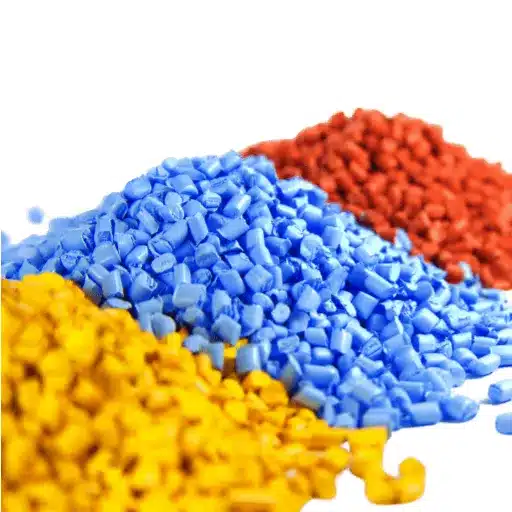
For engineers and procurement teams, HDPE is best understood as a tough, flexible, chemically inert thermoplastic with excellent processability. It is supplied as virgin resin pellets for injection molding, extrusion, blow molding, and rotational molding.
Key properties of HDPE:
- Density: 0.93–0.97 g/cm³
- Tensile strength: 20–37 MPa, depending on grade
- Tensile modulus: ~0.9–1.1 GPa
- Elongation at break: 400–700%, indicating high ductility
- Melting point: 130–137°C
- Service temperature range: approximately -40°C to 60°C
- Moisture absorption: near zero
- Chemical resistance: excellent to acids, alkalis, alcohols, and hydrocarbons
- UV resistance: good with stabilization; widely used in outdoor applications
HDPE is common in pipe systems, chemical storage tanks, outdoor furniture, marine components, food containers, and industrial liners. Its ability to withstand impact at low temperatures and its broad chemical compatibility make it the default choice for applications where long-term durability matters more than maximum rigidity.
For a deeper technical overview of HDPE grades and processing, see our HDPE plastic material guide.
What Is PVC?
Polyvinyl chloride (PVC) is a vinyl polymer produced by polymerizing vinyl chloride monomer. The polymer contains chlorine, which contributes to its density, flame-retardant behavior, and polar chemical character. PVC is rarely used in its pure form; it is compounded with stabilizers, lubricants, and, in flexible grades, plasticizers.
When engineers compare HDPE vs PVC, they are usually comparing HDPE to rigid PVC (uPVC). Flexible PVC is a different material class with plasticizer-dependent properties and should be evaluated separately.
Key properties of rigid PVC:
- Density: 1.38–1.48 g/cm³, significantly heavier than HDPE
- Tensile strength: 34–62 MPa, higher than most HDPE grades
- Tensile modulus: 2.8–3.3 GPa, roughly three times stiffer than HDPE
- Elongation at break: 50–80%, more brittle than HDPE
- Softening / Vicat temperature: begins around 80°C
- Maximum service temperature: typically 50–60°C under load
- Chemical resistance: good to acids, alkalis, and salts; vulnerable to ketones, esters, aromatics, and strong oxidizers
- Flame behavior: self-extinguishing due to chlorine content
Rigid PVC dominates window profiles, electrical conduit, drainage pipe, siding, and rigid structural components where stiffness and low cost are the primary drivers. Its higher density and lower impact ductility are trade-offs engineers accept for applications that do not require flexibility or extreme chemical exposure.
HDPE vs PVC: Property Comparison
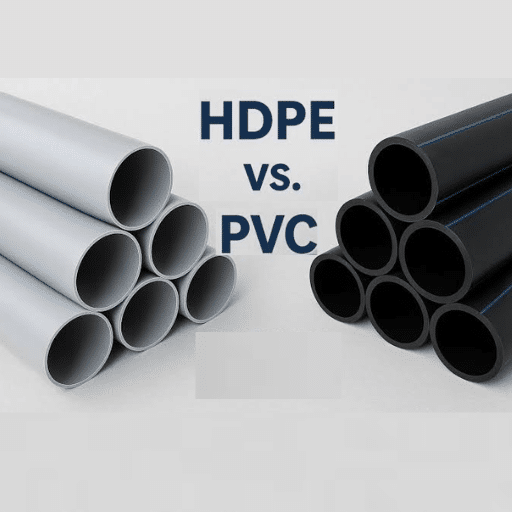
The difference between HDPE and PVC becomes clearer when the materials are compared side by side. The table below uses typical values for injection-molding or pipe-grade materials. Always confirm the specific grade datasheet before specifying.
| Property | HDPE | Rigid PVC (uPVC) |
|---|---|---|
| Density | 0.93–0.97 g/cm³ | 1.38–1.48 g/cm³ |
| Tensile strength | 20–37 MPa | 34–62 MPa |
| Flexural modulus | ~0.9–1.1 GPa | ~2.8–3.3 GPa |
| Elongation at break | 400–700% | 50–80% |
| Melting / softening point | 130–137°C | Softens ~80°C |
| Service temperature | -40°C to ~60°C | -10°C to ~60°C |
| Impact resistance | High; ductile at low temperature | Moderate; brittle at low temperature |
| Chemical resistance | Excellent across broad pH and solvents | Good to acids/alkalis; poor to solvents |
| UV resistance | Good with stabilization | Degrades without stabilizers |
| Moisture absorption | Near zero | Low |
| Flame behavior | Burns; requires FR additives for rating | Self-extinguishing |
Key takeaway: PVC is stiffer, denser, and stronger in tension than HDPE. HDPE is tougher, more ductile, lighter, and more chemically resistant across a wider range of environments.
Mechanical Behavior Under Load
Tom’s team at a chemical equipment manufacturer learned this distinction the hard way. They initially specified rigid PVC for a rectangular tank liner because the higher modulus promised less deflection under hydrostatic load.
During a winter delivery, a corner of the liner cracked during installation at 2°C. The same design in HDPE deformed slightly under load but absorbed handling stresses without cracking. Tom switched the specification to HDPE and accepted the small additional deflection in exchange for field reliability.
The practical lesson is that modulus is not the only mechanical metric that matters. HDPE’s much higher elongation at break means it can deform locally without catastrophic failure. PVC’s higher stiffness is an advantage in rigid, well-supported structures but becomes a liability in applications with impact, vibration, or cold-temperature handling.
Chemical Resistance
HDPE generally outperforms PVC in chemical environments involving organic solvents, hydrocarbons, and oils. PVC performs well against dilute acids and alkalis but degrades faster in concentrated acids above ~60°C and is attacked by ketones, esters, and aromatic hydrocarbons.
For plating tanks, fume hoods, and mild acid handling, rigid PVC is a proven and cost-effective choice. For fuel containers, chemical storage tanks, and industrial liners exposed to mixed or unknown chemical media, HDPE is the safer specification.
HDPE vs PVC: Cost and Lifecycle
Procurement comparisons often start with material price, but the real question is total cost over the design life.
Upfront Material Cost
PVC resin typically costs less per kilogram than HDPE in most markets. For simple rigid applications with short service lives, this makes PVC attractive. Pipe-specific estimates from industry sources place PVC at roughly 0.90–0.90–2.50 per foot and HDPE at 1.50–1.50–3.00 per foot for comparable diameters, though prices vary by region, grade, and volume.
Installation and Maintenance
HDPE pipe systems use heat-fusion joints that create monolithic, leak-free connections. This reduces fitting count, installation labor, and long-term maintenance. PVC systems use solvent cement, gaskets, or bell-and-spigot joints, which create more potential leak paths and require more fittings in directional changes.
Industry estimates suggest HDPE pipe failure rates are roughly one failure per 10 million feet, compared with one failure per 48,650 feet for PVC in some infrastructure datasets. These figures are directional, but they illustrate why HDPE is preferred for critical buried or dynamic-soil installations.
Lifespan and Total Cost
- HDPE lifespan: 50–100 years in buried pipe and infrastructure applications
- PVC lifespan: 25–70 years, depending on grade, UV exposure, and installation quality
For a 50-year infrastructure horizon, HDPE often has a lower total cost of ownership despite a higher upfront material price. For short-term, low-pressure, above-ground applications, PVC’s lower first cost can be the right economic choice.
HDPE vs PVC: Sustainability and Recyclability

Sustainability is becoming a specification input for procurement teams, especially in packaging and construction. The two materials differ meaningfully in carbon footprint and recycling infrastructure.
Carbon Footprint
According to a 2025 lifecycle review published by researchers at Hamburg University of Applied Sciences, PVC has the highest cradle-to-gate carbon footprint among major commodity plastics at approximately 7.83 kg CO₂-eq/kg, while HDPE is estimated at approximately 2.9 kg CO₂-eq/kg. Mechanical recycling can reduce the climate impact of either material to roughly 0.35–0.51 kg CO₂-eq/kg, emphasizing the importance of end-of-life collection.
Recycling Rates
HDPE is one of the most recycled commodity plastics. The Association of Plastic Recyclers estimates the U.S. recycling rate for HDPE bottles and containers at approximately 19.1%, second only to PET. PVC recycling is significantly lower and more fragmented, though industry initiatives such as VinylPlus target increasing recycled PVC volumes in construction applications.
The lower recycling rate for PVC is partly due to additive packages, stabilizers and plasticizers in flexible grades, that complicate mechanical recycling and limit end-market applications.
Regulatory Trends
The U.S. Plastics Pact baseline report notes that national plastic packaging recycling remains around 13%, well below the 2025 target of 50%. The Pew “Breaking the Plastic Wave 2025” report argues that systemic shifts could eliminate PVC from packaging and reduce HDPE packaging use by 67% by 2040 through reuse and material substitution.
For buyers, the practical implication is that HDPE offers a clearer recycling pathway and lower embodied carbon than PVC. If your application requires sustainability documentation or recycled-content options, HDPE is generally easier to justify.
When to Choose HDPE vs. PVC
The following decision matrix maps common application scenarios to the better material choice. Use it as a starting point, then validate against the specific grade datasheet.
Choose HDPE When:
- Chemical exposure is severe, variable, or includes hydrocarbons and solvents
- The application requires impact resistance at low temperatures
- Long service life with minimal maintenance is the priority
- UV exposure is significant and stabilization is feasible
- Leak-free joints are critical, as in water or gas distribution
- Weight matters, HDPE is roughly 30% lighter than PVC
- Recyclability and lower carbon footprint are specification requirements
Choose PVC When:
- Maximum rigidity and stiffness are required in a well-supported structure
- The chemical environment is limited to dilute acids, alkalis, or aqueous salts
- Flame retardancy without additive loading is important
- Upfront material cost is the dominant constraint
- The application is above ground, low pressure, and short-to-medium term
- Electrical insulation or conduit properties are required
Critical caveat: Flexible PVC should not be compared directly to HDPE. Its properties are dominated by the plasticizer system and vary widely between formulations.
Sourcing HDPE Resin from China
Once the material decision is made, the next question for many international buyers is where to source reliable resin. China is one of the largest global producers and exporters of polyethylene resin, and Suzhou-Shanghai is a major hub for engineering plastics distribution.
However, not all HDPE supply from China is equivalent. Buyers should distinguish between:
- Virgin branded prime resin, material from recognized petrochemical producers with consistent specifications
- Commodity / off-grade material, resin that may not meet datasheet specifications consistently
- Recycled or regrind HDPE, lower cost but variable properties, typically unsuitable for regulated or high-performance applications
What to Request from Your Supplier
A qualified HDPE supplier should provide:
- Certificate of Analysis (COA) for every lot, showing MFI, density, tensile properties, and compliance status
- Material Safety Data Sheet (MSDS) for customs clearance and handling
- Commercial invoice and packing list specifying grade, lot number, and quantity
- Compliance certificates such as FDA, RoHS, or REACH where applicable
- Sample material from the same lot before a volume order
Supplier Verification Matters
Linda, a procurement manager at a European packaging company, switched suppliers after receiving two consecutive HDPE lots with MFI values that deviated by more than 15% from the published datasheet. The variation caused cycle-time drift on her extrusion line and forced her to reject a full production batch.
Her new supplier provided manufacturer-issued COAs, lot traceability, and 25 kg trial quantities from the same lot as future production material. The qualification process took longer, but her line stability improved immediately.
This is why batch traceability and documentation consistency matter as much as price. A low unit price loses its value quickly if off-spec material disrupts production.
How Yifuhui Supports HDPE Sourcing
At Yifuhui, we supply certified HDPE resin with full manufacturer-issued COA documentation, MSDS, and export paperwork. Our standard minimum order quantity is 25 kg, which makes branded-grade HDPE accessible for R&D trials and qualification testing without a large volume commitment.
We ship from Suzhou with standard export terms including FOB Shanghai and CIF destination port. Our documentation package is prepared before shipment to support customs clearance and your incoming quality inspection.
Request an HDPE Quote, Response Within 24 Hours
If your application requires a specific MFI range, UV stabilization, or food-contact compliance, tell us your specification. We will identify the appropriate HDPE grade and confirm COA availability before quoting.
HDPE vs PVC: Final Selection Checklist
Before finalizing your material specification, confirm the following:
- Operating temperature range: Will the material see temperatures below -10°C or sustained loads above 50°C?
- Chemical exposure: Are hydrocarbons, solvents, or strong oxidizers present?
- Mechanical load: Is stiffness or toughness the more critical property?
- Jointing method: Can the system tolerate segmented joints, or is a fused monolithic system required?
- Service life: Is the design horizon 5–10 years or 50+ years?
- Sustainability requirements: Are recycled content or carbon-footprint targets part of the specification?
- Supplier documentation: Can your supplier provide COA, MSDS, and lot traceability for every shipment?
Answering these questions will point you toward the right material more reliably than comparing generic property tables alone.
Conclusion
HDPE vs PVC is not a contest with one universal winner. It is a trade-off between stiffness and toughness, upfront cost and lifecycle cost, chemical resistance breadth and flame-retardant chemistry.
Choose HDPE when your application demands ductility, broad chemical resistance, long service life, and reliable sourcing documentation. Choose rigid PVC when stiffness, low upfront cost, and flame retardancy are the decisive requirements.
For engineers and procurement teams sourcing HDPE from China, the final quality decision rests as much on the supplier as on the material. Verify COA documentation, confirm lot traceability, and request a trial quantity before committing to production volume. A qualified supplier will welcome that verification process. To gain a deeper understanding of HDPE vs PP: Material Selection Guide for Engineers and Buyers, please click to refer to our accompanying guide.
At Yifuhui, we supply certified HDPE resin with full documentation, starting from 25 kg MOQ. Contact our technical team with your application requirements and we will recommend the right grade for your production needs.
Frequently Asked Questions
Is HDPE stronger than PVC?
Rigid PVC has higher tensile strength and flexural modulus than HDPE, so it is stiffer and stronger in tension. However, HDPE is much tougher, with significantly higher impact resistance and elongation at break. “Stronger” depends on whether you measure stiffness or resistance to fracture.
Which is better for outdoor use, HDPE or PVC?
HDPE is generally better for outdoor use because it has better inherent UV stability and remains ductile at low temperatures. Rigid PVC degrades and becomes brittle under prolonged UV exposure unless heavily stabilized.
Can HDPE and PVC be recycled together?
No. HDPE and PVC have different melt behaviors, densities, and chemistries. They must be separated before recycling. Mixed recycling streams reduce material quality and can contaminate recycled HDPE batches.
Is HDPE pipe more expensive than PVC pipe?
HDPE pipe typically has a higher upfront material cost than PVC pipe. However, HDPE’s heat-fusion joints, longer lifespan, and lower maintenance often result in a lower total cost of ownership over a 50-year infrastructure life.
What documentation should I receive with HDPE resin from China?
Every shipment should include a manufacturer-issued Certificate of Analysis (COA), Material Safety Data Sheet (MSDS), commercial invoice, and packing list. For regulated applications, request FDA, RoHS, or REACH compliance certificates as applicable.
Does Yifuhui supply PVC resin?
Yifuhui focuses on branded engineering resins including HDPE, POM, PA66, PC, PTFE, and related materials. Our sourcing guidance and stock availability center on HDPE for applications where toughness, chemical resistance, and certified documentation are priorities.