
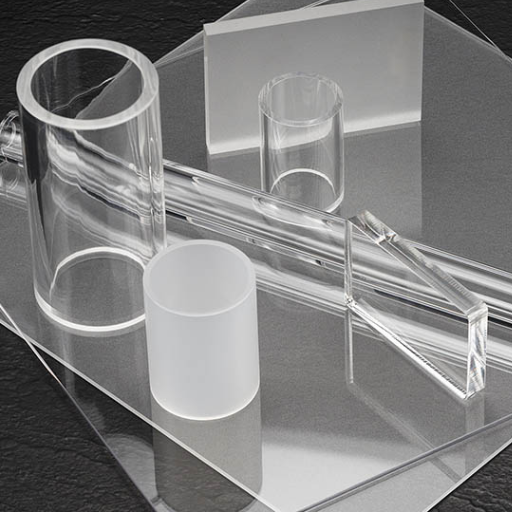



A frozen crate falls three meters onto a loading dock. Inside, bottles of detergent have survived the impact without cracking because the supplier specified HDPE. Three hundred kilometers away, a hot-fill juice line runs at 85 degrees Celsius, and the caps keep snapping closed cleanly because the molder chose PP with a living-hinge design. These two scenarios capture the practical reality of HDPE vs PP: both are polyolefins, both are inexpensive and widely recyclable, but they fail in completely different ways when pushed beyond their comfort zones.
If you are comparing HDPE vs polypropylene for a new part, a resin switch, or a sourcing project, you need more than a generic property table. You need to understand why one material behaves differently under load, heat, chemicals, and impact, and you need to know how to verify that the resin you buy actually matches the specification sheet. This guide compares HDPE and PP on structure, properties, processing, cost, and real applications, and it closes with the sourcing details engineers rarely see in standard comparison articles.
What Is HDPE?

High-density polyethylene (HDPE) is a semi-crystalline thermoplastic made by polymerizing ethylene with very little chain branching. The result is a tightly packed linear structure with a typical density of 0.941–0.965 g/cm³ per ASTM D792 and crystallinity between 70% and 85%. That tight packing gives HDPE its characteristic combination of stiffness, toughness, and chemical resistance while keeping moisture absorption essentially negligible.
HDPE carries recycling code #2 and is the most common polyethylene used for rigid packaging, pipes, and industrial containers. Its molecular regularity also makes it easy to process by injection molding, blow molding, and extrusion, though its relatively high shrinkage can challenge tight-tolerance part design. For a deeper look at HDPE characteristics, see our high-density polyethylene material guide.
Key Characteristics of HDPE
- Excellent toughness and impact resistance, especially at low temperatures
- Good chemical resistance to acids, bases, and many solvents
- Outstanding environmental stress crack resistance (ESCR) when properly formulated
- Low moisture absorption, making it suitable for wet and outdoor environments
- Lower continuous service temperature than PP, typically around 60°C in unstabilized grades
What Is PP?
Polypropylene (PP) is also a semi-crystalline polyolefin, but its polymer backbone carries methyl side groups that change the way chains pack together. That steric disruption reduces crystallinity compared with HDPE, yet PP still achieves a higher melting point because the methyl groups stiffen the chain. Typical PP density is 0.895–0.92 g/cm³, making it lighter than HDPE, and recycling code is #5.
The same methyl groups that improve heat resistance reduce low-temperature toughness. Standard homopolymer PP becomes brittle below roughly 0°C to -10°C, though random and impact copolymers can extend that range. PP also offers a harder surface feel and better fatigue resistance for living-hinge applications like flip-top caps.
Key Characteristics of PP
- Higher melting point and continuous service temperature than HDPE, up to 100–120°C for homopolymer grades
- Stiffer and harder surface than HDPE at room temperature
- Excellent fatigue resistance for repeated flexing and living hinges
- Lower density than HDPE, so parts can be lighter for the same volume
- Good chemical resistance, though less resistant to some aromatic and chlorinated solvents than HDPE
HDPE vs PP: Key Differences
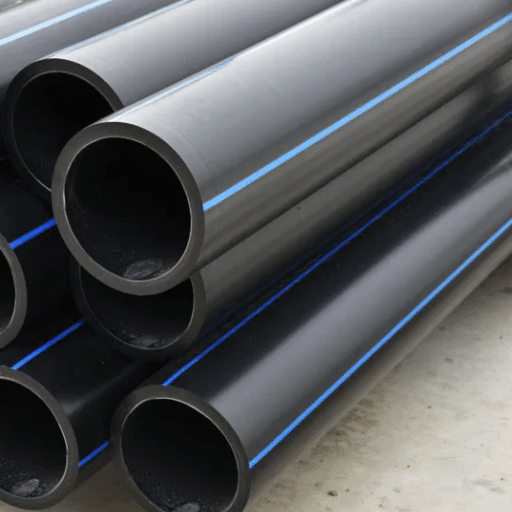
The difference between HDPE and PP comes down to molecular architecture. HDPE chains are linear and pack tightly, producing toughness and ESCR. PP chains are interrupted by methyl side groups, producing stiffness and heat resistance but sacrificing some low-temperature ductility.
HDPE and PP are not the only two polyolefins engineers weigh against each other. If your shortlist also includes rigid chlorinated or engineering polymers, our HDPE vs PVC: Material Selection Guide for Engineers and Buyers and our HDPE vs ABS: Material Selection Guide for Engineers and Buyers walk through those trade-offs in the same structured way.
Molecular Structure and Crystallinity
HDPE is essentially a long chain of CH₂ units with minimal branching. The chains align easily into crystalline regions, giving high stiffness-to-density ratio and excellent chemical barrier properties. PP has a CH₃ side group on every other carbon, which interrupts crystallization and forces the polymer into different crystalline forms, most commonly the alpha form. Despite lower crystallinity than HDPE, PP’s chain stiffness gives it a higher melting point.
Density and Weight
PP is lighter. At 0.895–0.92 g/cm³, PP can reduce part weight by roughly 5–8% compared with HDPE for the same geometry. For large-volume packaging or automotive components, that weight saving can translate into meaningful freight and material cost reductions. HDPE at 0.941–0.965 g/cm³ still offers one of the best stiffness-to-weight ratios among commodity thermoplastics.
Mechanical Behavior
PP homopolymer generally has higher tensile strength and flexural modulus than HDPE, which is why PP feels stiffer and holds tighter dimensional tolerances in thin-wall parts. HDPE is more ductile and absorbs impact energy through deformation rather than fracture. At subzero temperatures, HDPE retains useful impact performance while standard PP becomes notch-sensitive.
Thermal Performance
PP outperforms HDPE at elevated temperature. HDPE softens and loses load-bearing capability above approximately 60°C, while PP homopolymer can serve continuously at 100–120°C depending on grade and load. PP’s melting point range of 143–165°C also exceeds HDPE’s 126–139°C, making PP the safer choice for hot-fill packaging, dishwasher-safe parts, and underhood automotive components.
Chemical Resistance
Both materials resist water, acids, and bases well. HDPE has superior environmental stress crack resistance in the presence of surfactants and some organic liquids, which is why detergent bottles and chemical drums favor HDPE. PP tolerates higher temperatures in chemical service and resists some oxidizing acids better, but it is more susceptible to swelling or embrittlement in aromatic hydrocarbons, chlorinated solvents, and strong oxidizers.
HDPE vs PP Properties Comparison
| Property | HDPE | PP (Homopolymer) |
|---|---|---|
| Density (g/cm³) | 0.941–0.965 | 0.895–0.92 |
| Crystallinity | 70–85% | ~50–70% |
| Tensile Strength, Yield (MPa) | 17.5–26 | 23.4–33.1 |
| Flexural Modulus (MPa) | 600–1,400 | 1,100–1,700 |
| Elongation at Break (%) | 50–1,000+ | 50–600 |
| Melting Point (°C) | 126–139 | 143–165 |
| Heat Deflection Temp, 0.45 MPa (°C) | 60–88 | 90–110 |
| Continuous Service Temp (°C) | ~60 | 100–120 |
| Notched Izod Impact (J/m) | 20–1,000+ | 20–60 (homopolymer) |
| Moisture Absorption (%) | <0.01 | <0.01–0.1 |
| Mold Shrinkage (%) | 1.5–4.0 | 1.0–2.5 |
| Recycling Code | #2 | #5 |
Values are typical ranges for unfilled injection-molding grades tested per ASTM D638, D792, and D648. Always validate against the manufacturer’s datasheet for the specific grade you are sourcing.
What the Numbers Mean for Part Design
When you see PP’s higher flexural modulus, think thin-wall rigidity, snap-fit retention, and caps that do not flex open under spring pressure. When you see HDPE’s higher elongation and impact values, think drop resistance, cold-chain durability, and parts that deform rather than crack under sudden load.
The difference in mold shrinkage matters for tooling. HDPE’s wider shrinkage range makes tight-tolerance features more challenging, especially for parts with varying wall thickness. PP’s lower, more predictable shrinkage simplifies mold design but still demands attention to gate location and cooling uniformity because PP parts can warp if crystallization is uneven.
HDPE vs PP Applications
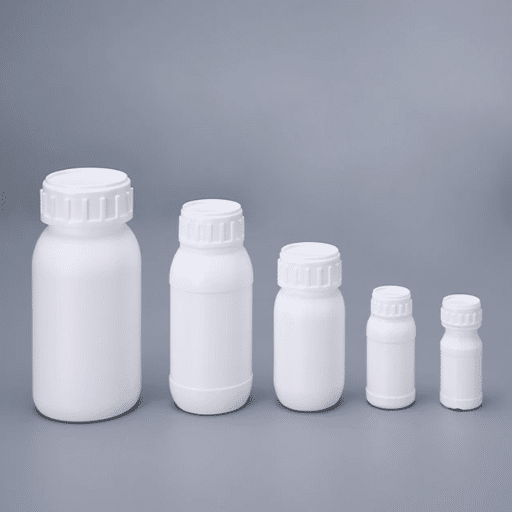
The right choice depends on what failure mode you cannot tolerate. HDPE and PP both serve packaging, automotive, construction, and consumer products, but the winning material in each case is usually dictated by temperature, impact, or chemical exposure.
When to Choose HDPE
HDPE dominates where toughness, chemical resistance, and cost converge.
- Blow-molded bottles and drums for household chemicals, detergents, and industrial fluids
- Chemical storage tanks, liners, and geomembranes requiring long-term ESCR
- Plastic pallets, crates, and totes that see impact, especially in cold storage
- Pipe and conduit for water, gas distribution, and drainage systems
- Fuel tanks and automotive fluid reservoirs where fuel resistance and low-temperature impact are required. For the ESCR, permeation, and compliance details behind these parts, see our dedicated guide to HDPE Fuel Tanks: Materials, ESCR, Permeation & Automotive Standards.
- Outdoor furniture and playground equipment with UV-stabilized grades
When to Choose PP
PP wins where heat, stiffness, and fatigue resistance matter more than low-temperature impact.
- Hot-fill containers and microwaveable food packaging
- Caps, closures, and living hinges that must flex thousands of times without breaking
- Autoclavable medical trays, labware, and surgical instruments
- Thin-wall packaging such as yogurt cups and deli containers
- Automotive interior and appliance housings needing higher heat deflection
- Woven sacks, strapping, and non-woven fibers where low density adds value
Industry-by-Industry Snapshot
In packaging, HDPE handles the bottle and PP handles the cap. HDPE is still a strong closure material in its own right, though, and if you need resin grade, seal design, and food-contact guidance for polyethylene closures, our HDPE Caps and Closures: Resin Grades, Seal Design & Food Contact Guide covers those decisions in detail. In automotive, HDPE lines fluid reservoirs and fuel tanks, while PP covers dashboards, bumpers, and battery trays. In construction, HDPE pipe and geomembranes are standard; PP appears in drainage fittings, sheet, and fiber applications. Neither material is universally better; each solves a specific set of constraints more economically than the other.
HDPE vs PP Processing and Manufacturing
Both materials process easily, but their thermal behavior and shrinkage require different machine settings and mold designs.
Injection Molding
HDPE injection-molding grades typically run at melt temperatures of 180–260°C with mold temperatures of 20–95°C. Shrinkage can range from 1.5% to 4.0%, so holding pressure and cooling time must be controlled to avoid sink marks and dimensional variation. Higher-density HDPE grades process at the upper end of the melt range and produce stiffer parts with slightly reduced impact.
PP injection grades run at melt temperatures of 200–290°C with mold temperatures of 20–80°C. Shrinkage is lower, generally 1.0–2.5%, but PP crystallizes quickly. That fast crystallization demands good cooling circuit design to prevent warpage and differential shrinkage across the part.
Blow Molding
HDPE owns commodity blow molding. Over 70% of rigid plastic bottles and drums are produced from HDPE because of its melt strength, ESCR, and cost position. PP is used in blow molding where hot-fill resistance or higher clarity is needed, such as cosmetic bottles and some food containers, but it is less common than HDPE in this process.
Extrusion
HDPE extrudes well into pipe, sheet, profiles, and blown film. Its broad molecular-weight distribution helps control melt elasticity. PP extrudes into sheet, fiber, strapping, and cast film. Biaxially oriented polypropylene (BOPP) film is one of the highest-volume packaging films globally.
Melt Flow Index Considerations
MFI, measured per ASTM D1238, indicates how easily the resin flows under heat and load. For HDPE, blow-molding grades typically run at 0.2–0.5 g/10 min, injection grades at 5–30 g/10 min, and film grades across a wider range. For PP, injection grades are often 10–60 g/10 min, fiber grades higher, and extrusion grades lower. Matching MFI to the process is as important as matching density or tensile strength to the application.
HDPE vs PP Cost and Sustainability
Relative Resin Cost
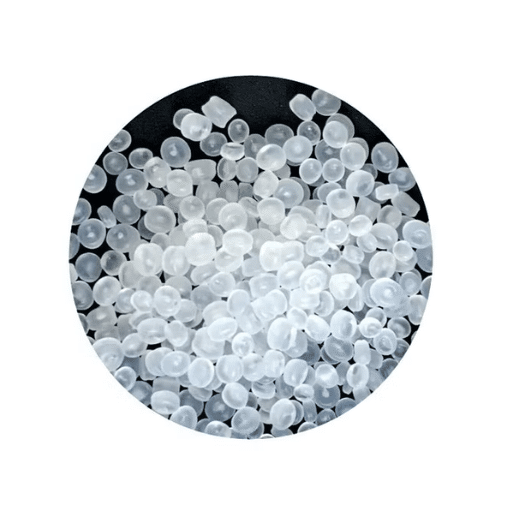
Commodity HDPE is generally 10–20% cheaper per kilogram than commodity PP, though the gap narrows when PP’s lower density allows thinner-wall designs. For a 25-gram bottle, the material cost difference may be small. For a 2-kilogram pallet or a 50-kilometer pipe run, the difference becomes material to the business case.
In mid-2026 China market terms, HDPE prime resin trades roughly USD 1,020–1,090 per metric ton, while commodity PP homopolymer typically sits 5–15% higher. These numbers move with feedstock costs, so request a current quote rather than relying on published averages for project costing.
Recycling and Environmental Considerations
HDPE (#2) has mature mechanical recycling infrastructure in most developed markets. Milk jugs and detergent bottles are collected, sorted, and reprocessed into pipe, lumber, and new packaging at scale. PP (#5) recycling is growing but less universally available, though recent investments in sortation technology are improving recovery rates.
Both materials are petroleum-based and not compostable. Recycled grades of both are available for non-food and non-medical applications, often with reduced mechanical consistency. If your application requires lot-to-lot uniformity, specify virgin or prime recycled grades with documented COA values.
How to Choose Between HDPE and PP
Use this decision framework when both materials seem plausible for your part.
Choose HDPE When
- Operating temperatures stay below 60°C continuously
- Impact resistance at low temperature is critical
- Chemical or surfactant exposure is expected
- Cost per kilogram is a primary driver
- The part will be blow-molded or extruded into pipe/profile
- UV exposure requires a stable outdoor grade
Choose PP When
- Continuous service temperature exceeds 80–100°C
- Stiffness and dimensional retention in thin walls matter
- The design includes a living hinge or repeated flexure
- Hot-fill, steam sterilization, or dishwasher exposure is required
- Lower density is valuable for weight-sensitive parts
- Injection molding into thin-wall packaging is the process
Application Checklist
Before finalizing the resin, confirm these points:
- Maximum continuous operating temperature and peak temperature
- Minimum expected service temperature and impact requirements
- Chemical species and concentration the part will contact
- Load type, load duration, and creep limits
- Processing method and required MFI range
- Regulatory requirements such as FDA, EU 10/2011, or RoHS
- Clarity, color, and surface finish requirements
- Target cost per part and total landed resin cost
Sourcing HDPE and PP Resin from China
Most online guides stop at the comparison table. For procurement managers and engineers buying resin internationally, the next question is how to source the material with confidence.
Branded Prime vs. Off-Grade or Compound
Prime resin from recognized producers offers consistent MFI, density, and additive packages with full traceability. Off-grade or reprocessed material may meet a price target but often lacks the batch consistency that injection molding and blow molding demand. At Yifuhui, we supply branded prime HDPE and PP with manufacturer-issued documentation, not repackaged commodity substitutes.
Certificate of Analysis Verification
Every resin shipment should include a Certificate of Analysis (COA) that lists the grade name, lot number, density, MFI, tensile yield, and any compliance statements such as FDA, RoHS, or REACH. Cross-check the COA against the manufacturer’s published datasheet. If the MFI or density falls outside the published range for that grade, the material may be off-spec, blended, or mislabeled.
Realistic Expectations from China Sourcing
When Maria, a procurement manager at a German packaging firm, switched her HDPE bottle-grade sourcing to a Suzhou distributor, she cut resin cost by 12%. That saving only came after she verified the supplier’s COA against the producer’s certificate of origin.
Her first shipment arrived with full documentation, intact packaging, and lot numbers that traced back to the manufacturer. The second shipment from a different trading company arrived with a photocopied COA and mismatched lot numbers. She rejected it. Documentation consistency matters as much as resin price.
What Yifuhui Provides
As a Suzhou-based engineering plastics supplier, we focus on the details that make international resin sourcing reliable:
- 25 kg MOQ for trial orders, so you can validate processing behavior before committing to full-container quantities
- Branded prime HDPE and PP from established producers with batch traceability
- Full export documentation including COA, MSDS, packing list, and commercial invoice
- FOB Shanghai and CIF options to match your freight and customs preferences
- Technical support to help match grade, MFI, and additive package to your process
For more on supplier verification and import documentation, see our guide to sourcing HDPE resin from China. You can also explore deeper property data in our articles on HDPE properties and HDPE chemical resistance.
Conclusion
HDPE vs PP is not a contest with one winner. It is a decision between two polyolefins whose molecular differences create real performance boundaries.
HDPE delivers toughness, low-temperature impact, and ESCR at a lower resin cost. PP delivers heat resistance, stiffness, and fatigue performance in lighter-weight parts. Choose based on the temperature, load, chemical, and processing demands of your application. Then verify that the resin you buy matches the specification through a proper COA.
If you need help selecting the right HDPE or PP grade, or if you want to compare prime resin quotes with full documentation, contact us. We stock certified polyolefin resins from 25 kg trial quantities to full container loads, with FOB Shanghai shipping and batch-traceable COA documentation.
Frequently Asked Questions
What is the main difference between HDPE and PP?
HDPE has linear polymer chains with high crystallinity, giving it toughness, low-temperature impact resistance, and excellent environmental stress crack resistance. PP has methyl side groups that increase stiffness and heat resistance but reduce low-temperature ductility. PP also has a lower density and higher melting point than HDPE.
Is HDPE stronger than PP?
PP homopolymer typically has higher tensile strength and flexural modulus than HDPE, so it feels stiffer and supports higher loads in thin walls. HDPE is tougher and more ductile, especially under impact and at low temperatures. “Stronger” depends on whether you measure stiffness, impact resistance, or long-term load capacity.
Which is better for hot-fill packaging, HDPE or PP?
PP is the better choice for hot-fill packaging because its melting point and continuous service temperature are significantly higher than HDPE. HDPE softens above approximately 60°C, while PP can handle hot-fill temperatures up to 85°C or higher depending on grade and design.
Can HDPE and PP be recycled together?
No. HDPE and PP must be separated before mechanical recycling because they have different melting points, densities, and processing behaviors. Mixed recycling streams contaminate each material and reduce the quality of the reprocessed resin. HDPE carries recycling code #2; PP carries recycling code #5.
Which is better for outdoor use, HDPE or PP?
HDPE is generally preferred for long-term outdoor use when UV-stabilized grades are specified, such as for playground equipment, outdoor furniture, and geomembranes. PP can also be used outdoors with UV stabilizers, but standard PP is more susceptible to UV-induced embrittlement than stabilized HDPE.
What is the density difference between HDPE and PP?
HDPE density is typically 0.941–0.965 g/cm³, while PP density is 0.895–0.92 g/cm³. That means PP is roughly 4–7% lighter than HDPE by volume, which can reduce part weight and shipping costs in large-volume applications.
How do I verify HDPE or PP quality from a supplier’s COA?
Check that the grade name, lot number, density, MFI, tensile strength, and compliance statements on the COA match the manufacturer’s published datasheet for that grade. The COA should be issued by the resin producer or an authorized distributor with traceable lot documentation. Mismatched lot numbers or missing test data are red flags.
Is HDPE or PP better for living hinges?
PP is the standard material for living hinges because it resists fatigue and can flex thousands of times without breaking. HDPE lacks the fatigue resistance needed for reliable living-hinge performance in most designs.