




When Chen’s pipe factory lost a $140,000 municipal water contract in Q3 2025, the root cause wasn’t his extrusion line. His equipment was two years old, well-maintained, running the correct temperature profile. The failure came from something simpler: he had been sold a low-MFI injection-molding grade labeled as extrusion-grade PE100. The pipes passed visual inspection but failed hydrostatic pressure testing at the job site. The material was wrong before it ever entered the hopper.
If you work with HDPE extrusion, you already know the machinery matters. But here’s what most guides skip: the right resin grade, verified at delivery, matters just as much as barrel temperature or screw speed. No amount of process optimization fixes the wrong material.
This guide walks through the complete HDPE extrusion process, from pellet to finished product. You’ll find reference temperature profiles for PE80, PE100, and PE100-RC grades, a practical troubleshooting table for the six most common defects, and a framework for selecting and sourcing extrusion-grade resin that won’t betray your production line at the moment of quality inspection.
What Is HDPE Extrusion?

HDPE extrusion is a continuous manufacturing process in which high-density polyethylene pellets are melted, homogenized, and forced through a shaped die to produce products with a constant cross-section, primarily pipes, films, sheets, and profiles. The process operates at 180 to 230 degrees Celsius and relies on precise control of temperature, pressure, and cooling rate to achieve the desired dimensions and surface quality.
HDPE dominates the extrusion market for specific reasons. Its melt viscosity profile provides enough strength to hold shape immediately after exiting the die, what engineers call melt strength, while still flowing smoothly through narrow die gaps. Its high crystallinity, typically 60 to 80 percent, creates products with excellent chemical resistance and stiffness once cooled. And unlike many engineering thermoplastics, HDPE processes across a forgiving temperature window that forgives minor fluctuations without catastrophic degradation. The global HDPE extrusion market, valued at roughly $41 billion, reflects this combination of processability and performance. For a deeper look at HDPE’s properties across all processing methods, see our comprehensive HDPE material guide.
The HDPE Extrusion Process: Step-by-Step
The extrusion line transforms raw HDPE pellets into finished product through a sequence of interconnected stages. Each stage depends on the one before it. A temperature deviation at the barrel shows up as a surface defect three stages later. Understanding the entire chain, not just isolated steps, is what separates consistent production from constant firefighting.
Raw Material Preparation and Feeding
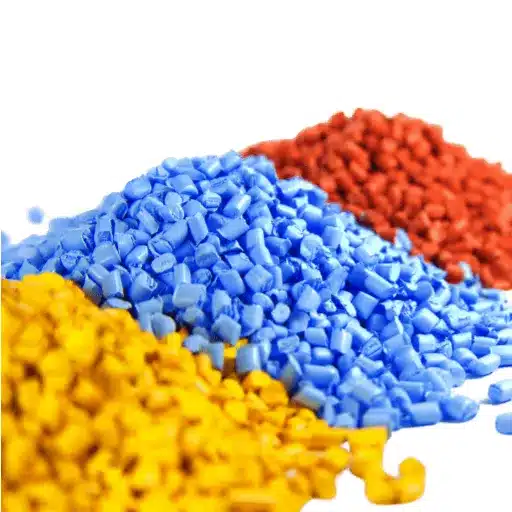
Raw HDPE resin enters the process as pellets, typically 3 to 4 mm in diameter. The pellets may contain additives blended in at the manufacturer: UV stabilizers for outdoor pipe, antioxidants to protect against thermal degradation during processing, carbon black at 2 to 2.5 percent for UV resistance, or color concentrates for branded products.
Moisture is the first enemy. While polyethylene absorbs far less water than nylon or polycarbonate, surface moisture on pellets creates steam bubbles in the melt that translate to pinholes and surface roughness in the finished product. Pre-drying at 80 to 100 degrees Celsius for 2 to 4 hours in a dehumidifying dryer eliminates this risk.
Pellets flow from the hopper into the extruder throat. For consistent output, and consistent output is everything in extrusion, gravimetric dosing systems outperform simple volumetric feeders. They control feed rate by weight, not volume, compensating for bulk density variations between resin batches.
Melting and Homogenization in the Extruder
The single-screw extruder barrel contains three functional zones, each with independent temperature control.
The feed zone receives cold pellets and begins conveying them forward. Temperatures here are deliberately lower, 170 to 195 degrees Celsius depending on the HDPE grade, to prevent premature melting that causes pellets to stick and bridge in the feed throat. The screw flights in this section are deepest to accommodate the low bulk density of solid pellets.
The compression zone is where the real work happens. Screw channel depth decreases, compressing the material. The combination of barrel heat and shear friction raises the melt temperature. By the end of this zone, the HDPE has transitioned from solid pellets to a fully molten state.
The metering zone ensures the melt reaches uniform temperature and consistency before it exits the barrel. Channel depth is shallowest here, creating back pressure that improves mixing. For HDPE extrusion, screw length-to-diameter ratios of 30:1 to 36:1 are standard. Longer screws provide more residence time and better homogenization, important when running regrind or when color dispersion matters.
Melt temperature at the screw tip should land between 200 and 230 degrees Celsius for PE100 grades. Exceed 240 to 250 degrees Celsius, and thermal oxidation begins producing discoloration, yellowing, then browning, along with a measurable drop in mechanical properties.
Die Shaping and the Air Gap
The molten HDPE enters the die head under pressure and is forced through a precisely machined orifice that determines the product’s cross-section. Circular dies produce pipe and tubing. Flat or coat-hanger dies produce sheet and film. The die does more than shape, it controls flow distribution, melt pressure, and the initial surface quality of the extrudate.
Between the die exit and the cooling tank sits the air gap. It looks like empty space, but it’s the most active zone on the entire extrusion line. Here is what happens in those few centimeters, simultaneously:
Die swell: The extrudate expands as it exits the die, driven by viscoelastic recovery of the polymer chains. Higher melt temperatures reduce swell. Shorter die land lengths increase it. Die swell must be accounted for in die design, the die opening is smaller than the target product dimension.
Melt fracture: If the shear rate at the die wall exceeds the polymer’s critical threshold, roughly 50 to 100 reciprocal seconds for standard PE100, the extrudate surface develops a rough, shark-skin texture. The fix is usually straightforward: raise the die lip temperature by 5 to 10 degrees in 3-degree increments, allowing 5 minutes for thermal equilibrium after each adjustment.
Surface oxidation: Hot HDPE in contact with atmospheric oxygen forms aldehydes and acids on the surface. A shorter air gap minimizes oxidation but increases the risk of die swell pulling the hot extrudate against the calibration sleeve before it’s ready.
Draw resonance: If the haul-off pulls the extrudate too fast relative to die exit velocity, cyclic diameter pulsations develop. The solution is adjusting the draw-down ratio, typically keeping it below the critical draw ratio for the specific resin grade.
Maria, a process engineer at a Spanish pipe extrusion plant, spent two weeks chasing intermittent surface roughness on her 630 mm PE100 line. She adjusted barrel zones. She tweaked screw RPM. She replaced the calibration sleeve. The problem turned out to be a 4-degree thermocouple error at the die lip. The controller thought it was delivering 223 degrees. The actual temperature was 219. A contact pyrometer measurement found it in 30 seconds. The moral: trust your thermocouples, but verify them.
Vacuum Calibration, Cooling, and Sizing
Immediately after the air gap, the extrudate enters the vacuum calibration tank. A vacuum of 0.08 to 0.12 MPa holds the still-soft HDPE against a water-cooled calibration sleeve. This sets the outer diameter and begins the solidification process from the outside inward.
Cooling water temperature is maintained at 15 to 20 degrees Celsius. Water that’s too cold creates thermal shock, rapid surface solidification while the core remains molten, building internal stresses. Water that’s too warm extends the cooling length required, slowing the line.
Crystallization is the critical physics here. HDPE is semi-crystalline, and 60 to 80 percent of crystallization occurs during cooling. The remaining 20 to 40 percent develops over the following hours and days, up to 90 percent within the first week. This post-extrusion crystallization causes slight shrinkage that must be accounted for in final dimension specifications.
For large-diameter, thick-wall pipes, cooling presents a specific problem: sag. The outer surface solidifies while the inner wall remains molten for extended periods, up to 10 hours for pipe walls exceeding 75 mm. Gravity pulls the molten inner material downward. Three strategies combat this: offset the die gap, making it wider at the top and narrower at the bottom; use low-sag bimodal HDPE resin grades with higher melt strength; and rotate the pipe during cooling to distribute the effect.
Haul-Off and Cutting
The haul-off unit, typically belt or caterpillar-type, grips the cooled pipe and pulls it through the line at a controlled speed, anywhere from 0.8 meters per minute for large-diameter, thick-wall pipe to 20 meters per minute for small-diameter tubing. Haul-off speed is the line’s master speed; it controls wall thickness via the draw-down ratio against the die output rate.
Cutting follows. Planetary cutters handle large-diameter pipes, orbiting the circumference for clean, square cuts. Saw cutters suffice for smaller diameters. The cutter must synchronize its speed with the line speed to produce burr-free cuts without interrupting production flow.
Finished product is either stacked in bundles for rigid pipes or coiled onto reels for flexible, smaller-diameter products. Coiling requires the pipe to have cooled sufficiently, bending warm HDPE sets in curvature that becomes permanent.
HDPE Extrusion Temperature Settings: Complete Reference
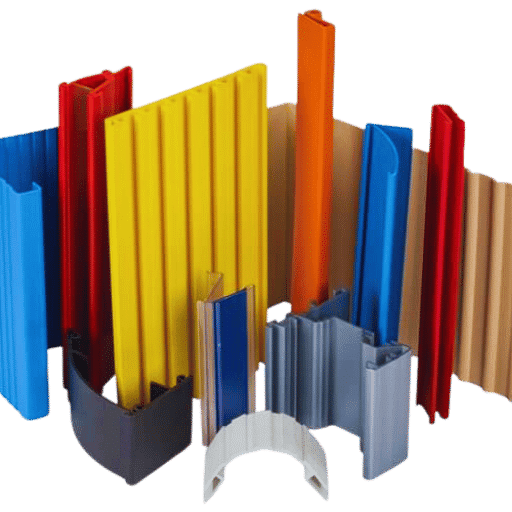
Temperature is the most powerful adjustment an operator can make, and the easiest to get wrong. The table below provides the standard processing window for the three most common HDPE pipe extrusion grades.
| Zone | PE80 | PE100 | PE100-RC |
|---|---|---|---|
| Zone 1 (Feed) | 170–185°C | 180–195°C | 175–190°C |
| Zone 2 (Compression) | 185–200°C | 195–210°C | 190–205°C |
| Zone 3 (Metering) | 200–215°C | 210–225°C | 205–220°C |
| Die Zone 1 (Body) | 200–220°C | 215–230°C | 210–225°C |
| Die Zone 2 (Lip) | 205–225°C | 220–235°C | 215–230°C |
| Melt Target | 190–220°C | 200–230°C | 195–225°C |
| Maximum Safe | 240°C | 250°C | 245°C |
These are starting-point ranges, not absolutes. Machine geometry, screw design, and ambient conditions all shift the actual optimum. Use these as baseline settings, then dial in based on extrudate appearance and dimensional measurements.
Several critical rules apply regardless of grade. Never set Zone 1 below 165 degrees for PE100 during startup. Below this threshold, unmelted pellets create excessive torque that can trip the motor overload. Die lip temperature controls surface finish more than any other setting. Make adjustments in 3-degree increments and wait a full 5 minutes for thermal equilibrium before evaluating the result. A contact pyrometer should be used weekly to verify that actual die body temperatures match the controller readings, a 4-degree discrepancy is enough to trigger melt fracture at typical line speeds.
HDPE Extrusion Grades and Material Selection
Here is the section you won’t find in any equipment manufacturer’s guide. Extrusion machinery sellers tell you their machine can process any HDPE grade. They’re right, technically. But “can process” and “will produce specification-grade product” are different statements. Grade selection is where extrusion projects succeed or fail before the line ever starts.
HDPE Grade Classification by Processing Method
Different extrusion applications demand different melt flow characteristics, and HDPE manufacturers design grades specifically for each processing method.
| Processing Method | Typical Grades | MFR (190°C/5 kg) | Density Range | Key Requirement |
|---|---|---|---|---|
| Pipe Extrusion | PE80, PE100, PE100-RC | 0.20–0.40 g/10min | 0.944–0.957 | High melt strength, low sag |
| Blown Film Extrusion | 7000F, EX5, HFI 5110 | 0.04–0.10 | 0.946–0.952 | High melt strength, bubble stability |
| Sheet Extrusion | HD 5000 S, 52518 | 0.30–0.50 | 0.950–0.958 | Good draw-down, surface finish |
| Monofilament Extrusion | Specialized filament grades | 0.50–1.0 | 0.950–0.960 | Consistent draw, high tenacity |
Running a pipe extrusion grade through a blown film line guarantees bubble instability. Running a film grade through a pipe line produces sag and wall thickness variation. The MFR number on the certificate of analysis is not a formality, it’s the single most consequential property for extrusion performance.
PE80 vs PE100 vs PE100-RC: Pipe Grade Selection
For pipe extrusion specifically, the grade choice is rarely arbitrary. Three categories cover most applications.
PE80 has a minimum required strength (MRS) of 8 MPa. It’s the workhorse for standard water distribution, drainage, and agricultural irrigation at lower operating pressures. Lower material cost makes it the default choice when the application doesn’t demand the higher pressure rating of PE100.
PE100, with an MRS of 10 MPa, handles gas distribution mains, high-pressure industrial water lines, and applications where thinner walls at the same pressure rating reduce material consumption. The higher MRS translates directly to either higher pressure capacity at a given wall thickness or lighter weight at a given pressure requirement. Most infrastructure-grade pipe extrusion lines today run PE100.
PE100-RC, or raised crack resistance, addresses a specific failure mode: slow crack growth. When pipes are installed trenchless, pulled through the ground or laid in rocky backfill, point loads and scratches on the pipe surface become stress concentrators. Standard PE100 can fail through slow crack propagation over years. PE100-RC grades resist this mechanism. For any pipe going into the ground without a sand bed, PE100-RC is the insurance premium worth paying.
Bimodal HDPE resins deserve special mention. These grades feature a molecular weight distribution with two distinct peaks, a high-molecular-weight fraction for melt strength and a low-molecular-weight fraction for processability. The result: lower sag during thick-wall pipe cooling and higher throughput at the same extruder RPM. Equipment manufacturer Bausano estimates material savings of up to 7 percent when switching from unimodal to low-sag bimodal grades for thick-wall pipe production.
Key Grade Properties to Verify Before Processing
Beyond the grade name, these four properties determine whether a resin will run well on your specific extrusion line.
Melt flow index or MFR at 190 degrees Celsius under 5 kg load. Lower MFR means higher melt strength, which translates to better dimensional control for large-diameter pipe and more stable bubbles for blown film. A mismatch of even 0.1 grams per 10 minutes can produce measurable wall thickness differences at the same process settings.
Density in the range of 0.944 to 0.958 grams per cubic centimeter. Density directly correlates with crystallinity, stiffness, and post-extrusion shrinkage. A batch-to-batch density shift of 0.002 produces a meaningful change in cooling behavior and final dimensions.
Molecular weight distribution width. Broad or bimodal distributions process better in extrusion because they balance melt strength with flow. Narrow-distribution grades, designed for injection molding’s fast fill times, fight against you in extrusion.
Additive package. UV-stabilized grades are non-negotiable for outdoor pipe. The standard carbon black loading for UV protection is 2 to 2.5 percent. Pipes intended for potable water may require specific pigment formulations to meet drinking water contact regulations.
Common HDPE Extrusion Defects and Troubleshooting
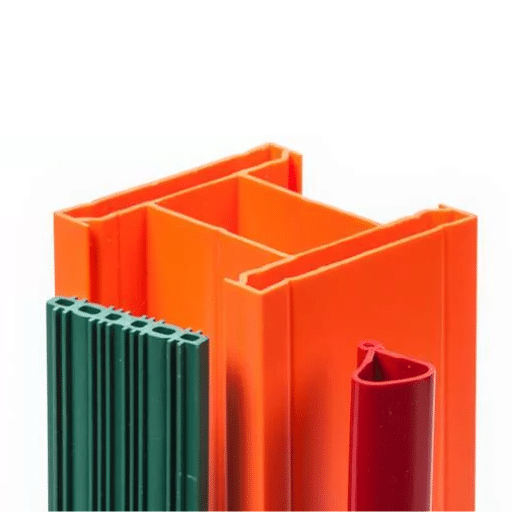
Every extrusion line produces defects. The difference between a 92 percent yield and a 99 percent yield is how quickly the operator diagnoses and corrects them. This table maps symptom to root cause to fix.
| Defect | Symptoms | Likely Cause | Primary Fix |
|---|---|---|---|
| Melt Fracture (Sharkskin) | Fine-scale surface roughness, shark-skin texture | Shear rate exceeds critical threshold at die wall; die lip temperature too low | Raise die lip temperature 5–10°C in 3°C increments; widen die gap |
| Die Swell Variation | Inconsistent outer diameter along pipe length | MFI or temperature inconsistency; batch variation | Increase die land length; verify die temperature uniformity with pyrometer |
| Sag (Thick-Wall Pipes) | Wall thinner at top, thicker at bottom of pipe | Inner wall remains molten too long; gravity pulls melt downward | Offset die gap (wider at top); switch to low-sag bimodal HDPE grade; rotate pipe during cooling |
| Ovality | Pipe cross-section not round | Uneven cooling; asymmetric vacuum calibration | Verify uniform cooling water flow; clean calibration sleeve; check sealing rings |
| Surface Oxidation / Discoloration | Yellow or brown tint; brittle surface | Melt temperature exceeding 240–250°C; thermal degradation | Reduce all zone temperatures 5°C; verify thermocouple readings with contact pyrometer |
| Wall Thickness Variation (Periodic) | Cyclic thick-thin-thick pattern | PID temperature oscillation from faulty thermocouple or controller | Increase PID proportional band 10–15%; replace suspect thermocouple |
| Surface Pinholes / Bubbles | Small voids visible on surface | Moisture in feedstock; entrapped volatiles | Dry resin 2–4 hours at 80–100°C; verify dryer dew point below -30°C |
| Spitty Surface / Melt Surging | Irregular flow, rough patches | Inconsistent feeding; bridging in hopper throat; low head pressure | Clean hopper throat; verify feed zone temperature not too high; check screw wear |
Not every rough surface is melt fracture. Impurities in the resin, partially cross-linked gel particles from hot spots, and even atmospheric moisture condensing on cold granules can produce surface defects that look similar. Before raising die temperatures to fix what appears to be sharkskin, verify that the resin is dry and that the die faces are clean.
HDPE Extrusion Applications Across Industries
HDPE extrusion serves an unusually broad range of end uses, reflecting the material’s combination of chemical resistance, flexibility, durability, and cost-effectiveness.
Pipe and infrastructure represents the largest segment by volume. PE100 pipes carry potable water from treatment plants to homes. They move natural gas through distribution networks at pressures up to 10 bar. They drain sewage, irrigate crops, and protect underground power cables as electrical conduit. A properly installed HDPE pipe has a design life exceeding 50 years. Deep-sea outfall pipes, island water supply lines, and trenchless urban rehabilitation projects all depend on HDPE extrusion for the pipe diameters and wall thicknesses these applications demand. For projects where material choice is still under evaluation, our HDPE vs PVC comparison guide covers the trade-offs in corrosion resistance, installation cost, and service life.
Blown film extrusion produces the HDPE film most consumers encounter daily: grocery bags, cereal box liners, food wrap, and industrial packaging films. The blown film process inflates a thin-walled HDPE tube into a bubble, which is then collapsed and wound. Grade 7000F and similar film-specific resins provide the bubble stability and draw-down characteristics that the pipe grades lack for this application.
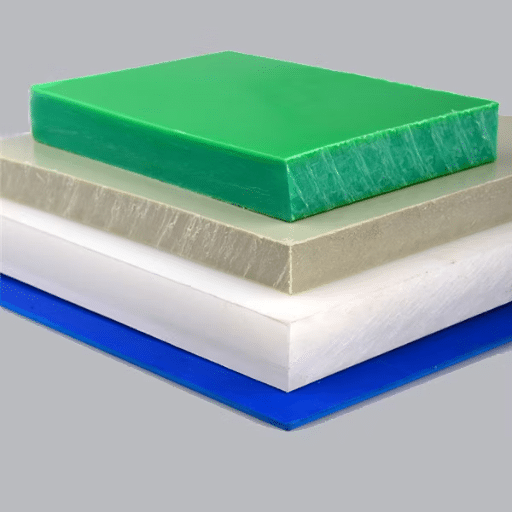
Sheet extrusion supplies the construction and environmental industries. HDPE geomembranes line landfills, prevent groundwater contamination, and waterproof building foundations. Anti-corrosion HDPE panels protect chemical storage areas. The sheet extrusion process requires grades with good surface finish characteristics, as any die line or roughness transfers directly to the final product surface.
Monofilament extrusion, while a smaller segment, produces products where consistent diameter is critical: ropes, fishing nets, industrial fabrics, and 3D printing filament. The narrow-diameter tolerance required for monofilament makes die design and precise temperature control especially important.
Need certified HDPE resin in the grade your extrusion line demands? Contact our technical team with your application requirements, we’ll verify grade availability, provide COA documentation, and arrange shipment from our Suzhou warehouse to your facility.
Sourcing HDPE Extrusion-Grade Resin
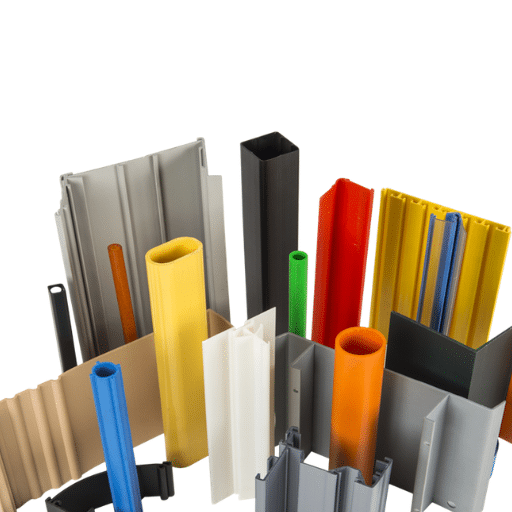
The best temperature profile in the world can’t compensate for the wrong resin. Yet resin sourcing is the part of the extrusion operation that often receives the least systematic attention. Here is a framework for evaluating HDPE extrusion resin suppliers.
First, confirm the supplier can provide the specific grade your application requires, not just “HDPE” or “PE100,” but the exact grade designation. A Certificate of Analysis (COA) should accompany every shipment. The COA must list the brand, grade name, batch number, MFR, density, and key mechanical properties. Cross-reference these values against the manufacturer’s published datasheet. A legitimate supplier will never hesitate to provide this.
Second, evaluate batch-to-batch consistency. A resin supplier who can deliver the same grade with an MFR within plus or minus 0.05 grams per 10 minutes across shipments saves you from recalibrating your line with every order. Process stability depends on material stability.
Third, understand the documentation package. Beyond the COA, you should receive a Material Safety Data Sheet and any applicable compliance certificates, RoHS, REACH, or food-contact certifications if your product requires them. Missing documentation at delivery creates delays at customs and unnecessary friction with your quality department.
Finally, verify the supply chain integrity. Resin misrepresented as branded grade, off-spec or repurposed material sold as prime PE100, is a documented risk when sourcing from unverified suppliers. Work with suppliers who have established relationships with the grade manufacturers and can demonstrate lot traceability back to the producer. We supply certified HDPE extrusion-grade resin with full COA documentation — contact us to verify grade availability for your application.
Conclusion
Extrusion is equal parts process and material. Temperature profiles, screw design, die geometry, and haul-off control form the production backbone. But the pipe that leaves your line is only as good as the pellet that entered your hopper.
The key takeaways from this guide: Understand your three barrel zones and what each one does to the melt. Work from the temperature reference table for your specific grade, PE80, PE100, or PE100-RC, and verify die lip temperature with a contact pyrometer, not just the controller display. Select your HDPE grade based on the extrusion process you’re running, pipe grades for pipe, film grades for film, no exceptions. Use the troubleshooting table to diagnose defects quickly rather than adjusting settings at random. And source your extrusion-grade HDPE resin from a supplier that provides full COA documentation and lot traceability with every shipment.
The extrusion line is a precision instrument. The wrong resin turns it into an expensive guessing game. The right resin, verified at intake, transforms it into what it’s designed to be, a consistent, predictable, profitable production system.
If you’re specifying HDPE resin for an extrusion application and need certified extrusion-grade material with full documentation, contact our technical team with your grade requirements. We’ll confirm availability, provide a quotation, and ship from our Suzhou warehouse with COA documentation included. Minimum order starts at 25 kg, trial the grade before committing to volume.
Frequently Asked Questions
What is HDPE extrusion?
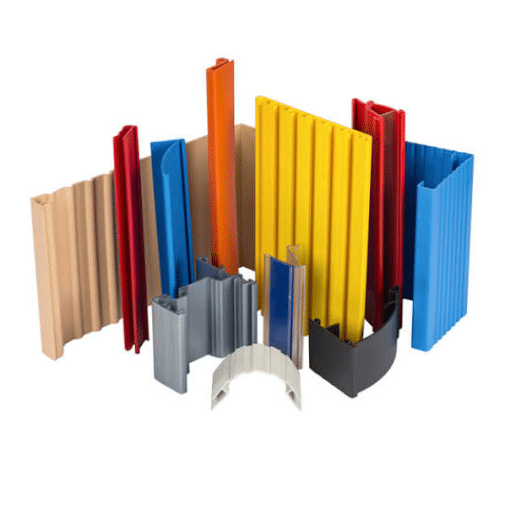
HDPE extrusion is a continuous manufacturing process that melts high-density polyethylene pellets and forces them through a shaped die to create products with a constant cross-section such as pipes, films, sheets, and profiles. The process operates at 180 to 230 degrees Celsius with precise control over barrel temperature, screw speed, die pressure, and cooling conditions.
What temperature should HDPE be extruded at?
HDPE pipe extrusion barrel temperature zones typically range from 170 to 235 degrees Celsius depending on the grade. PE100 processes between 180 and 235 degrees across zones, with the die lip set to 220 to 235. PE80 runs 10 to 15 degrees lower across all zones. Never exceed 250 degrees, thermal oxidation and discoloration begin above 240 degrees.
What is the difference between PE80 and PE100 for pipe extrusion?
PE80 has a minimum required strength of 8 MPa and is used for standard water distribution, drainage, and agricultural irrigation at lower pressures. PE100 has an MRS of 10 MPa, enabling either higher pressure ratings at the same wall thickness or thinner walls at the same pressure, reducing material consumption and weight. PE100 dominates modern infrastructure-grade pipe production.
Why does HDPE sag during large-diameter pipe extrusion?
Sag occurs when thick pipe walls cool at different rates, the outer surface solidifies while the inner material remains molten for hours. Gravity pulls the molten inner material downward, creating non-uniform wall thickness. Solutions include offsetting the die gap, using low-sag bimodal HDPE resin, and rotating the pipe during cooling.
What causes melt fracture in HDPE extrusion?
Melt fracture, also called sharkskin, occurs when the shear rate at the die wall exceeds the polymer’s critical threshold, about 50 to 100 reciprocal seconds for PE100 grades. The primary fix is to raise die lip temperature by 5 to 10 degrees Celsius, which reduces melt viscosity and brings shear stress below the critical threshold.
How do I choose the right HDPE grade for extrusion?
Match the grade’s melt flow index to your process, low MFR for pipe (0.20-0.40), ultra-low for blown film (0.04-0.10), medium for sheet (0.30-0.50). Verify density matches your product specifications. Prefer bimodal molecular weight distribution for thick-wall pipe extrusion. Confirm the additive package meets your application requirements, especially UV stabilization for outdoor products.