






In 2023, a Tier 1 fuel-system supplier in Michigan approved a low-cost Chinese HDPE that its datasheet called “fuel tank grade.” Nine months later, the program hit a wall: after the 20-week fuel-soak preconditioning required before certification, the test tank measured 2.1 g/m²/day of permeation, ten times the 0.20 limit under EPA Tier 3. The resin was a commodity blow-molding grade with an ESCR of barely 180 hours. Re-qualifying cost the program eleven weeks and roughly half a million dollars.
HDPE fuel tanks look simple; the materials behind them are anything but.
Since the 1980s, automakers have replaced stamped steel with blow-molded HDPE, and today high-density polyethylene holds about 78% of the automotive fuel tank material market. It is lighter, corrosion-free, safer in a crash, and far cheaper to form into complex shapes. But specifying the right HDPE fuel tank grade is not like picking a commodity resin. You have to balance molecular weight, ESCR, and low-temperature impact against permeation limits that force multilayer EVOH barriers or surface fluorination, while procurement teams must verify that sourced resin matches the grade lot after lot.
This guide covers what actually matters for HDPE fuel tanks: resin grade requirements mapped by tank type, blow molding and barrier technology, the regulatory standards that govern them, the plastic-versus-steel trade-off, and how to verify fuel-tank-grade HDPE through a manufacturer-issued Certificate of Analysis (COA).
Why HDPE Fuel Tanks Replaced Steel
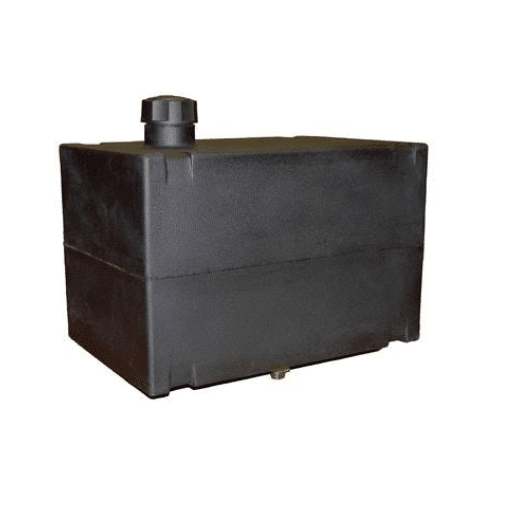
Steel dominated fuel tanks through the 1970s because it was the only material strong enough, formable enough, and cheap enough for mass production. HDPE changed that calculation on four fronts, and once the technology matured, the shift was permanent.
The Weight and Cost Advantage
HDPE has a density of roughly 0.95 g/cm³ against steel’s 7.8 to 8.0 g/cm³. That translates to fuel tanks that are typically 30 to 50% lighter, which matters directly for fuel economy, payload, and handling. The cost picture is just as decisive.
Blow molding produces a complete tank in one operation from a parison of molten resin, whereas a steel tank requires stamping multiple panels, drawing them, and welding them together. Fewer operations, less tooling, lower energy use, and no weld inspection step. For a part as large as a fuel tank, that production-cost gap is substantial.
Corrosion, Condensation and Fuel Purity
Steel rusts from the inside, especially when condensation accumulates in the tank and mixes with water and fuel components. Rust flakes then contaminate the fuel system, clog filters, and shorten injector and pump life. HDPE does not rust, and its low thermal conductivity means less temperature cycling inside the tank, so less condensation forms in the first place. Fuel-grade HDPE is also chemically inert to gasoline, diesel, and the additive packages they carry, so it does not degrade or leach into the fuel.
Safety in Crash and Fire
Blow-molded HDPE tanks are seamless, which eliminates the weld lines that act as failure points on steel tanks in a collision. On impact, HDPE does not generate sparks, it springs back after deformation, and its very low thermal conductivity, about 1% of metal, slows heat transfer in a fire. In a severe fire, the tank melts and drips rather than pressurizing and exploding at a weld. Service temperature spans roughly -40°C to +90°C, and fuel-tank grades keep ductile impact performance well below that, with brittleness temperatures down to -70°C or lower.
Where Steel Still Wins
HDPE is not a universal replacement. Steel and aluminum retain advantages in strength and heat resistance, which is why heavy commercial trucks and diesel applications still favor metal tanks. HDPE also has a practical capacity ceiling of about 6,500 liters before design integrity starts to suffer. And there is a sustainability tension: multilayer EVOH tanks are heterogeneous and harder to recycle than steel, and tank molding generates roughly 30% industrial scrap. For the full picture on material fundamentals, see our high density polyethylene material guide.
Choosing between plastic and steel for your next tank program? Start with the grade requirements below, then map them to your capacity, fuel type, and target market regulations. If you want a recommendation for your application, contact our technical team and we’ll point you to the right HDPE fuel tank grade.
HDPE Fuel Tank Resin Grade Requirements
A fuel tank is one of the most demanding blow-molding applications there is. The resin must support a large parison without sagging, survive years of fuel and detergent exposure under load, and stay ductile in a -30°C crash. Generic blow-molding HDPE cannot do all three.
Why HMW-HDPE Copolymers
Fuel tank resins are high-molecular-weight (HMW) HDPE copolymers, using hexene or butene comonomers, engineered specifically for extrusion blow molding. The high molecular weight and broad molecular weight distribution give the melt the strength to hold a parison for a 40 to 80 liter tank without sagging, while the comonomer side chains improve environmental stress crack resistance. This is why fuel tank grades sit in the HMW fraction of the HDPE family, distinct from the injection-molding grades you’d use for a cap or a bracket, and why the HDPE vs LDPE comparison is relevant context: low-density polyethylene simply lacks the melt strength and stiffness for this job.
Critical Properties for Fuel Service
The properties that separate a genuine fuel tank grade from a general-purpose blow-molding grade are:
- ESCR (Environmental Stress Crack Resistance): at least 500 to 1,000+ hours per ASTM D1693 (100% Igepal). This is the single most-cited requirement for fuel tanks, protecting against stress cracking from fuel components, detergent additives, and tank flexing under load.
- Low-temperature impact: tensile impact of 120 to 480 kJ/m² and brittleness temperature at or below -70°C, so the tank survives a cold-crash impact without shattering.
- Fuel-ageing resistance: long-term stability in gasoline, diesel, and ethanol blends up to E85, including the additives they carry.
- Rigidity and tenacity: tensile yield of 23 to 25 MPa and flexural modulus of 890 MPa to 1.28 GPa, so the tank holds its shape under fuel weight and vacuum.
- ESD compliance (where required): conductive carbon-black compounds that dissipate static charge during filling.
- Chemical resistance to the fuel itself: for a fuller treatment of HDPE’s behavior across aggressive media, including the specific question of gasoline and diesel exposure, see our HDPE chemical resistance and ESCR guide.
Fuel Tank HDPE Property Snapshot
| Property | Fuel Tank Grade Range | Test Standard | Notes |
|---|---|---|---|
| Density | 0.944–0.952 g/cm³ | ASTM D792 / ISO 1183 | Typical 0.946–0.949 |
| High Load Melt Index (HLMI) | 4.5–10 g/10 min (190°C/21.6 kg) | ASTM D1238 Condition F | Indicates HMW with processability |
| Standard Melt Index (MI) | ≤0.10–0.30 g/10 min (190°C/2.16 kg) | ASTM D1238 | Fractional melt, high molecular weight |
| ESCR | ≥500–1,000+ h (100% Igepal) | ASTM D1693 Condition A/B | Higher is better for fuel service |
| Thermal stress crack resistance | ≥250 h | ASTM D1693 | Some grades specify separately |
| Tensile yield strength | 23–25 MPa (3,300–3,800 psi) | ASTM D638 / ISO 527 | |
| Flexural modulus | 890 MPa–1.28 GPa | ISO 178 | Stiffness for tank rigidity |
| Elongation at break | 820–1,000% | ASTM D638 | Ductility for crash resistance |
| Brittleness temperature | ≤ -70°C to -118°C | ASTM D746 | Low-temperature toughness |
| Melting point | ~127°C | DSC | |
| Recommended melt temperature | 180–240°C | — | Typical 190–210°C |
One warning before you compare grades: fuel tank resins are specified by HLMI at 190°C/21.6 kg, not the standard 2.16 kg load used for injection-molding grades. If someone quotes you an MFI for a “fuel tank grade” at the 2.16 kg condition, the number is meaningless for blow molding comparisons. That distinction is also why our HDPE properties guide is worth keeping handy when you evaluate datasheets.
Branded HDPE Fuel Tank Grades
These are real, commercially available blow-molding grades with published density, HLMI, and ESCR values. They are the reference points most tank programs specify:
| Grade | Supplier | Density (g/cm³) | HLMI (g/10 min) | Key Feature | Target Application |
|---|---|---|---|---|---|
| MS 201 B / MS 201 BN | TotalEnergies | 0.949 | 8.0 | ESCR >1,000 h, fuel-ageing resistance, barrier-compatible | Automotive fuel tanks, filler pipes |
| Lupolen 4261 AG (UV) | LyondellBasell | ~0.946 | — | Outstanding ESCR, high impact, FNCT 80 h @3.5 MPa | Jerrycans, heating-oil tanks, IBCs |
| ALCUDIA 45060 (UV) | REPSOL | HMW hexene copolymer | — | Meets Ford WSK-M4D645-A | Automotive fuel tanks |
| NOVAPOL HB-W747-A | NOVA Chemicals | 0.946 | 8.5 | ESCR ≥1,000 h, FDA-compliant | Fuel tanks, large containers |
| Paxon BA50-100 | ExxonMobil | 0.949 | 10 | ESCR ≥800 h, high melt strength | Large drums, fuel tanks |
| GM7746CA | Braskem | 0.944 | 4.5 | ESCR ≥1,000 h, UV-stabilized, tenacity | Fuel tanks, structural containers |
| B5403 | SABIC | 0.954 | 2.6 (MFR 21.6 kg) | Stiffness + ESCR + toughness, UN-approved packaging, food-contact | Jerrycans, UN-approved fuel and dangerous-goods packaging |
| 40055L HF | DOW | bimodal HMW | — | Outstanding ESCR, UN approval for dangerous goods | Medium containers, jerrycans, fuel cans |
| 1202 | Petromont | HMW hexene copolymer | — | Parison stability, stress-crack resistance | Automotive fuel tanks, 19–210 L containers |
| QHB18 | Junhai (China) | HMW-HDPE | — | Fuel tank special material, creep resistance | Blow-molded fuel tanks (China market) |
| HXM 50100N | Maoming Petrochemical | HMW-HDPE | — | High rigidity, low-temperature impact | Fuel tanks, containers (China market) |
Fuel Tank Grade Selection Checklist
Work through these in order when you spec a fuel tank program:
- Define the tank type and capacity (automotive saddle tank, portable can, marine tank, heating-oil tank).
- Confirm the blow-molding process (extrusion vs. accumulator head) and the melt strength it demands.
- Verify ESCR (≥1,000 h preferred) for the fuel, additive, and detergent exposure in your market.
- Confirm density for the stiffness-versus-impact balance (0.944–0.952 g/cm³).
- Specify low-temperature impact requirements (-30°C to -40°C crash performance).
- Decide the barrier approach: multilayer EVOH, fluorination, or sulfonation.
- Check whether an ESD/conductive grade is required for static dissipation during filling.
- Verify UN certification needs for portable dangerous-goods packaging.
- Confirm compliance statements (FMVSS 301, EPA/CARB, REACH, RoHS where applicable).
- Request the manufacturer COA with lot-specific density, HLMI, and ESCR values.
How HDPE Fuel Tanks Are Made

Understanding the manufacturing route explains why the resin grade matters so much, so it is worth covering the process briefly before we get to barrier technology.
Extrusion Blow Molding
Automotive fuel tanks are made by extrusion blow molding. A multilayer parison is co-extruded, the mold closes around it, compressed air inflates the parison against the chilled cavity, and the part cools before ejection. The result is a seamless one-piece tank with baffles, pump pockets, and fittings integrated during molding. Large tanks use accumulator-head machines, which gather a heavy shot of melt and push it out as a thick parison in a controlled burst.
For the full process mechanics, including parison programming, temperature profiling, and defect troubleshooting, see our HDPE blow molding process guide. This article stays focused on the fuel tank application and its material and compliance requirements.
Barrier Technologies for Permeation Control
Here is the central engineering problem of the modern fuel tank. Untreated HDPE permeates 10 to 30 g/m²/day of hydrocarbon, far above every regulatory limit, so a barrier layer or surface treatment is mandatory in regulated markets.
| Barrier Method | Typical Permeation | Notes |
|---|---|---|
| Multilayer coextrusion (EVOH) | ~0.2–0.3 g/m²/day | State of the art. 5–7 layers; EVOH layer ≥2% of wall thickness per 40 CFR §1060.240. A 6-layer tank with EVOH at ~3% wall achieves ~97% reduction on CE10 |
| Fluorination | 0.05–0.15 g/m²/day | Post-mold surface treatment, ~90% reduction, cheaper than coextrusion; EPA has raised PFAS/TSCA concerns |
| Sulfonation | Below untreated, above fluorinated | Alternative surface treatment; less common |
| Laminar barrier (nylon platelets) | ~85% reduction | Barrier resin dispersed as laminar platelets within HDPE (e.g., Sclar nylon) |
EVOH is preferred over nylon for a specific reason: nylon’s permeation resistance degrades as fuel alcohol content rises, and modern fuel blends are loaded with ethanol. The layer stack for a coextruded tank typically runs HDPE / regrind / adhesive / EVOH / adhesive / HDPE. Adhesive tie layers bond the polar EVOH to the non-polar HDPE, and the regrind layer consumes molding scrap so the multilayer tank does not waste it. Industry research, including SAE’s work on low-permeation technologies for plastic fuel tanks, documents why this architecture became the standard (SAE 2003-01-0790).
The ethanol-driven switch shows up in real production history. In the mid-2000s, as US regulators began enforcing tighter evaporative limits for ethanol blends, tank producer Kautex moved its barrier layer from nylon to EVOH. Tanks that had passed permeation testing at pure gasoline suddenly failed when the same design ran E10, because nylon’s barrier performance fell apart in contact with alcohol. The fix was a material change in the barrier layer, not a wall-thickness change. It is a reminder that barrier compatibility is part of the resin selection, not an afterthought.
Electrostatic Discharge Control
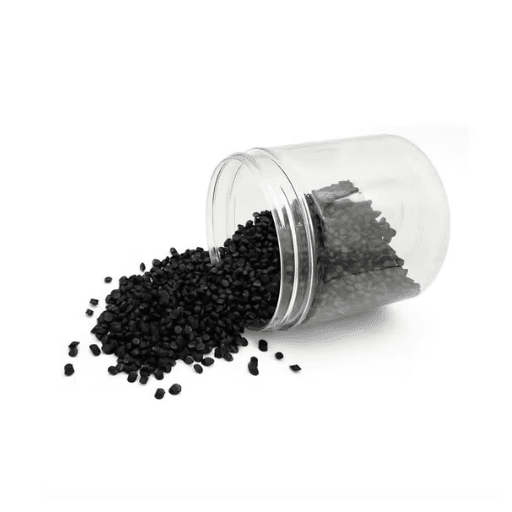
Since the 2000s, static dissipation during filling has become a design concern, particularly for portable and off-road tanks where fueling rates are high. Conductive compounds, HDPE loaded with conductive carbon black, dissipate static charge and prevent spark accumulation. TotalEnergies markets an ESD grade, ESD201B, for exactly this role in mono- or multilayer extrusion. If your application involves frequent filling, high flow rates, or low-humidity climates, ask for an ESD grade rather than assuming the standard tank compound is adequate.
HDPE Fuel Tank Regulations & Standards
Regulations are the reason fuel tanks are engineered the way they are. If there were no evaporative emissions limits, a monolayer HDPE tank would be good enough. The limits are what force the barrier architecture and the grade requirements above.
Permeation and Evaporative Emissions Standards
| Standard | Permeation Limit | Region / Scope | Notes |
|---|---|---|---|
| EPA Tier 2 / Tier 3 | 0.20 g/m²/day (light-duty) | USA (federal) | Measured at 40°C, CE10 (10% ethanol), SHED test |
| CARB LEV III | 0.20 g/m²/day tank; 0.300 g/test total budget | California + 17 Section-177 states | Effectively national in the US |
| EPA SORE (small off-road engines) | 1.5 g/m²/day | USA | Portable equipment fuel tanks |
| CARB off-road rules | 1.0 → 0.5 g/m²/day pathway | California | Smaller portable tanks |
| 40 CFR §1060.240 design spec | EVOH barrier ≥2% wall thickness | USA | Design-spec compliance option for equipment |
A useful reference for the federal design-specification option is the text of 40 CFR §1060.240, which lets equipment manufacturers demonstrate compliance by using an EVOH barrier layer of at least 2% of wall thickness rather than running a full permeation test.
Structural and Safety Standards
Permeation is not the only compliance axis. FMVSS 301 (Federal Motor Vehicle Safety Standard) governs fuel-system integrity in crash impacts: the tank must not leak after rear, side, and rollover impacts, which is why low-temperature impact and seamless construction matter. In Asia-Pacific, China 6 and Bharat Stage VI have tightened evaporative limits in the region’s largest markets, and Euro 7 in Europe is pushing the strictest frameworks yet, driving multilayer EVOH adoption across new vehicle programs. For portable tanks, the UN dangerous-goods regime applies: jerrycans carry markings like UN 3H1/Y/150 and must pass drop, stacking, and impact testing before they can be used for fuel.
Compliance and Durability
Two practical realities shape every fuel tank compliance program:
- Permeation must hold for the vehicle’s useful life, typically 10 years or 150,000 miles, not just at first certification.
- The measurement itself takes time. Certification programs commonly run about 20 weeks of fuel soak at 40°C before the final permeation reading, which is why the Michigan supplier’s failure above was so expensive: you discover the problem long after you thought the program was on track.
Accelerated aging, UV exposure, thermal cycling, and ethanol compatibility (up to E85) data are all part of a complete qualification package. Components are grouped into emission families, and carryover certification is available when geometry, wall thickness, material, and barrier remain unchanged. If you change any of those, the tank is a new certification event.
Compliance is decided by the resin as much as the design. A grade with the right ESCR, lot-consistent HLMI, and documented barrier compatibility is the difference between a smooth certification and a re-qualification. If you’re evaluating a fuel-tank-grade HDPE for a compliance-bound program, request a COA and datasheet before you commit to a lot.
Plastic vs Steel Fuel Tank: Decision Framework
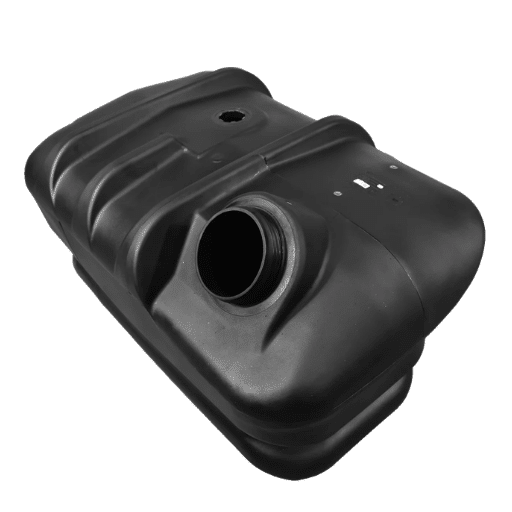
When you are actually choosing between materials for a new program, the comparison table below gives you the procurement-grade view.
| Factor | HDPE Fuel Tank | Steel Fuel Tank |
|---|---|---|
| Weight | ~30–50% lighter | Heavier (~2.5× density) |
| Corrosion | None; no rust contamination | Rusts over time; can contaminate fuel |
| Condensation | Lower, less water in fuel | Hygroscopic, retains water |
| Design freedom | Complex blow-molded shapes, seamless | Welded stampings limit shape |
| Weld seams / failure points | None | Every weld is a potential failure point |
| Crash / fire behavior | No sparks, springs back, melts/drips | Can spark, may burst/explode at seams |
| Heat resistance | ~ -40°C to +90°C service | Higher |
| Practical max capacity | ~6,500 L | Larger sizes feasible |
| Cost | Lower production cost | Higher forming + welding cost |
| Recycling | Multilayer EVOH harder to recycle; ~30% molding scrap | Readily recycled |
When to Choose Which
Choose HDPE for passenger cars and light trucks, gasoline and diesel, where weight, corrosion resistance, design freedom, and cost dominate the decision. That covers portable fuel cans and marine tanks too. Choose steel or aluminum for heavy commercial trucks and diesel applications that demand maximum strength and heat resistance, and for very large fuel storage above about 6,500 liters. The adoption numbers show where the market has landed: plastic fuel tanks hold roughly 90% of the market in Europe and the US, and about 70% of passenger-car fuel tanks in China.
Portable HDPE Fuel Tanks: Jerrycans & Marine Tanks
Fuel tanks are not only automotive. Portable fuel containers and marine tanks are a large, distinct segment with their own certification logic, and they are a common entry point for molders moving into fuel-grade blow molding.
UN-Approved Jerrycans
The standard sizes are 5 L and 20 L, with dimensions that trace back to military specifications for stackability and transport compatibility. UN approval is what makes them legal for transporting fuel, and the marking tells you what they passed. A typical marking reads UN 3H1/Y/150: “UN” packaging, type 3H1 for a plastic jerrycan, a Y packing group (medium danger), and 150 for the stacking test load.
A fuller marking might read UN 3H1W/Y1.0-Z1.0/150/94-D/BAM, encoding the specific drop height, year of manufacture, and certifying body.
Since June 2015, gasoline and diesel jerrycans also carry GHS/CLP hazard labeling for the European market, and the assemblies use PP screw caps with LDPE discharge spouts that include ventilation.
Resin Requirements for Portable Fuel Cans
Portable cans need the same core properties as automotive tanks, high ESCR, impact resistance, stiffness, and chemical resistance to fuel, plus UN-testable consistency from lot to lot. Grades explicitly marketed for UN-approved dangerous-goods packaging include SABIC B5403, DOW 40055L HF, and LyondellBasell Lupolen 4261 AG. Some UN-rated jerrycans use a blend of barrier resin and monolayer HDPE, such as the KORTRAX BR system, to resist solvent permeation and evaporation at reduced cost. For a buyer’s view of which grades a certified supplier holds and how to verify them, our guide to sourcing HDPE from China walks through the qualification steps.
Marine Fuel Tanks
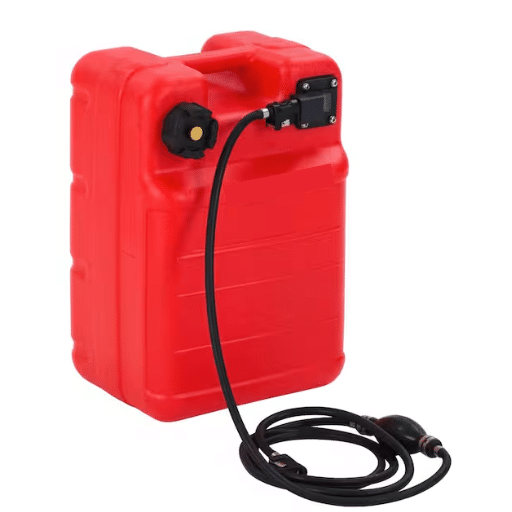
Marine tanks are blow-molded HDPE, typically 12 to 53 liters for portable units and larger for built-in tanks, CE-certified for European use, and available in low-profile and wheeled configurations. They use the same HMW-HDPE and barrier logic as automotive tanks, adapted for constant saltwater exposure and the sloshing loads of a moving vessel. Corrosion is not a concern with HDPE, which is why it displaced steel in this application too.
HDPE Fuel Tanks in 2026: Market Context
If you are sizing a sourcing decision, here is where the market stands in mid-2026:
- The global plastic fuel tank market is about USD 6.9 billion in 2026, heading to roughly USD 9.1 billion by 2036, about 2.8% CAGR (Fact.MR).
- The automotive plastic fuel tank resin market runs around USD 6.06 billion (2025) and is projected to reach USD 7.69 billion by 2032, about 3.5% CAGR.
- The total automotive fuel tank market across all materials is roughly USD 21.6 billion in 2026, growing to about USD 37.4 billion by 2036, about 5.6% CAGR.
- Plastic tanks hold about 43% of the automotive fuel tank market by type (2025), and HDPE is about 78% of fuel tank material.
- Passenger vehicles account for about 52.8% of plastic fuel tank demand, and Asia-Pacific is the largest regional market at roughly 45 to 54%, led by China and India.
- The 45 to 70 liter segment dominates at about 62%, while above-70-liter tanks are the fastest-growing, driven by North American pickups and SUVs.
The demand drivers are consistent: tighter emission regulations (China 6, Euro 7, LEV III), the EV transition (PHEVs and HEVs retain fuel tanks, often smaller with stricter permeation because EV-mode cycling raises fuel temperature and vapor pressure), lightweighting, and wider multilayer barrier adoption. Indicative August 2026 pricing for China-origin fuel-tank-grade HDPE sits around USD 1,000 to 1,200 per metric ton, with branded prime imports like TotalEnergies MS 201 BN and SABIC B5403 commanding a premium.
Sourcing Fuel-Tank-Grade HDPE
The article ends where procurement begins. Everything above establishes what the material must do; this section covers how to buy it without repeating the Michigan scenario.
Branded Prime vs. Generic Grades
Fuel tank production punishes inconsistency. A density or HLMI swing between lots shifts parison sag, drifts wall thickness, and can push a marginal tank past its ESCR margin. Branded prime resin holds manufacturer-controlled density and HLMI distributions with published tolerances and full batch traceability. The premium you pay is usually recovered many times over in reduced scrap and avoided re-qualification. We saw the cost of failure at the top of this article; the savings from a consistent lot usually exceed the branded premium.
How to Verify Fuel-Tank-Grade HDPE via COA
When a supplier offers you fuel-tank-grade HDPE, ask for the Certificate of Analysis and check these fields against the manufacturer’s published datasheet:
- Grade designation: brand and grade number, not “fuel tank HDPE.”
- Density per ASTM D792.
- HLMI at 190°C/21.6 kg and the standard MI at 190°C/2.16 kg, so you can confirm you are looking at the right test condition.
- ESCR per ASTM D1693. This is the single most important fuel tank property; its absence is a deal-breaker.
- Tensile yield strength.
- Compliance statements relevant to your market: FMVSS 301, EPA/CARB, REACH, RoHS, and FDA where applicable.
The COA must be issued on the manufacturer’s letterhead for the specific lot. A supplier-generated document that only references manufacturer data does not carry the same verification value. Cross-reference every value, and confirm that the barrier compatibility and processing-temperature window match your blow-molding line.
Red Flags in Unverified Fuel-Tank-Grade Supply
Watch for these signs when qualifying a supplier:
- A missing or generic grade designation, like “fuel tank HDPE” with no brand and grade number.
- A supplier-generated COA with no manufacturer letterhead or lot-specific values.
- HLMI reported at the wrong test condition (2.16 kg instead of 21.6 kg).
- No ESCR value at all.
- Lot-to-lot density or HLMI swings beyond the stated tolerance.
- Pricing significantly below the regional market benchmark with no credible explanation.
At Yifuhui, we supply certified fuel-tank-grade HDPE resin from China, branded prime material from manufacturers including TotalEnergies, SABIC, LyondellBasell, Braskem, and NOVA Chemicals, each with manufacturer-issued COA traceable to lot. Based in Suzhou minutes from the Port of Shanghai, we ship the export documentation package international buyers need, and our 25 kg minimum order lets you run a qualification trial before committing to volume.
Request a Quote for Fuel-Tank-Grade HDPE → Contact Yifuhui
Tell us your tank type, capacity, barrier approach, and target market, and we’ll confirm current availability of the matching branded grade with its COA. From automotive saddle-tank grades to UN-approved jerrycan material, the trial starts at 25 kg, FOB Shanghai.
Conclusion
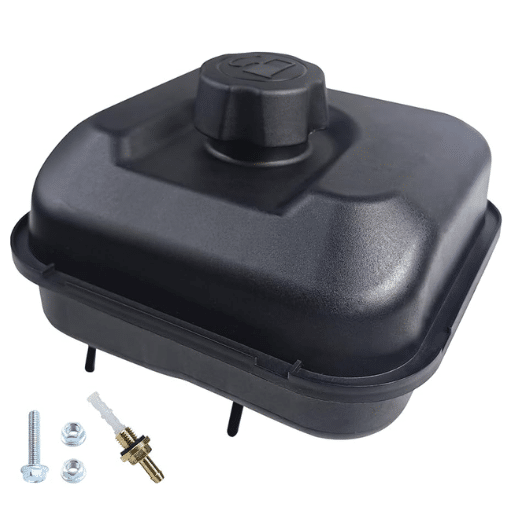
Specifying HDPE fuel tanks comes down to four decisions: choose an HMW-HDPE copolymer blow-molding grade with high ESCR and low-temperature impact; control permeation with a multilayer EVOH barrier, fluorination, or sulfonation; meet the EPA/CARB/China 6/Euro 7 limits and FMVSS 301 crash integrity for your target market; and verify resin consistency through a manufacturer-issued COA on every lot. Get those four right and the tank program runs, certifies, and ships on schedule. Get any one wrong, as the Michigan program did, and you own eleven weeks of re-qualification and a half-million-dollar write-off.
The good news is that the materials, the standards, and the verification methods are all well documented. You do not need to invent the answer; you need a resin supplier who can provide the right branded grade with the documentation to prove it. That is the part we handle. To gain a deeper understanding of HDPE vs PP: Material Selection Guide for Engineers and Buyers, please click to refer to our accompanying guide.
Start Your Fuel Tank Grade Qualification → Request a COA Sample
Frequently Asked Questions
What are HDPE fuel tanks made of?
HDPE fuel tanks are made from high-molecular-weight HDPE copolymers (hexene or butene) designed for blow molding. Modern automotive tanks are multilayer co-extruded structures with an EVOH or nylon barrier layer plus adhesive tie layers to control fuel permeation, or single-layer HDPE treated by fluorination or sulfonation.
Why is HDPE used for fuel tanks instead of steel?
HDPE tanks are roughly 30 to 50% lighter, corrosion-free (no rust contamination), cheaper to produce, formable into complex seamless shapes, and safer in crashes (no sparks, springs back, melts rather than explodes). Plastic fuel tank adoption is about 90% in Europe and the US and about 70% in China passenger cars. Steel remains on heavy trucks and very large tanks.
What is the ESCR requirement for HDPE fuel tank resin?
Fuel tank HDPE grades typically require ESCR of at least 1,000 hours per ASTM D1693 (100% Igepal), the single most important property for fuel service. Grades range from about 500 hours for some portable-can resins to more than 1,000 hours for automotive tanks.
How does an HDPE fuel tank stop fuel permeation?
Untreated HDPE permeates 10 to 30 g/m²/day, far above the 0.20 g/m²/day EPA/CARB limit. Multilayer coextrusion with an EVOH barrier layer (at least 2% of wall thickness, roughly 97% permeation reduction) is the state-of-the-art method. Fluorination (0.05 to 0.15 g/m²/day) and sulfonation are cheaper surface treatments; fluorination raises PFAS/TSCA concerns.
What regulations apply to HDPE fuel tanks?
Key US standards are EPA Tier 3 (0.20 g/m²/day permeation), CARB LEV III (0.20 g/m²/day tank, 0.300 g/test total budget), EPA SORE (1.5 g/m²/day portable), and FMVSS 301 for crash fuel-system integrity. China 6 and Euro 7 drive evaporative limits in Asia-Pacific and Europe. Portable jerrycans need UN dangerous-goods certification, for example UN 3H1/Y/150.
How are HDPE fuel tanks manufactured?
Automotive fuel tanks are made by extrusion blow molding: a multilayer parison is co-extruded, clamped in a mold, and inflated with compressed air to form a seamless one-piece tank. Large tanks use accumulator-head machines. Baffles, pumps, and fittings are integrated during molding.
What density and melt index should HDPE fuel tank resin have?
Fuel tank grades have a density of 0.944 to 0.952 g/cm³ (typical 0.946 to 0.949) and a High Load Melt Index of 4.5 to 10 g/10 min at 190°C/21.6 kg. The standard melt index at 2.16 kg is very low, at or below 0.10 to 0.30, indicating high molecular weight with good melt strength for blow molding.
How do I verify that HDPE resin matches the fuel tank grade I specified?
Request a Certificate of Analysis issued on the manufacturer’s letterhead for each lot. Verify grade designation, density per ASTM D792, HLMI at 190°C/21.6 kg, the standard MI at 190°C/2.16 kg, and ESCR per ASTM D1693 against the manufacturer’s published datasheet. Reject supplier-generated internal COAs without manufacturer documentation.