



A food packaging buyer in Hamburg once rejected a full container of HDPE resin because the Certificate of Analysis cited a cleaning-product grade. The supplier had promised “food-safe #2 plastic,” but the lot was never manufactured under FDA food-contact conditions. That one documentation gap cost three weeks of production and a strained customer relationship.
Stories like this are more common than they should be. HDPE is one of the most widely used food-contact plastics in the world. It is also one of the most misunderstood. The question “is HDPE food safe” gets a quick yes from most suppliers, but the real answer depends on resin origin, additive package, processing history, and the documentation that proves it.
In this guide, we explain when HDPE is truly food-safe, what FDA 21 CFR 177.1520 actually requires, and how procurement teams can verify food-grade HDPE resin before it reaches the production line. Whether you are specifying resin for milk jugs, food containers, or processing equipment, you will leave with a clear compliance checklist and a sourcing framework you can use immediately. If you want a broader technical foundation before diving into food safety specifics, our High Density Polyethylene (HDPE): Complete Material Guide covers the material’s properties, grades, and processing in detail.
Is HDPE Food Safe? The Short Answer
Yes, HDPE is food-safe when it is virgin, food-grade resin manufactured and used within its intended temperature range.
High-density polyethylene (HDPE) is approved by the U.S. Food and Drug Administration for direct, repeated food contact under 21 CFR 177.1520, the regulation covering olefin polymers. It contains no BPA, no phthalates, and has extremely low migration under normal food-storage conditions. That is why it appears in milk jugs, beverage bottles, butter tubs, cereal liners, and countless food-processing parts.
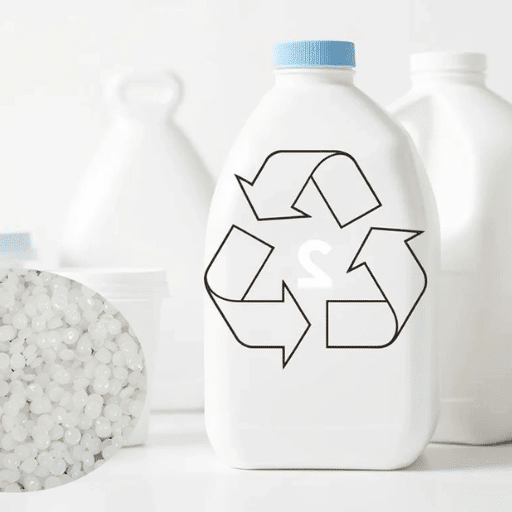
However, not every container marked with recycling code #2 is food-grade. The #2 symbol only identifies the resin family. It says nothing about additives, prior contents, or whether the material was produced under food-contact manufacturing conditions. A detergent bottle and a milk jug can carry the same symbol while meeting very different safety standards.
Need food-grade HDPE resin with full documentation? Request a quote for FDA-compliant HDPE resin with manufacturer-issued COA, 25 kg minimum order, FOB Shanghai.
What Makes HDPE Food-Safe?
Three factors determine whether an HDPE article is safe for food contact: regulatory compliance, resin purity, and additive safety.
FDA 21 CFR 177.1520 Compliance
The FDA regulates HDPE for food contact under 21 CFR 177.1520, which covers olefin polymers used in articles that contact food repeatedly. The regulation sets limits on extractable substances to ensure that migration into food stays below safe thresholds.
For HDPE, the key requirements include:
- n-hexane extractables must not exceed 5.0 mg per square inch of surface area.
- Xylene extractables must not exceed 3.0 mg per square inch.
- Additives, colorants, and stabilizers must be cleared for food contact at the intended use level.
- The finished article must be manufactured under conditions that keep these extractables within limits for the intended food type and temperature.
These numbers matter because they give buyers an objective way to compare a supplier’s claims against a published regulation. A statement like “food-safe HDPE” is only meaningful if it is tied to a specific compliance framework such as FDA 21 CFR 177.1520, EU 10/2011/EC, or an equivalent national standard.
Virgin vs. Recycled HDPE
Virgin HDPE is broadly accepted as food-safe. It is produced directly from polymerization feedstock, so its composition is controlled and traceable. Food-grade virgin HDPE is the material of choice for milk jugs, food-storage containers, and bottle caps.
Recycled HDPE is more complex. Post-consumer recycled (PCR) HDPE may have contained cleaning chemicals, motor oil, or other non-food substances. For that reason, the FDA evaluates recycled HDPE for food contact on a case-by-case basis. A recycler must submit data showing that its decontamination process removes potential contaminants and that the recycled resin meets the same extractables limits as virgin material. If approved, the FDA issues a Letter of Non-Objection (LNO).
Without an LNO, recycled HDPE should not be used in direct food-contact layers. Some brands use PCR HDPE in non-contact outer layers or in applications such as shipping pallets, but direct food contact requires documented clearance. If you are weighing recycled material for any part of your product, our HDPE Recycling: A Technical and Sourcing Guide for Engineers and Procurement Teams explains how decontamination, grading, and traceability work in practice.
BPA-Free, Phthalate-Free, and Low Migration
HDPE does not require bisphenol A (BPA) or phthalates to achieve its properties. This distinguishes it from some other plastics and gives food-packaging buyers one less migration risk to manage. HDPE also absorbs almost no water, less than 0.01% over 24 hours, which makes it suitable for moist and fatty foods when the correct grade is used.
HDPE Recycling Code #2: Does It Mean Food-Safe?
The #2 recycling code identifies high-density polyethylene. It does not certify food-grade status. This distinction trips up buyers and consumers regularly.
A milk jug and a motor-oil bottle can both display #2. The milk jug was produced from food-contact-certified virgin HDPE with FDA-compliant additives. The motor-oil bottle was produced from industrial-grade HDPE with colorants and stabilizers chosen for chemical resistance, not food safety. Reusing the oil bottle for food storage would introduce contamination risk even though the resin family is the same.
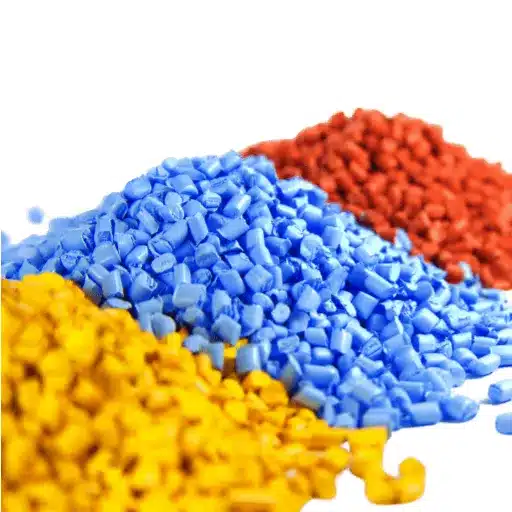
For manufacturers, the same principle applies at scale. A resin lot sold as “HDPE #2 granules” is not automatically suitable for a food-contact application. The buyer must confirm:
- The grade was manufactured for food contact.
- The additive package is cleared for the intended food type.
- The supplier can provide a COA or compliance declaration referencing FDA 21 CFR 177.1520 or the relevant regional regulation.
If a supplier only points to the #2 symbol as proof of food safety, that is a red flag. The symbol identifies the polymer. Compliance documentation proves the grade.
Common Food-Contact Applications for HDPE
HDPE’s combination of chemical resistance, moisture barrier, impact strength, and low cost makes it the default choice for many food-packaging categories. Typical applications include:
- Milk jugs and beverage bottles: Blow-molded HDPE resists stress cracking and handles cold-chain distribution well.
- Food-storage containers and prep containers: Virgin HDPE tubs and buckets store dry goods, oils, and prepared foods.
- Butter and margarine tubs: Injection-molded HDPE provides rigidity at low cost.
- Cereal box liners: Thin HDPE film protects dry food from moisture.
- Bottle caps and closures: High-MFI injection grades form reliable seals.
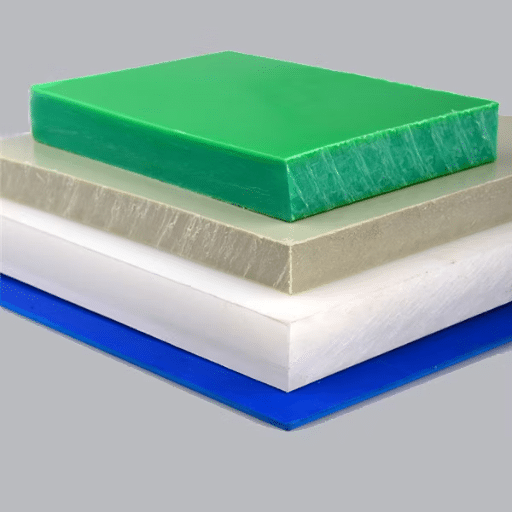
- Cutting boards and conveyor parts: HDPE sheet is easy to clean and resists many sanitizing chemicals.
In each case, the application is only food-safe if the specific grade was compounded and processed for food contact. A structural HDPE pipe grade may have excellent mechanical properties, but it is not automatically cleared for direct food contact. Because sanitizing agents and fatty or acidic foods interact differently with the resin, it helps to review our HDPE Chemical Resistance: Compatibility Chart & Industrial Application Guide when matching a grade to your specific food type and cleaning process.
HDPE Food-Safe Temperature Limits
Temperature is where HDPE food safety often breaks down in practice. The material is excellent at low temperatures, but its performance drops as heat increases.
Freezer and Refrigerated Storage
HDPE remains tough and flexible down to approximately -50°C. This makes it ideal for frozen food packaging, ice-cream tubs, and cold-chain logistics. Unlike some plastics that become brittle in the freezer, HDPE retains impact resistance.
Hot-Fill and Cooking Limits
HDPE begins to soften near 100°C. Its typical peak melting range is 120–137°C, and its continuous service temperature is generally around 80°C. For that reason:
- Microwave use is not recommended. HDPE containers can warp, leach additives, or deform under microwave heating.
- Boiling water is not recommended. Long-term contact with boiling water can soften the material and accelerate additive migration.
- Hot-fill applications are limited to short contact times at controlled temperatures, usually below 80°C, depending on the grade.
| Use Case | Typical Temperature | Safe for Food Contact? |
|---|---|---|
| Freezer storage | -20°C to -40°C | Yes |
| Refrigerated storage | 0°C to 4°C | Yes |
| Room-temperature dry goods | 20°C to 25°C | Yes |
| Hot-fill, short contact | Up to ~80°C | Grade-dependent |
| Dishwasher top rack | Up to ~65°C | Generally yes for labeled containers |
| Microwave / boiling water | 100°C+ | No |
When a food-packaging engineer specifies HDPE, the temperature profile of the filled product is just as important as the resin name. A grade that is perfect for refrigerated milk may fail in a hot-fill sauce application.
HDPE vs. Other Food-Safe Plastics
Engineers and buyers often compare HDPE to PET, PP, LDPE, and PC when selecting food-contact materials. Each has a different balance of barrier properties, temperature resistance, clarity, and cost.
| Material | Food-Safe | BPA-Free | Typical Max Temp | Best Uses |
|---|---|---|---|---|
| HDPE | Yes, food-grade virgin | Yes | ~80°C continuous | Milk jugs, bottles, tubs, caps |
| PET | Yes, food-grade | Yes | ~60°C continuous | Water bottles, clamshells, trays |
| PP | Yes, food-grade | Yes | ~100°C continuous | Hot-fill containers, microwave trays |
| LDPE | Yes, food-grade | Yes | ~80°C continuous | Films, squeeze bottles, liners |
| PC | Yes, some grades | Can contain BPA | ~120°C continuous | Reusable water bottles (declining) |
| PVC | Limited food grades | Phthalate concerns | ~60°C continuous | Films, some bottles (declining) |
| PS | Limited | Yes | ~70°C continuous | Foam trays, disposable cups |
When to choose HDPE over PP: HDPE usually wins on cost, chemical resistance, and impact toughness at low temperatures. PP wins when higher heat resistance or microwave compatibility is required.
When to choose HDPE over PET: HDPE is more flexible and impact-resistant than PET. PET is preferred when optical clarity or carbonation barrier is important.
For a deeper comparison within the polyethylene family, see our HDPE vs LDPE material guide.
Food-Grade HDPE Grades for Manufacturers
Not all HDPE is created equal. The same polymer family includes grades optimized for blow molding, injection molding, extrusion, and rotational molding. Each process demands a different melt flow index (MFI), density, and additive package.
Blow Molding Grades
Blow-molded HDPE is used for milk jugs, beverage bottles, and drums. These grades typically have a low MFI (0.2–1.5 g/10 min) to provide melt strength during parison formation. They also need high environmental stress crack resistance (ESCR) because fatty or oily foods can accelerate cracking in the wrong grade.
Injection Molding Grades
Caps, closures, thin-wall containers, and tubs use higher-MFI grades (8–50+ g/10 min). The higher flow allows fast cycle times and complete cavity fill in complex molds. Food-contact injection grades must use FDA-compliant colorants and slip agents.
Extrusion Grades
Pipe, film, sheet, and profile extrusion use low-MFI grades (0.2–0.6 g/10 min) with balanced melt strength and draw-down stability. Food-contact film grades need careful additive selection to avoid migration issues.
Common Branded Food-Contact HDPE Grades
Food-packaging manufacturers often specify branded prime resins to ensure lot-to-lot consistency. Examples include:
- Sinopec HDPE food-contact grades
- Reliance HDPE food-grade grades
- LyondellBasell / Equate / QAPCO grades such as 5502BN
- SABIC M80064 / M80064S
- Dow KT10000, DMDA-8940
- Chevron Phillips HHM5202-02BN, HHMTR-480AT
Specifying by brand and grade number matters because it locks in density, MFI, and additive chemistry. A generic “food-grade HDPE” description leaves too much room for substitution.
How to Verify Food-Grade HDPE from a Supplier
Documentation separates a compliant food-grade resin from a risky guess. Before placing an order, request the following from your supplier.
Certificate of Analysis (COA) Checklist
A proper COA for food-grade HDPE should include:
- Grade designation matching the manufacturer’s official portfolio.
- Manufacturer name and lot number for batch traceability.
- FDA 21 CFR 177.1520 compliance statement or equivalent regional declaration.
- Key physical properties: MFI, density, tensile strength, melting point.
- Additive declaration confirming food-contact clearance.
- Test methods referenced, such as ASTM D1238 for MFI or ASTM D792 for density.
Cross-check the COA values against the manufacturer’s published datasheet. If the MFI or density falls outside the published range, ask why before accepting the lot.
Red Flags in Unverified Supply
- Price significantly below market, often a sign of off-spec or mislabeled material.
- COA issued only by the trading company, not the resin manufacturer.
- Vague claims like “food safe” without reference to a specific regulation.
- Refusal to provide lot numbers or allow manufacturer verification.
- Generic descriptions such as “PE granules” instead of a branded grade name.
A procurement manager at a Dutch packaging company once told us that the fastest way her team weeds out unverified resin traders is to ask for the manufacturer datasheet and a verifiable lot number. Suppliers who hesitate usually have something to hide.
Sourcing Food-Grade HDPE Resin from China
China is a major source of HDPE resin, but food-contact buyers need to look beyond price. The key decision is whether the supplier can deliver branded prime resin with traceable documentation.
Branded Prime vs. Compound Grades
Branded prime HDPE comes from recognized polymer producers such as Sinopec, SABIC, Dow, or LyondellBasell. It is manufactured to tight specifications and supported by official datasheets and COAs. Lot-to-lot consistency is generally reliable.
Compound or modified HDPE is produced by third-party compounders. Some compounds are excellent, but others vary widely in quality. Without a manufacturer-issued COA, it is difficult to confirm that the material meets food-contact extractables limits.
For food-contact applications, branded prime resin is usually the lower-risk choice.
What Yifuhui Supplies
At Suzhou Yifuhui New Material Co., Ltd., we stock food-contact HDPE grades from established manufacturers. Every shipment includes:
- Manufacturer-issued Certificate of Analysis (COA)
- Material Safety Data Sheet (MSDS)
- Commercial invoice and packing list
- FDA / RoHS / REACH compliance statements where applicable
- Lot-level traceability to manufacturer batch records
Our location in Suzhou, minutes from the Port of Shanghai, supports 7–14 day lead times to major international ports. Orders start at 25 kg, which makes branded food-grade HDPE accessible for trials and qualification runs.
Planning a food-contact HDPE project? Tell us your application and target compliance framework, we will identify the right grade and confirm COA availability.
Frequently Asked Questions

Is HDPE 2 food safe?
Recycling code #2 means the container is made from HDPE, but it does not mean the container is food-grade. A #2 detergent bottle is not safe for food storage. Always confirm the item was manufactured for food contact.
Is HDPE microwave safe?
No. HDPE softens near 100°C and can warp or deform in a microwave. It may also accelerate additive migration. Use microwave-safe materials such as PP for reheating.
Is HDPE dishwasher safe?
Many food-grade HDPE containers are labeled dishwasher-safe for the top rack only, where temperatures stay lower. Avoid the heating element and check the manufacturer’s instructions.
Can HDPE hold boiling water?
No. Boiling water can soften HDPE and increase migration risk. Use materials rated for high-temperature food contact, such as PP or glass.
Is recycled HDPE food safe?
Only if the recycler has received an FDA Letter of Non-Objection for the specific decontamination process. Without that clearance, recycled HDPE should not contact food directly.
Is HDPE safer than PET?
Both are safe when used as intended. HDPE is more impact-resistant and flexible; PET offers better clarity and carbonation barrier. The safer choice depends on the application, not the material alone.
How do I know if my HDPE container is food-grade?
Look for labeling that says “food-safe” or “food-grade” from the manufacturer. For resin buyers, verify the COA references FDA 21 CFR 177.1520 or an equivalent food-contact regulation.
Conclusion
Is HDPE food safe? Yes; when it is virgin, food-grade resin used within its temperature limits and backed by proper compliance documentation. The material itself is FDA-compliant under 21 CFR 177.1520, BPA-free, and suitable for a wide range of food-contact applications from milk jugs to processing equipment.
The risk enters when buyers assume that “#2 plastic” or “HDPE granules” automatically equals food-grade. It does not. Food safety depends on resin origin, additive package, processing conditions, and the COA that proves compliance.
For procurement teams sourcing HDPE resin from China, the safest path is to specify branded prime grades, request manufacturer-issued COAs, and cross-check lot numbers against published specifications. If you need food-grade HDPE resin with full traceability, request a quote today, we supply certified grades from 25 kg trial orders to full container loads, with COA, MSDS, and export documentation ready for your QA team. To gain a deeper understanding of HDPE Supplier China: How to Source Certified Resin Without the Guesswork, please refer to our accompanying guide.