



A procurement manager in Hamburg once told us his worst sourcing story. His company ordered 20 tons of HDPE pipe grade from a new Chinese supplier at a price 18% below the next best quote. The COA looked correct. The photos showed a clean warehouse. When the container arrived, the MFI was off by 4 g/10 min, the density sat outside spec, and hydrostatic tests failed. Six months of claims, third-party testing, and production delays followed. The savings evaporated before the first meter of pipe was installed.
Stories like this are why “HDPE supplier China” is not just a search term. It is a high-stakes procurement decision. The right supplier delivers consistent, specification-compliant resin with complete documentation. The wrong one creates quality failures, customs delays, and audit problems that outlast any price advantage.
This guide is for procurement managers and engineers who plan to buy HDPE from China or work with an HDPE resin supplier China trusts. You will learn how to evaluate suppliers, specify the right grade, verify documentation, spot red flags, and structure a low-risk first order. We will focus on raw HDPE resin sourcing, pellets and granules, while noting where pipe, sheet, and finished-component buyers need different criteria.
What Is an HDPE Supplier China?
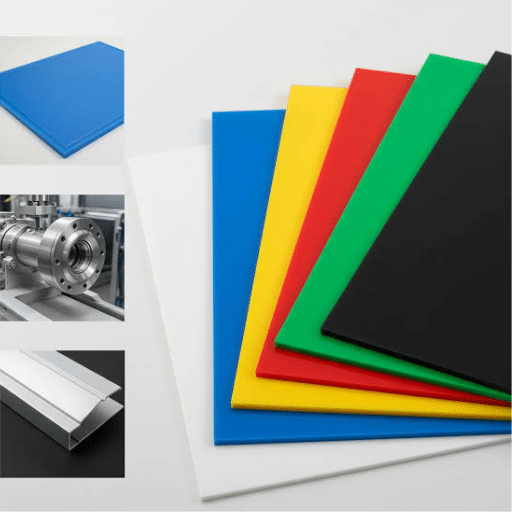
An HDPE supplier China is a manufacturer, distributor, or trading company that sells high-density polyethylene resin, pellets, or granules from China to international buyers. These suppliers typically provide certificates of analysis, technical datasheets, material safety data sheets, and export logistics such as FOB Shanghai or CIF delivery.
What HDPE Buyers Actually Source from China
HDPE is not one material. It is a family of high-density polyethylene grades differentiated by molecular weight, MFI, density, and additive packages. Before contacting any HDPE supplier China, clarify which form you actually need. Not every HDPE granules supplier China stocks pipe-grade PE100 or film-grade resin, so form and grade must come first.
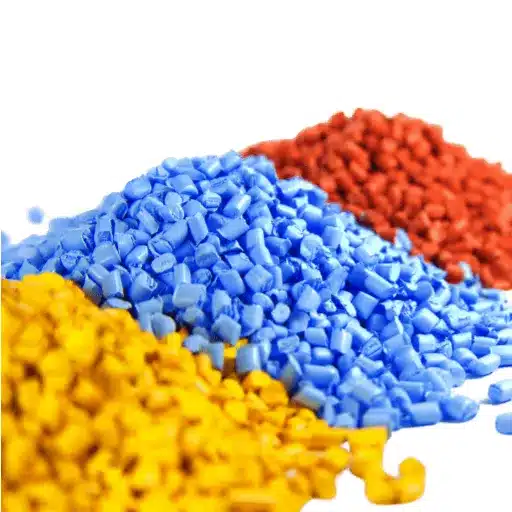
HDPE resin granules / pellets are the focus of this guide. These are used by injection molders, extruders, and blow molders who convert raw material into finished parts. Buyers typically specify by grade family, MFI range, density, and application.
If you are comparing polyethylene options, see our HDPE vs. LDPE comparison for density, strength, and application differences. This is the form most HDPE resin supplier China companies stock and ship internationally.
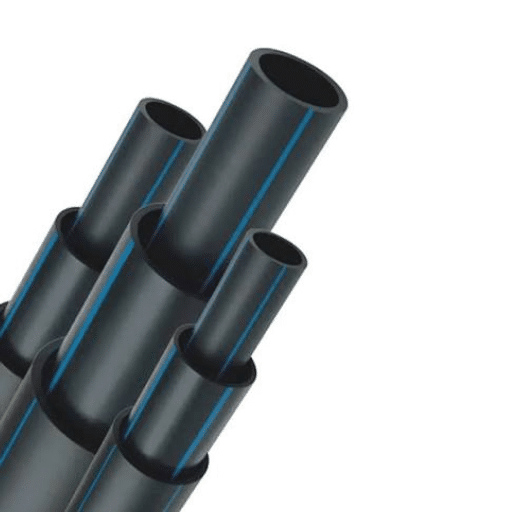
HDPE pipe and fittings are usually sourced from pipe manufacturers, not resin distributors. Pipe buyers need PE80, PE100, or PE4710 pressure-rated grades with hydrostatic strength certification. The supplier evaluation shifts from resin quality to pipe extrusion capability and pressure-test records.
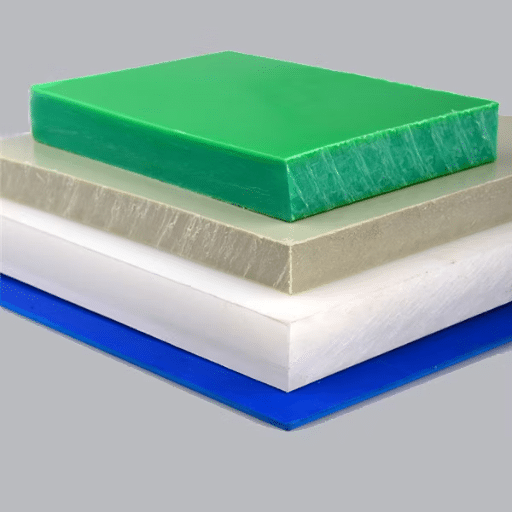
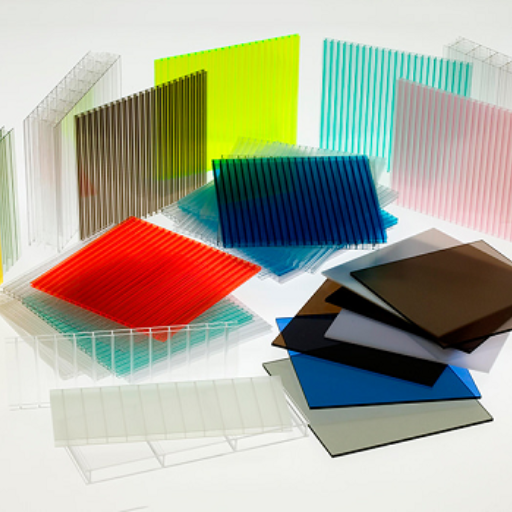
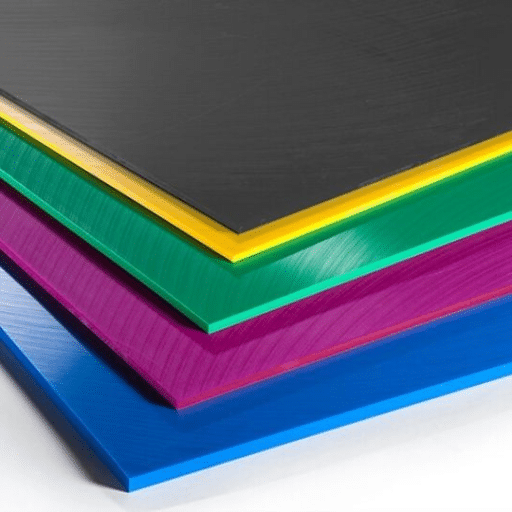
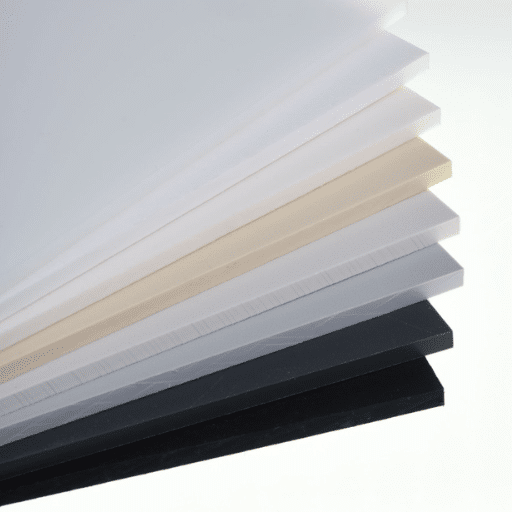
HDPE sheet, film, and geomembrane are intermediate products. Sheet buyers check thickness tolerance, surface finish, and UV stabilization. Geomembrane buyers need ASTM or GRI certification for liner applications.
Finished or semi-finished HDPE parts, tanks, drums, crates, require a parts manufacturer with molding capability, not just a resin supplier.
The rest of this article focuses on HDPE resin sourcing because resin is the common input behind most HDPE supply chains. If you source pipe or sheet, many of the verification principles still apply. However, your HDPE supplier China audit must also include fabrication capability.
Key HDPE Grades and Specifications to Specify
A generic inquiry that says “quote me HDPE” will attract low-quality responses. Professional buyers specify the grade family and key properties. Your HDPE supplier China should be able to respond to these terms without prompting. For a deeper look at the properties behind these grades, see our HDPE properties guide.
Blow molding grades
Blow molding HDPE needs melt strength, ESCR, and stiffness balance. Typical applications include bottles, drums, and small fuel tanks. MFI usually falls in the 0.2–1.0 g/10 min range for larger containers and up to 3–5 g/10 min for smaller bottles.
Injection molding grades
Injection molding HDPE flows more easily. MFI ranges from 5 g/10 min up to 40 g/10 min for thin-wall applications like caps and closures. These grades prioritize fast cycle times and dimensional stability. See our HDPE injection molding process guide for processing tips.
Extrusion grades, PE80 / PE100 / PE4710
Pipe-grade HDPE is the most specification-sensitive category. PE80 and PE100 are ISO classifications based on minimum required strength. PE4710 is the ASTM standard common in North America. These grades require long-term hydrostatic strength data, slow crack growth resistance, and density control. Pipe buyers should request compliance to ISO 4427, ASTM D4976, or the relevant local standard.
Film grades
Film HDPE emphasizes toughness, puncture resistance, and processability. MFI is typically 0.3–1.0 g/10 min for blown film. These grades are used in flexible packaging, agricultural film, and industrial liners.
Virgin vs. recycled HDPE
Virgin HDPE comes directly from polymerization. It offers predictable mechanical properties, cleaner color, and full regulatory documentation. For buyers who need a virgin HDPE resin China source, this is usually the only acceptable option. Recycled HDPE, labeled rHDPE or PCR-HDPE, costs less but varies in MFI, color, and contamination level. For food-contact, medical, or OEM automotive applications, virgin resin is usually mandatory.
| Grade family | Typical MFI range | Density (g/cm³) | Key property | Common application |
|---|---|---|---|---|
| Blow molding | 0.2–5 | 0.946–0.960 | ESCR, melt strength | Bottles, drums, fuel tanks |
| Injection molding | 5–40 | 0.950–0.965 | Fast flow, stiffness | Crates, caps, pallets |
| Pipe (PE80/PE100) | 0.2–0.4 | 0.943–0.955 | Hydrostatic strength | Water/gas distribution pipe |
| Film | 0.3–1.0 | 0.941–0.950 | Toughness, puncture resistance | Packaging, agricultural film |
When you request a quote, include your required MFI range, density target, processing method, and end application. A qualified HDPE supplier China will use this information to recommend the correct grade rather than offering whatever is cheapest in stock.
How to Evaluate an HDPE Supplier China Partner
The Chinese HDPE market includes genuine branded distributors, compound manufacturers, recycling operations, and spot-market traders. Any company listed as an HDPE manufacturer China may be a direct producer or an authorized agent, so verification matters. Supplier evaluation is the step that separates a reliable long-term partner from a one-time low-price transaction.
Factory vs. trading company
A factory or authorized distributor controls the material source. A trading company buys and resells, often without holding inventory. Trading companies are not automatically bad, many legitimate distributors operate this way, but you should know which one you are dealing with. Ask directly: do you hold stock of this grade, or do you source to order?
Production capacity and equipment audit
For resin buyers, capacity matters less than inventory discipline. A good supplier can tell you which grades they stock, typical lot sizes, and warehouse conditions. Ask for photos or a video call showing storage, packaging, and lot segregation. Off-spec or cross-contaminated resin often comes from poor warehouse handling, not poor manufacturing.
Export experience and reference customers
Suppliers with international experience understand documentation, Incoterms, and customs requirements. Ask for references in your region, or at least examples of previous exports to similar markets. A supplier hesitant to provide references is a warning sign.
Communication responsiveness and technical support
Send a technical question with your inquiry. For example, ask whether a specific HDPE grade meets FDA food-contact requirements or what the ESCR value is for a blow molding grade. A supplier who answers clearly and accurately demonstrates technical competence. A supplier who deflects or gives vague responses may not understand the material they are selling.
Supplier vetting checklist:
- Business license and export registration confirmed
- ISO 9001 or equivalent quality certification
- Stock confirmation for the specific grade requested
- Sample COA available before order
- Clear Incoterm and lead-time quotation
- Responsive technical support
- Export references in your region
At Yifuhui, we stock standard HDPE grades alongside our engineering plastics portfolio. We provide supplier qualification documentation, sample COAs, and 24-hour inquiry response for international buyers.
Request a sample COA for your HDPE grade, response within 24 hours]
Documentation Every HDPE Supplier China Order Should Include
Documentation is where a professional HDPE supplier China separates itself from commodity traders. Every HDPE shipment from China should arrive with a complete package that supports customs clearance, incoming inspection, and your internal quality records.
Certificate of Analysis (COA)
The COA is the most important document. It should be issued against a specific production lot and include the material grade, lot number, manufacturer, test date, and measured properties. For HDPE, key values include MFI, density, tensile strength, and, for pipe grades, hydrostatic strength or ESCR where applicable.
The COA should come from the manufacturer or a verified distributor with direct traceability. A supplier-generated COA based on unspecified testing is not sufficient for regulated or OEM applications.
Material Safety Data Sheet (MSDS / SDS)
The MSDS describes chemical composition, handling precautions, storage conditions, and emergency response information. It is required for customs clearance in most countries and should match the exact grade being shipped.
Technical Data Sheet (TDS)
The TDS provides the manufacturer’s published property ranges and processing recommendations. Use it to cross-check the COA values. If the COA MFI falls outside the TDS range, request an explanation before accepting the shipment.
Compliance certificates
Depending on your application and destination market, you may need:
- ISO 9001 quality system certification
- FDA or EU 10/2011 food-contact compliance
- RoHS and REACH declarations for electronics-bound shipments
- CE marking or ASTM/ISO pipe standards for pressure-pipe grades
- SGS or Intertek third-party test reports
A complete documentation package is not an extra. It is proof that your HDPE supplier China operates a professional trade process. If a supplier treats documentation as optional, treat that supplier as high-risk.
Red Flags When Sourcing HDPE from China
Some warning signs are obvious when you buy HDPE from China. Others only appear after you dig. Watch for these during supplier evaluation.
Prices significantly below market. HDPE is a globally traded commodity with transparent pricing. A quote 20–30% below comparable offers should trigger investigation, not excitement. The low price may reflect recycled content sold as virgin, off-spec material, or a trader who cannot deliver.
Refusal to provide a sample or sample COA. A legitimate HDPE supplier China holds inventory and can provide a 1–5 kg sample with COA before a bulk order. A supplier who refuses or delays samples may not have the material in stock.
Vague grade descriptions. “HDPE pellets” without MFI, density, or grade family tells you nothing. Professional suppliers describe material by grade, manufacturer, and intended application.
Unwillingness to specify Incoterms. A supplier who avoids clear FOB, CIF, or EXW terms is often inexperienced with international trade or hiding logistics costs.
No verifiable business license or factory address. Request a business license and verify the registered address. Many problems arise from shell traders with no fixed facility.
When Marcus, a procurement specialist at a Dutch packaging company, ignored these flags, he learned the hard way. His supplier quoted a price 22% below market for HDPE blow molding grade, shipped material from three different lots without disclosure, and provided a COA with no manufacturer letterhead. The resulting color variation forced his customer to reject a full production run. The cost of rework exceeded the original purchase price.
Pricing, MOQ, and Order Structure
When you work with an HDPE supplier China, pricing depends on virgin vs. recycled content, grade family, brand, volume, oil-linked feedstock costs, and global supply-demand balance. As of 2026, global HDPE output is approximately 56.24 million tons with an average selling price around USD 1,087 per ton, according to Global Info Research. The advanced HDPE resins market is projected to grow from roughly USD 27.98 billion in 2025 to USD 48.01 billion by 2033, per Grand View Research.
For buyers sourcing from China, indicative ranges are:
- Virgin HDPE granules: roughly USD 0.90–1.50/kg depending on grade and volume
- Recycled HDPE granules: roughly USD 0.55–0.95/kg, with wider quality variation
- HDPE sheet: commonly USD 3–8/kg
- Pipe-grade PE100/PE4710: premium over general-purpose grades due to certification requirements
Pricing from an HDPE granules supplier China can also shift with oil-linked feedstock costs and container availability.
MOQs vary by supplier and product form:
- Resin granules: typically 1–10 tons, though some distributors offer 25 kg trial quantities
- Sheet/block: 10–50 kg
- Pipe and custom profiles: often higher due to setup costs
A trial order is the safest way to validate a new HDPE supplier China. Order from a single lot, run process validation, and compare the COA against your baseline. At Yifuhui, we offer 25 kg MOQs across our materials, including HDPE, so buyers can qualify material without committing to a full container load.
Order a 25 kg HDPE trial sample with full COA documentation
Logistics and Incoterms for HDPE Imports
Choosing the right Incoterm with your HDPE supplier China affects cost, risk, and how much control you have over the shipment.
EXW, Ex Works means you arrange all transport from the supplier’s facility. Use this only if you have a trusted freight forwarder in China.
FOB Shanghai is the most common choice for experienced importers. The supplier handles export clearance and delivers the container to the vessel at Port of Shanghai. You control ocean freight and insurance. Port of Shanghai is one of the world’s highest-throughput container ports, which means frequent sailings and competitive freight rates.
CIF, Cost, Insurance, Freight simplifies the process for first-time buyers. The supplier arranges ocean freight and insurance to your destination port. You still handle import clearance and inland delivery.
Lead times from China to major destinations are typically:
- 7–14 days to Southeast Asian ports
- 18–28 days to Middle Eastern ports
- 20–28 days to US East Coast ports
- 25–35 days to North European ports
HDPE resin is usually packaged in 25 kg bags, supersacks, or bulk containers. Confirm packaging, palletization, and labeling with your HDPE supplier China before shipment. The commercial invoice should describe the material by full grade name and lot number, not as generic “plastic granules.”
Why Buyers Choose a Branded Prime HDPE Supplier China
Not every buyer needs a branded HDPE grade. For commodity applications like non-structural crates or industrial liners, a generic prime or off-grade material may be acceptable. But for applications where consistency matters, pressure pipe, fuel tanks, food-contact packaging, automotive components, a virgin HDPE resin China distributor with manufacturer-issued COA is the safer choice.
Branded prime HDPE offers:
- Consistent lot-to-lot MFI and density
- Manufacturer-issued COA traceable to batch records
- Published technical datasheets for process setup
- Regulatory compliance documentation
- Lower risk of contamination or mislabeling
A multi-brand distributor adds another layer of value: neutral grade selection advice. Rather than pushing a single manufacturer’s product, a trusted HDPE supplier China can recommend the grade that fits your application and budget from multiple sources.
Yifuhui supplies HDPE alongside our broader engineering plastics portfolio from our Suzhou location near the Port of Shanghai. We provide COA documentation, MSDS, commercial invoice, packing list, and applicable compliance certificates with every shipment. MOQ starts at 25 kg, and we support FOB Shanghai, CIF, and EXW terms.
Frequently Asked Questions

What certifications should an HDPE supplier in China have?
At minimum, ISO 9001. For food-contact applications, request FDA or EU 10/2011 compliance documentation. For electronics, ask a potential HDPE resin supplier China for RoHS and REACH declarations. For pipe grades, confirm CE, ASTM D4976, or ISO 4427 compliance as required by your destination market.
Where is the best place to buy HDPE from China?
The best place to buy HDPE from China is a verified distributor or branded prime resin supplier that provides lot-traceable COAs, clear Incoterms, and export references in your region. Avoid shell traders who cannot confirm stock or provide sample documentation.
How do I verify HDPE resin quality before placing a bulk order?
Request a sample from the specific lot with a manufacturer-issued COA. A reliable HDPE supplier China will provide this without hesitation. Cross-check the MFI and density against the published TDS. Run the sample through your process and compare behavior to your baseline. For critical applications, send a sample to a third-party lab for independent testing.
What is the typical MOQ for HDPE resin from China?
Resin granules typically start at 1–10 tons from manufacturers. Some distributors offer 25 kg trial quantities for qualification. A direct HDPE manufacturer China may require a full container load, while trading companies often have more flexible terms. Sheet and pipe products often have higher MOQs due to production setup.
What is the difference between virgin and recycled HDPE?
Virgin HDPE comes directly from polymerization with consistent properties and full regulatory documentation. Recycled HDPE is reprocessed from post-industrial or post-consumer material. It costs less but varies in MFI, color, and contamination. Virgin is required for food-contact, medical, and most OEM applications.
How long does shipping take from China for HDPE resin?
Ocean freight from a typical HDPE supplier China to major destinations takes approximately 7–14 days to Southeast Asia, 18–28 days to the Middle East, 20–28 days to the US East Coast, and 25–35 days to North Europe. Export clearance and inland delivery add additional time at origin and destination.
Conclusion
Sourcing HDPE from China does not have to be a gamble. The buyers who choose the right HDPE supplier China follow a consistent process: specify the right grade, verify the supplier, demand complete documentation, start with a trial order, and choose clear Incoterms.
The cheapest quote is rarely the lowest total cost. A failed lot, a delayed shipment, or a missing COA can cost far more than the per-kilogram savings. Working with a verified HDPE supplier China, one that offers branded prime resin, traceable documentation, and transparent logistics, protects your production schedule and your quality reputation. Whether you need an HDPE granules supplier China or a pipe-grade specialist, the same verification principles apply.
At Yifuhui, we help buyers source HDPE and other engineering plastics with the documentation and technical support needed for international procurement. Whether you need a 25 kg trial sample or a full container, we can recommend the right grade and handle export logistics from Suzhou to your port. To learn more about High Density Polyethylene (HDPE), please click to refer to our accompanying guide: High Density Polyethylene (HDPE): Complete Material Guide
Request your HDPE quote, include your grade, MFI, quantity, and destination port for an accurate offer within 24 hours]