




A plastic melting point chart answers one question in five seconds, and it causes more material-selection mistakes than almost any other table in the industry. Two errors repeat across nearly every chart that ranks today: readers grab a melting point and design a part to it, or they read a processing temperature off a competitor’s table and mistake it for a melting point.
This chart is built to prevent both. It reports the melting point (Tm) correctly, including the amorphous resins where a melting point does not exist at all. It adds the two columns the other charts omit, mold temperature and drying condition. And it tells you which of the five thermal numbers actually constrains your design, because the number that melts the resin is rarely the number that limits the part.
You can also read our engineering plastic temperature guide for the companion view on glass transition, heat deflection and service temperatures. This page owns melting point and the chart. That page owns everything around it.
We’re an engineering plastics supplier in China, based in Suzhou, with a Certificate of Analysis on every lot. If you need a thermal datasheet before you specify, ask our technical team and we respond within 24 hours.
Plastic Melting Point Chart (Master Table)

Semi-crystalline resins have a true melting point. Amorphous resins do not, and that single fact is where most charts go wrong. The master table below reports both, plus the mold and drying temperatures each resin needs.
The table below is the melting point of plastics table itself, reporting both values in °C and °F. It also carries the mold temperature and drying condition each resin needs. Values are typical for unmodified grades.
| Plastic | Full name | Type | Tg °C (°F) | Tm, melting point °C (°F) | Melt / processing temp °C | Mold temp °C | Drying condition | Notes |
|---|---|---|---|---|---|---|---|---|
| ABS | Acrylonitrile butadiene styrene | Amorphous | 105 (221) | No true Tm, softens above Tg | 190–270 | 40–80 | 80 °C / 2–4 h | No sharp melting point; often misquoted as 130–160 °C |
| PC | Polycarbonate | Amorphous | 147 (297) | No true Tm, softens above Tg | 280–320 | 80–120 | 120 °C / 3–4 h to <0.02% | Highest Tg of the common amorphous resins |
| PMMA | Poly(methyl methacrylate) | Amorphous | 105 (221) | No true Tm, softens above Tg | 170–275 | 60–90 | 80 °C / 2–4 h | Depolymerises above roughly 270 °C |
| POM-C | Polyoxymethylene copolymer (acetal) | Semi-crystalline | −60 (−76) | 160–175 (320–347) | 180–230 | 60–120 | 80–90 °C / 1–3 h, optional | Releases formaldehyde above roughly 220–230 °C |
| POM-H | Polyoxymethylene homopolymer | Semi-crystalline | −60 (−76) | 172–184 (342–363) | 185–230 | 80–120 | 80–90 °C / 1–3 h, optional | Higher Tm and surface hardness than copolymer |
| PA6 | Polyamide 6 (nylon 6) | Semi-crystalline | ~50 (122) | 215–225 (419–437) | 230–290 | 40–90 | 80–90 °C / 4–6 h | Hygroscopic; moisture lowers both Tg and Tm |
| PA66 | Polyamide 66 (nylon 66) | Semi-crystalline | 45–65 (113–149) | 255–265 (491–509) | 260–300 | 40–100 | 80–90 °C / 4–6 h to <0.1–0.2% | Highest Tm of the common engineering plastics |
| HDPE | High-density polyethylene | Semi-crystalline | ~−120 (−184) | 125–137 (257–279) | 180–280 | 20–60 | Not required | Widest grade-to-grade Tm spread of the common resins |
| PP | Polypropylene | Semi-crystalline | ~−20 (−4) | 160–170 (320–338) | 190–270 | 30–80 | Not required | Tm shifts with tacticity and comonomer content |
| PBT | Polybutylene terephthalate | Semi-crystalline | ~45 (113) | 220–230 (428–446) | 230–270 | 40–80 | 120 °C / 3–4 h | Fast-crystallising and hygroscopic |
| PET | Polyethylene terephthalate | Semi-crystalline | ~78 (172) | 245–260 (473–500) | 245–280 | 10–30, or 130–140 for crystallised parts | 120–140 °C / 4–6 h | Quench-cooled parts stay amorphous; Tm applies to crystallised parts |
| PPS | Polyphenylene sulfide | Semi-crystalline | 85–95 (185–203) | 275–290 (527–554) | 300–350 | 120–180 | 150 °C / 2–3 h if needed | Frequently glass-filled; high HDT |
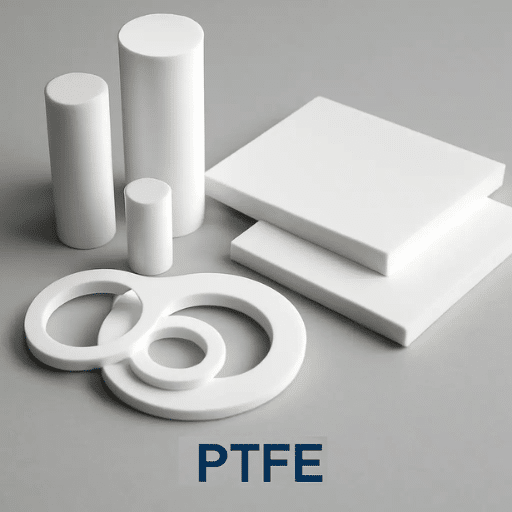
| PTFE | Polytetrafluoroethylene | Semi-crystalline | ~120 (248) | ~327 (621) | Not melt-processable by injection moulding | N/A | Not required | Melt viscosity is far too high; sintered, not moulded |
| PEEK | Polyether ether ketone | Semi-crystalline | 143–150 (289–302) | ~343 (649) | 360–400 | 170–200 | 150 °C / 3–4 h | Requires hot-runner tooling; highest Tm of the common resins |
Typical values for unmodified grades. Grade, filler loading, comonomer content and moisture state all shift every number in this table. Tm measured by DSC per ASTM D3418 or ISO 11357. Always verify against the grade datasheet.
Get the printable version of this plastic melting point chart, plus the mold and drying columns in a single-page PDF you can hand to the molding floor. Request it here and we will send it with the datasheets that match your grade.
What Is the Melting Point of Plastic?
Thermoplastics melt across a range from roughly 100 °C (212 °F) to over 340 °C (644 °F). Semi-crystalline plastics such as POM, PA66, PPS and PTFE have a true melting point (Tm) where their crystal structure breaks down. Amorphous plastics such as ABS, PC and PMMA have no true Tm; they soften gradually above their glass transition temperature (Tg), which is why no honest chart can give ABS a melting point.
Why There Is No Single Answer
Polymer family is not the same as grade. Two POM compounds from the same manufacturer can melt several degrees apart because of comonomer ratio, nucleating agents or glass-fibre loading. HDPE is the clearest example: its melting point spans roughly 12 °C across the grade range, from low-density-like flexible grades to high-crystallinity pipe grades.
Processing temperature is also not melting point. Injection molders run the melt 20 to 60 °C above Tm so the resin flows and fills the cavity. A chart that lists ABS at 190–270 °C is reporting a processing window, not a melting point, and more than one popular chart makes exactly that error.
The Same Values in Celsius and Fahrenheit
If you need the melting point of plastic in Celsius, read the left column; if your datasheet or drawing is in Fahrenheit, read the right. The formula is °F = (°C × 1.8) + 32.
| °C | °F | Reference point |
|---|---|---|
| 60 | 140 | Hot-car interior, upper end |
| 105 | 221 | Tg of ABS and PMMA |
| 130 | 266 | Tm of HDPE |
| 147 | 297 | Tg of PC |
| 165 | 329 | Tm of POM copolymer |
| 260 | 500 | Tm of PA66 |
| 300 | 572 | PPS processing region |
| 343 | 649 | Tm of PEEK |
This is why a plastic melting point chart in Fahrenheit and one in Celsius should be the same table with two columns, not two separate tables. Hand conversions are where rounding errors enter a specification.
Why Melting Point Is Grade-Specific, Not Just Family-Specific
The number you find on a datasheet belongs to a grade, and grades are engineered. A 30% glass-filled PA66 does not melt at the same temperature as an unfilled PA66, and an impact-modified POM does not soften like a general-purpose POM. When a chart like the one above says “PA66: 255–265 °C,” it is describing the unfilled baseline. Treat that as a starting point for reading a datasheet, not as a substitute for one.
Why Some Plastics Have No Melting Point

This is where most charts quietly mislead their readers, so it deserves its own section.
Semi-Crystalline Plastics: A True Tm
Semi-crystalline resins have ordered crystalline regions, typically 40 to 80 percent of their volume. When heated, those regions break down at one temperature, releasing a sharp melting endotherm that differential scanning calorimetry (DSC) can measure precisely. That is a genuine melting point in the thermodynamic sense.
Semi-crystalline families include POM, PA6, PA66, HDPE, PP, PBT, PET, PPS, PTFE and PEEK. Every one of them earns a real number in the Tm column above.
Amorphous Plastics: Softening, Not Melting
Amorphous plastics have disordered chains that never form crystals. With no crystal structure to break down, there is no melting endotherm. They soften progressively above their glass transition temperature instead, and that softening range depends on the load and the time it is applied.
Amorphous families include ABS, PC, PMMA, PS, PVC and PSU. When a chart quotes “ABS: 130–160 °C,” it is reporting a softening range or a processing window, not a melting point. We cover the distinction in full in the material profiles below, because it is the single most common source of bad material decisions.
Thermosets: They Never Remelt
For completeness: thermosets such as epoxy, phenolic and silicone are crosslinked networks. They do not melt at any temperature. Heat them far enough and they decompose. That is why thermosets cannot be remelted for recycling, and why they do not appear in a thermoplastic melting point chart.
Which Number in the Plastic Melting Point Chart Matters? Tm vs Tg vs Vicat vs HDT
This is the section that turns a reference table into a decision. Read it before you specify anything.
| Metric | What it measures | Standard | When it governs your design |
|---|---|---|---|
| Tg (glass transition) | Temperature where an amorphous phase stiffens or softens | ASTM E1356 / ISO 11357 | Amorphous resins with no Tm; determines the softening ceiling |
| Tm (melting point) | Temperature where crystalline regions break down | ASTM D3418 / ISO 11357 | Processing only. It tells a molder how to melt the resin |
| Vicat softening | Temperature at which a flat probe penetrates 1 mm | ASTM D1525 / ISO 306 | Comparative softening ranking across materials |
| HDT (heat deflection) | Temperature at which a loaded bar deflects a set amount | ASTM D648 / ISO 75 | Structural parts under sustained load at temperature |
| Continuous service temperature | Maximum temperature for long-term property retention | Manufacturer rating, often UL 746 | Any part with a service-life requirement |
The rule is blunt: never design a part to its melting point. Tm tells a molder how to process the resin. HDT under load and continuous service temperature tell an engineer how hot the part can run. Those are different questions, and the answers differ by 60 °C or more.
Take POM as the worked example. POM copolymer melts at 165 °C, but its HDT at 1.8 MPa is around 100–110 °C, and its continuous service rating sits near 80–120 °C.
Consider what that gap costs in practice. Daniel, a product engineer at a small appliance manufacturer, specified a POM lever for a housing that runs at 140 °C in service. His reasoning was simple and wrong: the chart said POM melts at 165 °C, so 140 °C had to be safe.
The levers passed the first functional test, then crept out of position over eight weeks of continuous duty. The number that governed Daniel’s part was HDT, not Tm. The redesign moved him to a glass-filled PA66 that holds its shape past 200 °C. The chart was right the whole time; he’d asked it the wrong question.
The same logic resets the PC-versus-ABS comparison. Neither resin has a melting point, so the melting point chart cannot separate them at all. PC’s Tg of ~147 °C against ABS’s ~105 °C is the entire selection decision for a warm enclosure, and it is the reason PC wins there. Our polycarbonate glass transition temperature article covers that comparison in depth, and our heat deflection temperature vs melting point hub covers the design rule when a load is involved.
If a thermal property is the constraint in your application, send us the operating temperature and the load, and we’ll tell you which of these five numbers you should be specifying against.
Melting Point by Material: Engineering Plastics in Depth

Each material below has a dedicated article that owns the depth. The summaries here are deliberately short so the chart stays the answer.
ABS is amorphous, so the melting point of ABS does not exist in the true sense. Its Tg of ~105 °C defines how hot a rigid ABS part can run before it softens under load. ABS is cheap, tough, easy to mold, and the right default for housings and enclosures, not for hot service. → ABS melting temperature
POM (acetal) is semi-crystalline with a sharp melting point: the POM melting point is ~165 °C for copolymer and ~175 °C for homopolymer. It melts cleanly and machines beautifully, which is why it dominates precision gears and bearings, but the narrow gap between its melt and its 220–230 °C formaldehyde-release threshold makes process control non-negotiable. → POM melting point, POM resin supplier
HDPE has a melting point of 125–137 °C, the widest grade-to-grade spread of any common resin. Crystallinity drives the number, so a high-density pipe grade and a flexible film grade can sit 12 °C apart. → HDPE melting point by grade, certified HDPE resin
PA66 (nylon 66) has a melting point of 255–265 °C, the highest melting point of the common engineering plastics. That thermal headroom, not the melting point itself, is why glass-filled PA66 holds HDT values above 200 °C and why it keeps winning underhood and structural assignments. → PA66 melting point, PA66 resin supplier
PC (polycarbonate) has no melting point at all. Its Tg of ~147 °C is the highest of the commodity amorphous resins, and that single number is what separates a PC part from an ABS part in warm service. → Covestro Makrolon PC resin supplier
PMMA (acrylic) is also amorphous, with a Tg of ~105 °C and no Tm. Its optical clarity, not its thermal performance, is the reason to choose it, and it depolymerises above roughly 270 °C if you overheat it. → PMMA glass transition temperature
The High-Temperature Tier
When a chart needs to stretch past the commodity resins:
| Plastic | Melting point | Practical constraint |
|---|---|---|
| PPS | ~275–290 °C | Usually glass-filled; needs 120–180 °C mold temperature |
| PTFE | ~327 °C | Not melt-processable by standard injection moulding; sintered instead |
| PEEK | ~343 °C | Requires hot-runner tooling and 360–400 °C melt temperature |
| PI (polyimide) | Above 350 °C, often no clean Tm | Thermoset-like behaviour; specialist processing only |
PTFE is the trap in this tier. Its ~327 °C melting point makes it look like an injection-molding material, and it is not: its melt viscosity is so high that parts are compression-moulded or sintered. If you need a fluoropolymer that actually injection moulds, PFA or FEP is the answer, and PTFE resin supplier covers that trade-off.
Melt Temperature vs Melting Point: The Processing Rule
You process above the melting point, never at it. In practice a molder runs the melt 20 to 60 °C above Tm for semi-crystalline resins, because the resin has to flow, fill the cavity and pack before it solidifies.
This is where the two columns nobody else charts do their work.
Mold temperature is not a convenience setting. In semi-crystalline resins it controls crystallinity, and crystallinity controls shrinkage, dimensional stability and surface finish. Run a POM part in a 30 °C mold instead of the recommended 80–120 °C and you get a different part with a different shrinkage rate, often one that fails inspection after ejection. High mold temperatures are also what make 120–180 °C mold temperature mandatory for PPS.
Drying is mandatory for hygroscopic resins and pointless for the rest. PC, PA66, PA6, PET and PBT absorb enough atmospheric moisture that they must be dried before molding, typically to under 0.1–0.2 percent. Moisture in the barrel hydrolyses the melt, and the visible result is splay, silver streaking and a measurable drop in molecular weight.
HDPE and PP don’t need drying in normal storage. POM is the in-between case: optional in most climates, worthwhile at 80–90 °C for one to three hours if the resin has been open for a while.
There are also degradation ceilings, and they’re lower than most charts imply. POM begins releasing formaldehyde above roughly 220–230 °C, which is why its processing window is so tight. PMMA depolymerises above about 270 °C, and PA66 accelerates its degradation above 300–310 °C.
The gap between “melts” and “degrades” is the entire engineering problem for POM and PMMA. It’s invisible on any chart that only reports a melting point.
For the full barrel-zone and drying tables by material, use our processing temperature windows by material guide.
What Temperature Does Plastic Melt? Everyday Plastics and 3D-Printing Filaments

The same chart answers consumer questions and printer questions, provided the numbers are read correctly.
| Everyday plastic | Typical melting point |
|---|---|
| HDPE milk jugs and bottles | 125–137 °C (257–279 °F) |
| PP food containers | 160–170 °C (320–338 °F) |
| PET beverage bottles | 245–260 °C (473–500 °F), for crystallised PET |
| PS foam cups | No true Tm; softens above ~100 °C (212 °F) |
| PVC pipes and profiles | No true Tm; softens around 80–100 °C (176–212 °F) |
Two corrections matter here. Polystyrene and PVC are amorphous, so their “melting points” in most consumer tables are softening temperatures, not melting points. And a hot car interior reaches 60–80 °C, which is enough to soften and warp many plastics, though far below the melting point of any of them. If a part fails in a hot car, the cause is softening and creep, not melting.
3D-Printing Filaments: Nozzle Temperature Is Not Melting Point
This is the most common confusion in the whole field. Printer profiles list nozzle temperatures, which are processing temperatures, and they are 40 to 90 °C above the resin’s melting point.
| Filament | Typical nozzle temperature | Actual melting point |
|---|---|---|
| PLA | 190–230 °C | ~150–180 °C |
| PETG | 220–260 °C | ~245–260 °C, crystallised PET |
| ABS | 220–260 °C | No true Tm; Tg ~105 °C |
| Nylon (PA6/PA66) | 240–300 °C | 215–265 °C depending on grade |
Sam, who runs a small prototyping shop, reached a wrong conclusion from exactly this table. He read “ABS nozzle 240 °C” in a filament guide, compared it with his PC profile at 280 °C, and assumed ABS was more heat-resistant because 240 was “close to” its printing temperature.
The opposite is true. ABS has no melting point and a Tg of ~105 °C; PC has no melting point and a Tg of ~147 °C. A printed ABS bracket in a warm enclosure will sag long before a PC one.
Nozzle temperature tells you how to print. Tg tells you how the part will behave.
How Plastic Melting Point Is Measured
Melting point is measured by differential scanning calorimetry (DSC) under ASTM D3418 or ISO 11357. A small sample is heated at a controlled rate, usually 10 °C per minute, and the instrument records the energy absorbed as the crystals melt. The result appears as an endotherm, and the temperature at its peak is the reported Tm.
Three practical details explain why two datasheets legitimately disagree on the same grade:
- Heating rate. A faster ramp shifts the peak upward. 10 °C/min is the standard, but not every lab reports at the rate you assume.
- First heat versus second heat. The first heating cycle carries the material’s thermal history from processing. Most datasheets report the second heat, after the sample has been melted and re-crystallised at a controlled rate, which gives a cleaner and more reproducible number.
- Onset versus peak versus equilibrium. The onset of melting, the peak of the endotherm and the thermodynamic equilibrium melting point are three different numbers for the same sample, and datasheets do not always say which they are quoting.
Related methods worth knowing because they appear on the same datasheets: HDT per ASTM D648 or ISO 75, Vicat softening per ASTM D1525 or ISO 306, and melt flow index per ASTM D1238 or ISO 1133.
You can cross-check any published table against MatMake’s polymer melting point reference, which cites the CRC Handbook, or the Polymer Science Learning Center’s thermal property tables. For a worked example of how a manufacturer reports the number, see the published datasheet for DuPont Delrin 988PA acetal (POM-H), which lists a melting point of 178 °C and a deflection temperature well below it.
How Melting Point Drives Grade Selection and Sourcing
Here is the commercial consequence of everything above: the melting point is a property of the grade, not the polymer family. If you specify by family name, you have not specified anything a molder can run.
Branded Grade Baselines
For the engineering resins we supply, these are the grade families that carry published thermal baselines you can verify.
| Family | Branded grades | Representative Tm / Tg |
|---|---|---|
| POM | Ultraform® (BASF), Hostaform® / Amcel® (Celanese), DURACON® (Polyplastics), KOCETAL® (Kolon), FORMOCON® (Formosa) | Tm 160–175 °C copolymer, 172–184 °C homopolymer |
| PA66 | Ultramid® (BASF), Vydyne® (Ascend), Zytel® (Celanese) | Tm 255–265 °C unfilled; HDT rises to >200 °C glass-filled |
| PC | Makrolon® (Covestro), Lexan™ (SABIC) | No Tm; Tg ~147 °C |
| PEEK | Victrex®, Ketaspire® (Solvay) | Tm ~343 °C; Tg 143–150 °C |
These are the baselines. Confirm the actual value for the exact grade you are buying against its datasheet, and then confirm it again against the lot’s COA.
Why an Off-Spec Lot Is a Thermal Problem
Consider what happens when a validated process meets an unvalidated resin. Priya, a molding engineer at a Tier-2 automotive supplier, had qualified a POM gear on a branded prime grade with a documented Tm of 166 °C and a validated mold temperature of 95 °C. Under cost pressure she accepted a cheaper “equivalent” lot from another source. The replacement resin’s Tm came in around 159 °C.
Seven degrees doesn’t sound like much. But crystallinity had shifted with it, the validated mold temperature no longer produced the same crystal structure, and the gears shrank out of tolerance after ejection.
Priya spent three days chasing a mold problem that was actually a resin problem, then scrapped the lot. The Tm on the chart hadn’t changed. The resin had.
This is why a plastic melting point chart and a COA belong in the same conversation. A shifted Tm invalidates the process window you validated. It is the highest-consequence failure mode in resin sourcing, and it is invisible unless you document every lot.
What to Check on a COA
When a Certificate of Analysis arrives with a lot, verify these fields before the resin goes into the dryer:
- Grade designation and the manufacturer’s name, matched to the grade you specified
- Melt flow index or melt flow rate, the most sensitive single indicator of a genuine lot
- Density, which flags filler loading and grade substitution
- Tm and HDT where the manufacturer reports them
- Lot number, so the thermal data can be traced back to the specific batch
If a supplier can’t provide traceable lot documentation, the melting point on their datasheet is a claim, not a specification. Ask for the manufacturer’s own datasheet, the lot COA, and a melt-flow figure for the exact batch before you commit to a first order. We send all three with every quotation.
Sourcing Facts, Stated Plainly
We hold certified inventory of branded engineering resins in Suzhou, near the Port of Shanghai. What that means for your order:
- Branded prime resin and compounded grades, with lot traceability on every batch
- Minimum order quantity from 25 kg, so smaller buyers can qualify a grade without a container commitment
- FOB Shanghai pricing, with a standard lead time of 7 to 14 days to major international ports
- Full export documentation: COA, MSDS, commercial invoice and packing list
- Technical support from inquiry to delivery, including grade selection against your operating temperature and load
If you are selecting a grade against a thermal requirement, send us the service temperature, the load and the environment. We will tell you which number in the chart governs your part, and we will tell you honestly if a higher-temperature material is the better answer even when it is not the material you asked about. Request a quote and we respond within 24 hours.
Frequently Asked Questions

What is the melting point of plastic?
Thermoplastics melt across a range from roughly 100 °C (212 °F) to over 340 °C (644 °F). Semi-crystalline plastics such as POM, PA66 and PTFE have a true melting point. Amorphous plastics such as ABS, PC and PMMA have no true melting point and soften above their glass transition temperature instead.
At what temperature does plastic melt in Fahrenheit?
It depends on the resin. HDPE melts at 257–279 °F, PP at 320–338 °F, POM copolymer at 320–347 °F, PA66 at 491–509 °F, PTFE at about 621 °F and PEEK at about 649 °F. Convert any Celsius value with °F = (°C × 1.8) + 32.
Which plastic has the highest melting point?
Among commonly supplied engineering resins, PEEK leads at ~343 °C, followed by PTFE at ~327 °C and PPS at 275–290 °C. Polyimide sits higher still but behaves more like a thermoset and is a specialist material.
Which plastic has the lowest melting point?
Of the common thermoplastics, low-density polyethylene grades melt lowest, in the region of 105–115 °C. HDPE follows at 125–137 °C. Amorphous resins have no melting point at all, so they cannot be ranked on this scale.
Does ABS have a melting point?
No. ABS is amorphous, so it has no true melting point. Its glass transition temperature is ~105 °C, and it softens progressively above that. Charts quoting “ABS: 130–160 °C” are reporting a softening range or a molding window, not a melting point.
Does polycarbonate have a melting point?
No. Polycarbonate is amorphous and has no Tm. Its Tg of ~147 °C is the number that matters, and it is why PC outperforms ABS in warm service despite neither material having a melting point.
Is melting point the same as heat resistance?
No, and treating them as the same thing causes failed parts. Melting point tells a molder how to process the resin. Heat resistance for a loaded part is HDT per ASTM D648, and for long-term exposure it is the continuous service temperature. A POM part melts at 165 °C but should not be designed to run much above 100 °C under load.
Why do different charts give different melting points for the same plastic?
Because the value depends on the grade, the crystallinity, the test heating rate, and whether the datasheet reports the first heat, the second heat, the onset or the endotherm peak. Reporting the test standard next to the number is the only way to compare two charts honestly.
Do thermoset plastics melt?
No. Thermosets such as epoxy, phenolic and silicone are crosslinked networks. They decompose rather than melt, which is why they cannot be remelted or recycled by melting.
Can plastic melt in a car?
No, but that is not the real risk. A hot car interior reaches 60–80 °C, far below the melting point of any common plastic. That heat is enough to soften and warp parts, though, especially those made from amorphous resins near their Tg. Failures in hot cars are softening and creep failures, not melting.
Conclusion: Read the Chart, Then Read the Grade
Five things to carry away from this plastic melting point chart.
Tm is a real, sharp number only for semi-crystalline resins, and amorphous resins such as ABS, PC and PMMA simply don’t have one. Processing runs 20 to 60 °C above Tm, which is why a molding window is not a melting point.
Tm is never the design ceiling: HDT under load and continuous service temperature decide whether a part survives, and for POM that gap is more than 60 °C. Mold temperature and drying condition belong next to the melting point on any chart a processor uses, which is why they’re columns here and not footnotes. And every value is grade-specific, so the datasheet and the COA are the only versions of the number you can actually rely on.
Any plastic melting temperature chart can give you a candidate. Only the datasheet confirms it, and only the COA verifies what actually arrived.
Use the chart to choose. Use the datasheet to confirm. Use the COA to verify.
If you need a certified grade with full thermal documentation, request a quote for the printable chart and the datasheets that match your application. Branded prime resin, COA on every lot, 25 kg minimum order, FOB Shanghai, response within 24 hours.