



Lin’s quality team rejected a $40,000 batch of ABS automotive trim panels because the finish was peeling at the edges. The coating line had followed every step: clean, sand, prime, paint, bake. But the primer was a generic metal formulation, the bake cycle hit 110 degrees Celsius, and no one had checked whether the ABS grade itself contained mold-release additives that migrated to the surface after molding. The failure was not in the painting process. It was in the assumption that ABS paints the same way steel does.
If you have ever dealt with paint adhesion abs problems, you have probably faced a version of Lin’s situation. ABS is one of the more paint-friendly engineering plastics, but it sits at a critical boundary. Its surface energy is just high enough for some coatings to bond, yet just low enough for others to fail under thermal cycling, humidity, or mechanical stress. Understanding where ABS sits on that boundary, and how to push it into the safe zone, is the difference between a finish that lasts years and one that flakes in weeks.
This guide explains the surface science behind ABS paint adhesion, provides quantitative data from peer-reviewed research, and maps the right preparation methods and primer systems for industrial and automotive finishing. Whether you run a coating line, specify resin grades for painted components, or troubleshoot existing failures, you will leave with actionable criteria you can apply immediately.
Need a primer recommendation first? See our guide to the best primer for ABS plastic for tested product picks and application steps.
The Surface Energy Problem: Why ABS Is Borderline for Paint Adhesion
ABS plastic has a baseline surface energy of approximately 42 dynes per centimeter, or 42 millijoules per square meter. That number matters because it sits right at the threshold of reliable coating adhesion.
Most solvent-based paints, including epoxy and polyurethane systems, have surface tensions in the 40 to 45 dynes per centimeter range. The general rule in coatings engineering is that a substrate must exceed the paint’s surface tension by at least 5 dynes per centimeter to ensure proper wetting and long-term bond strength. At 42 dynes per centimeter, untreated ABS is borderline. It will accept some paints under ideal conditions, but it offers almost no safety margin for contamination, process variation, or environmental stress.
This is why ABS is more forgiving than polypropylene, which sits at roughly 30 dynes per centimeter and requires aggressive flame or corona treatment before any coating will stick. But it is also why ABS is less forgiving than polycarbonate, which measures roughly 42 to 46 dynes per centimeter and bonds more reliably with a wider range of paint chemistries.
| Plastic | Untreated Surface Energy (dynes/cm) | Paintability Without Treatment |
|---|---|---|
| PTFE (Teflon) | ~18 | Very poor — requires specialized treatment |
| Polypropylene (PP) | 29-33 | Poor — requires flame or corona treatment |
| Polyethylene (PE) | 30-32 | Poor — requires treatment |
| Polystyrene (PS) | 34-36 | Moderate — light prep usually sufficient |
| ABS | 34-42 | Good to moderate — prep recommended for industrial finishes |
| Polycarbonate (PC) | 42 | Good — bonds with minimal prep |
| Polyester (PET) | 43 | Good |
| Epoxy / PU paints | ~43 | N/A (coating surface tension) |
For a deeper look at how ABS molecular structure affects its surface properties, see our article on ABS polymer structure.
Common Causes of Poor Paint Adhesion on ABS Plastic
Paint failures on ABS rarely have a single cause. In most production environments, two or three factors combine to create a weak boundary layer that the coating cannot bridge. Here are the most common culprits.
Mold Release Agents and Surface Contamination
Injection-molded ABS parts almost always carry traces of mold-release agents, typically silicone oils or wax-based compounds. These residues form an invisible hydrophobic film that repels primer. Even if the surface looks clean to the eye, a simple water-break test will often reveal uneven wetting where silicone is still present.
Some ABS grades also contain internal lubricant additives that can bloom to the surface over time. This is especially common in grades formulated for high-flow molding. The lubricant improves mold release during processing, but it creates a waxy weak boundary layer that paint sticks to temporarily. When that layer itself separates from the substrate, the coating peels away cleanly, leaving no paint residue on the ABS surface.
Inadequate Surface Preparation
As-molded ABS has a smooth, glossy surface that offers almost no mechanical keying points. Without light abrasion, the coating relies entirely on chemical adhesion. That works for some paint systems under laboratory conditions. It fails much more often in production environments where humidity, temperature, and film thickness vary from part to part.
Static electricity is another overlooked factor. ABS builds static charge easily during handling and machining. That charge attracts dust and airborne contaminants in the paint booth, creating micro-inclusions that weaken the coating film and provide crack-initiation points.
Solvent Incompatibility and Stress Cracking
ABS is a terpolymer, and its butadiene rubber phase is sensitive to aggressive solvents. Lacquer thinner, acetone, methyl ethyl ketone, and halogenated solvents will craze or stress-crack the surface rather than prepare it. The damage may not be visible immediately. Micro-cracks form below the surface and propagate days or weeks later as the coated part flexes or thermally cycles.
Even some adhesion-promoter solvents are too aggressive for thin or stressed ABS parts. Always test on scrap before applying any solvent-based product to a finished component.
Process and Environmental Defects
Film thickness matters more on plastics than on metal. Exceeding 30 micrometers in a single coat builds internal stress and traps solvent that continues to attack the substrate during cure. High humidity above 75 percent causes interfacial condensation that blocks chemical bonding between primer and substrate. Insufficient flash time between coats leads to solvent entrapment, bubbling, and later delamination.
Bake profiles are another common issue. ABS has a heat deflection temperature of roughly 85 to 100 degrees Celsius depending on grade. A bake cycle designed for steel panels at 120 degrees Celsius will distort ABS and create internal stresses that later cause edge peeling.
Surface Treatment Methods for ABS: What the Research Shows
Improving paint adhesion abs performance requires raising the substrate’s surface energy, removing contaminants, or both. Several methods are in common industrial use, and peer-reviewed studies provide quantitative data on their effectiveness.
Mechanical Abrasion
Wet sanding with 400 to 600 grit sandpaper is the most accessible surface preparation method. It removes the glossy molded skin, creates micro-roughness for mechanical anchoring, and disrupts any surface-bloomed additive layer. The goal is a uniform matte finish, not deep scratches. Over-sanding thins the part and can create stress concentrations at edges.
For industrial lines, automated abrasive blasting with fine plastic media achieves the same mechanical keying effect at higher throughput. Blast pressure must be controlled carefully. Excessive pressure can embed media fragments into the surface or over-roughen thin-walled parts.
Chemical Etching and Adhesion Promoters
Dedicated plastic adhesion promoters contain chlorinated polyolefin resins and mild solvents that swell the ABS surface on a microscopic level. This creates both chemical bonding sites and mechanical interlocking. Applied at 15 to 25 micrometers thickness, they form a bridge layer between the ABS substrate and the topcoat system.
The two most widely used products in automotive and industrial finishing are SEM Plastic Adhesion Promoter and Bulldog Adhesion Promoter. SEM is specified in OEM repair manuals for Ford, GM, and Toyota interior trim. Bulldog is a transparent universal agent that works across ABS, polycarbonate, nylon, and polyurethane, making it the preferred choice for mixed-material projects.
Flame Treatment
Flame treatment passes a controlled propane flame across the plastic surface for a fraction of a second. The flame oxidizes the surface, introducing polar functional groups such as carbonyls and hydroxyls that raise surface energy and improve wetting. On ABS, flame treatment is effective but requires strict control of distance, dwell time, and flame chemistry. Too much heat distorts the part. Too little leaves the surface unchanged.
In automotive production, flame treatment is often used on polypropylene bumper covers before priming. On ABS, it is less common because the substrate’s higher baseline surface energy usually allows adhesion-promoter-based systems to succeed without the added process complexity.
Plasma Treatment: Peer-Reviewed Results
Atmospheric pressure plasma treatment is the most scientifically validated method for improving paint adhesion abs performance. A 2018 study by Martinez, Abenojar, and Lopez de Armentia at Universidad Carlos III de Madrid tested an atmospheric pressure plasma torch on ABS substrates coated with polyurethane and epoxy paints.
The results were dramatic. Water contact angle on untreated ABS measured 94.7 degrees, indicating poor wetting. After plasma treatment, the contact angle dropped to approximately 40 degrees. Bond strength between ABS and polyurethane paint increased by a factor of ten, changing from adhesive failure at the interface to mixed failure within the coating itself. ABS-epoxy adhesion improved from essentially zero, with the epoxy lifting cleanly off the untreated substrate, to very high strength where failure occurred in the ABS substrate rather than at the interface.
The plasma modification remained stable for at least 336 hours, or 14 days, after treatment. This makes the process practical for industrial finishing lines where parts may be treated, transported, and painted hours or days later. Unlike chemical etching, plasma treatment uses no solvents or consumable chemicals, making it environmentally compatible with tightening VOC regulations.
Other researchers have confirmed these findings. Slavicek et al. reported contact-angle decreases from roughly 90 degrees to below 10 degrees on plasma-treated ABS. Frascio et al. observed similar hydrophilic modification with corresponding adhesion improvements across multiple paint systems.
For production environments struggling with intermittent adhesion failures on ABS, plasma treatment offers a data-backed solution that removes the variability associated with solvent-based prep and manual sanding.
Choosing the Right Primer and Paint System for ABS
Surface preparation gets the substrate ready. The primer and paint system determine whether the coating survives real-world use. Here is how to match the system to the application.
When to Use an Adhesion Promoter vs. a Self-Etching Primer
An adhesion promoter is a dedicated bonding layer, not a primer in the traditional sense. It contains no pigment or fill. Its only job is to chemically activate the plastic surface and create a receptive layer for the next coating. You need an adhesion promoter when applying 2K urethane primers, automotive basecoats, or any system where the topcoat solvents might attack raw ABS.
A self-etching primer combines mild chemical etching with a pigmented primer film. Products like KBS Fusion SEP are designed for rigid plastics and can be applied directly to sanded ABS without a separate adhesion-promoter step. They work well for electronics housings, appliance panels, and display bezels that will not see significant flex or impact.
For automotive and industrial applications, the recommended system is two-step: adhesion promoter first, then 2K high-build primer, then topcoat. Skipping the adhesion promoter and applying 2K primer directly to ABS risks solvent attack on the butadiene phase.
Compatible Paint Chemistries for ABS
Not all paint types behave the same way on ABS. The compatibility matrix below summarizes the most common industrial and commercial options.
| Paint Chemistry | Primer Required | Flexibility | Best For |
|---|---|---|---|
| Acrylic enamel | 1K plastic primer or adhesion promoter | Good | General industrial, consumer goods |
| Acrylic urethane | Adhesion promoter + 2K primer | Excellent | Automotive trim, exterior parts |
| 2K polyurethane | Adhesion promoter + 2K primer | Excellent | High-durability industrial, marine |
| Acrylic lacquer | 1K lacquer primer | Moderate | Hobby models, light-duty indoor |
| Epoxy | Adhesion promoter recommended | Rigid | Chemical-resistant coatings, floors |
| Water-based acrylic | Adhesion promoter recommended | Good | Low-VOC industrial, interior parts |
Water-based and UV-cured coatings are increasingly common due to environmental regulations. These systems typically require higher substrate surface energy, often 46 to 52 dynes per centimeter, because their surface tension is higher than solvent-based paints. For ABS, this means adhesion promotion or plasma treatment becomes even more important when switching from solvent to water-based systems.
Planning a full repaint project? Our how to paint ABS plastic guide covers the complete procedure from surface prep through cure.
Step-by-Step: Preparing ABS for High-Performance Painting
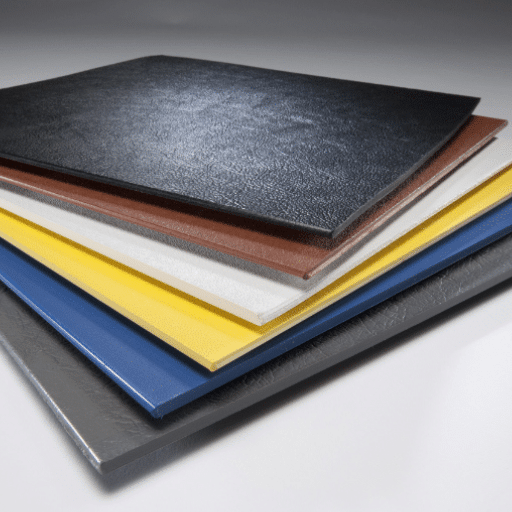
Follow this procedure when adhesion and durability are non-negotiable. It applies to automotive, industrial, and any production-line finishing operation.
Step 1: Clean with isopropyl alcohol. Wipe the surface with 95 percent or higher IPA on a lint-free cloth, moving in one direction. Do not use acetone, lacquer thinner, or MEK. They will craze the butadiene phase. For heavily contaminated parts, an ultrasonic wash in a mild alkaline detergent followed by a deionized water rinse and IPA wipe is more reliable.
Step 2: Wet sand with 400 to 600 grit. Create a uniform matte finish across the entire surface. Wet sanding reduces dust, prevents heat buildup, and produces a more consistent surface profile than dry sanding. Do not over-sand edges or thin sections.
Step 3: Remove dust and eliminate static. Wipe again with IPA. Use an ionizing air gun or a slightly damp, well-wrung cloth to neutralize static charge. Any dust left on the surface will become a defect in the final finish.
Step 4: Apply adhesion promoter. Spray a thin, even coat of SEM, Bulldog, or equivalent. Hold the applicator 8 to 12 inches from the surface. Allow the full flash time specified on the technical data sheet, typically 5 to 15 minutes.
Step 5: Apply 2K high-build primer if required. For automotive or industrial systems, apply 1 to 2 light coats of compatible 2K primer over the cured adhesion promoter. Film thickness should stay below 30 micrometers per coat. Allow proper flash time between coats.
Step 6: Apply paint. Use multiple thin coats rather than one heavy coat. Maintain consistent distance and overlap each pass by 50 percent. Allow full flash time between coats.
Step 7: Apply clear coat for UV and abrasion protection. This is mandatory for exterior or high-wear applications.
Step 8: Cure properly. Allow 24 to 48 hours before handling. Full chemical cure can take 7 to 10 days. For bake-cured systems, use staged heating. Start at 60 degrees Celsius for 10 minutes, then raise to 80 degrees Celsius for 20 minutes. Never exceed the ABS grade’s heat deflection temperature.
Troubleshooting Paint Adhesion Failures on ABS
When a finish fails on ABS, the symptom usually points to a specific root cause. Use this table to diagnose and fix common problems.
| Symptom | Likely Cause | Solution |
|---|---|---|
| Large-area peeling, no paint residue on substrate | Mold release, oil, or wax contamination | Re-clean with IPA. Perform tape test on raw parts to detect weak boundary layer. Switch to low-mold-release ABS grade. |
| Peeling after thermal cycling or sun exposure | Coefficient of thermal expansion mismatch or unrelieved molding stress | Use flexible 2K polyurethane. Anneal parts at 80 degrees Celsius for 2 hours before painting. |
| Edge peeling after assembly or handling | Unrelieved injection molding stress | Anneal substrate before painting. Switch to higher glass-transition-temperature paint system. |
| Bubbles or craters in finish | Solvent entrapment or moisture on surface | Reduce film thickness per coat. Extend flash time. Control booth humidity below 70 percent. |
| Paint scratches or dissolves with solvent wipe | Under-cured paint or incorrect catalyst ratio | Verify oven temperature and dwell time. Check paint mix ratio and expiration date. |
| Fish-eyes or dewetting during primer application | Silicone contamination on substrate | Strip and re-clean. Use silicone-free mold release in production. Consider plasma treatment for severe cases. |
ABS Grade Selection for Paintable Applications

Not all ABS grades finish the same way. If you are specifying resin for parts that will be painted in production, the grade selection matters as much as the surface preparation.
High-impact ABS grades are the most commonly painted variant. They offer excellent toughness and are widely used in automotive interior trim, appliance housings, and consumer goods. Their surface chemistry is generally favorable for coating adhesion.
Plating-grade ABS is formulated with a matte surface texture and additive packages designed to promote adhesion. It is specified for parts that will receive both paint and vacuum-metallized or electroplated finishes. The surface energy of plating-grade ABS is typically higher than general-purpose grades, making it easier to coat consistently.
Low-mold-release grades reduce the surface contamination that causes primer failure on automated coating lines. If your production process does not include a dedicated degreasing step before painting, specifying a low-mold-release grade can eliminate a major source of adhesion variation.
Heat-resistant ABS grades allow more aggressive bake cycles. Standard ABS begins to distort at roughly 85 degrees Celsius. Heat-resistant grades push that limit to 100 degrees Celsius or higher, enabling faster primer cure without substrate distortion. This matters on high-throughput coating lines where cycle time directly affects production cost.
ABS-polycarbonate alloys combine the paintability of ABS with the higher heat deflection and dimensional stability of PC. They are commonly specified for automotive interior panels and electronics enclosures where both coating adhesion and structural performance are required.
At Yifuhui, we supply general-purpose, high-impact, and plating-grade ABS resins with full Certificate of Analysis documentation and lot traceability. If you are selecting a grade for painted-component production, we can cross-reference your coating system and bake profile against the material properties to recommend the right option. Our standard MOQ starts at 25 kg, and we hold inventory in Suzhou with FOB Shanghai export capability.
Request a quote on paintable-grade ABS resin — response within 24 hours.
Frequently Asked Questions
What is the surface energy of ABS plastic?
Untreated ABS plastic has a surface energy of approximately 42 dynes per centimeter, or 42 millijoules per square meter. This is high enough for some coatings to bond without treatment, but it offers minimal safety margin for contamination or process variation. For water-based and UV-cured coatings, surface treatment is strongly recommended to push surface energy into the 46 to 52 dynes per centimeter range.
Does ABS need an adhesion promoter?
For light-duty indoor projects with all-in-one plastic spray paints, an adhesion promoter is optional. For automotive, industrial, exterior, or 2K urethane systems, an adhesion promoter is mandatory. The promoter prevents solvent attack on the butadiene phase and creates a chemical bonding layer that survives flexing, vibration, and thermal cycling.
Can you paint ABS without sanding?
You can, but the results are unpredictable. As-molded ABS has a smooth glossy surface that offers almost no mechanical keying points. All-in-one spray paints formulated for plastic sometimes bond to smooth ABS, but industrial coatings almost always require light abrasion for reliable adhesion. Wet sanding to a uniform matte finish takes minutes and eliminates a major failure mode.
Why does paint peel off ABS plastic?
The most common causes are mold-release contamination, inadequate surface preparation, incompatible solvents that stress-crack the substrate, excessive film thickness, and improper cure conditions. If the paint peels away leaving no residue on the ABS, the failure is almost certainly at the substrate surface, indicating contamination or insufficient surface activation.
What is the best primer for ABS plastic adhesion?
For automotive and industrial applications, SEM Plastic Adhesion Promoter or Bulldog Adhesion Promoter followed by a compatible 2K high-build primer is the professional standard. For rigid electronics housings and appliance panels, KBS Fusion SEP self-etching primer offers strong direct-to-plastic bonding. For hobby and light-duty projects, Rust-Oleum Specialty Plastic Primer is the most accessible option.
How long does paint take to cure on ABS?
Handle-painted ABS parts after 24 to 48 hours of air curing. Full chemical cure, where the coating reaches maximum hardness and solvent resistance, takes 7 to 10 days. Bake-cured systems can accelerate handling time but must stay below the ABS grade’s heat deflection temperature to prevent distortion.
Can you use acetone to clean ABS before painting?
No. Acetone, lacquer thinner, and methyl ethyl ketone will craze or stress-crack the butadiene rubber phase in ABS. Always use isopropyl alcohol at 70 percent concentration or higher, or a dedicated plastic cleaner formulated for styrenic substrates.
Conclusion
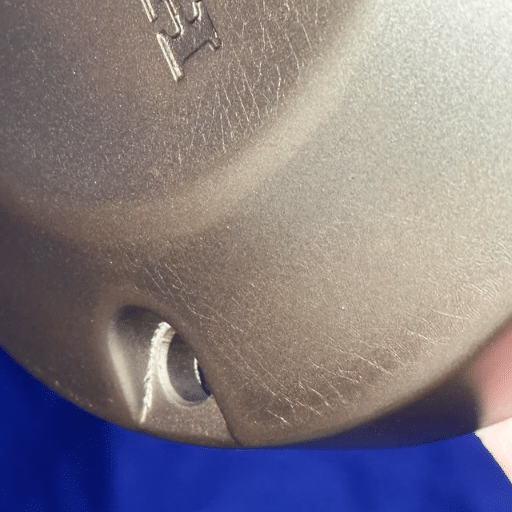
Paint adhesion abs performance is predictable when you understand the numbers. ABS at 42 dynes per centimeter is paintable, but it is not forgiving. Contamination, the wrong solvent, or an incompatible primer system will push it across the failure threshold faster than most substrates.
The key takeaways are straightforward. Clean with isopropyl alcohol, not acetone. Sand to a uniform matte finish to create mechanical keying points. Use a dedicated adhesion promoter when applying 2K urethane or automotive systems. Control film thickness below 30 micrometers per coat and keep booth humidity under 70 percent. For production environments struggling with intermittent failures, atmospheric plasma treatment offers a validated, solvent-free way to increase bond strength by an order of magnitude.
If you are specifying ABS resin for paintable components, the grade you choose is as important as the finishing process itself. Plating-grade and low-mold-release grades reduce the surface-contamination problems that cause the majority of production-line adhesion failures. Heat-resistant grades allow faster bake cycles without distortion. ABS-PC alloys add dimensional stability for demanding applications. To learn more about How to Paint ABS Plastic, please click to refer to our accompanying guide: How to Paint ABS Plastic: Complete 2026 Guide (Prep → Prime → Paint → Cure)
At Yifuhui, we do not just supply resin. We help you match the grade to your process. Tell us your coating system, bake profile, and performance requirements, and we will recommend the ABS grade that gives you consistent adhesion from the first batch. Our technical team responds within 24 hours, and every shipment includes full COA documentation with lot traceability. To gain a deeper understanding of Paint ABS vs PVC, please click to refer to our accompanying guide: Paint ABS vs PVC: Which Plastic Takes Paint Better?
Contact us for paintable ABS resin specifications and pricing.