


Marcus spent a Saturday in his garage painting the center console trim on his 2019 sedan. He scuffed the surface with 220-grit paper, wiped it down with acetone, shot two coats of automotive spray paint, and called it done. Within three weeks the finish was bubbling. By week six, his thumb was wearing through the paint every time he reached for the climate controls. The problem wasn’t the paint. Marcus had treated ABS plastic like metal, and ABS doesn’t forgive that mistake.
If you are painting ABS car trim, the difference between a finish that lasts five years and one that fails in five weeks comes down to material identification, solvent compatibility, and thermal expansion management. ABS is one of the most paintable engineering plastics when prepped correctly, but it is also sensitive to aggressive chemicals and prone to clear-coat cracking if the coating system doesn’t account for how much the plastic moves with temperature. To learn more about How to Paint ABS Plastic, please click to refer to our accompanying guide: How to Paint ABS Plastic: Complete 2026 Guide (Prep → Prime → Paint → Cure)
This guide covers interior and exterior ABS trim separately because the two environments demand different approaches. You’ll learn how to identify whether your trim is actually ABS (and not TPO or PC/ABS), how to preserve factory texture on interior pieces, and why exterior ABS trim demands a flex additive in the clear coat to survive thermal cycling. By the end, you’ll have a process that works for dashboards, grilles, mirror housings, and console trim alike.
Need the right ABS resin grade for manufacturing trim parts? Yifuhui supplies certified, batch-traceable ABS resin from branded manufacturers with full COA documentation. Tell us your application and we’ll recommend the right grade →
Is Your Car Trim Actually ABS? Check Before You Paint

Not every plastic car part that looks like ABS actually is. Modern vehicles use at least four distinct plastic families for trim, and each requires different surface preparation. Paint a TPO bumper cover with an ABS prep routine and the coating will delaminate within weeks. Paint an ABS grille with a TPO-only adhesion promoter and you may get solvent bubbling from the wrong chemistry.
How to Identify ABS Trim
ABS is harder and more rigid than TPO. It usually appears on grilles, mirror housings, interior dashboard trim, center console bezels, and door panel inserts. TPO dominates bumper covers, fender flares, and lower body cladding because it is more flexible and impact-resistant.
If the part has a manufacturer marking or part number molded into the back, search that number along with “material specification.” OEM parts databases typically list the base resin. For aftermarket parts, contact the supplier directly.
For parts with no markings, use the solvent swipe test. Dampen a cloth with lacquer thinner and rub an inconspicuous area. ABS will soften and become slightly tacky within 10 to 15 seconds. TPO will not react visibly. PC/ABS blends behave similarly to pure ABS but may show slightly less surface softening due to the polycarbonate content.
A burn test also works if you have a small scrap piece. ABS burns with a yellow flame, produces black soot, and emits an acrid, styrene-like odor. TPO drips like candle wax and smells like paraffin. Use this test only on scrap or broken pieces, never on installed trim.
Why PC/ABS Blends Change the Equation
Dashboard trim and center console pieces are often PC/ABS blends rather than pure ABS. The polycarbonate content raises heat deflection temperature, which matters when the part sits below a windshield that can reach 80°C in direct sun. However, PC/ABS is slightly more sensitive to certain solvents than pure ABS. If you are painting dashboard trim, test your primer on the back side first and watch for stress cracking or hazing.
| Test | ABS Reaction | TPO Reaction | PC/ABS Reaction |
|---|---|---|---|
| Lacquer thinner swipe | Softens, tacky | No visible change | Slight softening |
| Burn test | Black soot, acrid smell | Drips, paraffin smell | Similar to ABS |
| Flex test | Rigid, snaps under force | Bends significantly | Moderate rigidity |
| Common location | Grille, mirror, interior trim | Bumper, fender flare | Dashboard, console |
Interior vs. Exterior ABS Trim: Different Enemies
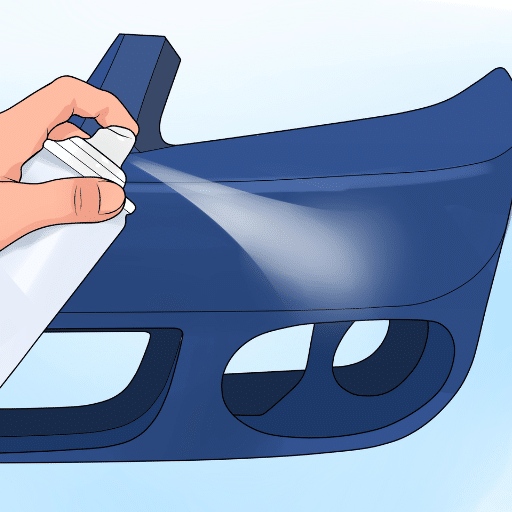
The finish on your center console fails for different reasons than the finish on your front grille. Understanding the exposure environment determines your coating system, your sanding approach, and whether you need a flex additive at all.
Interior Trim: Texture, Contact, and Chemical Exposure
Interior ABS trim faces handling wear, cleaning chemical exposure, and moderate UV through windows. The biggest challenge for most DIYers is preserving factory texture. Oversand a textured dashboard piece and you’ll have a smooth patch surrounded by grain. That smooth patch will catch light differently and look amateurish even under perfect paint.
Interior trim also sees repeated contact with skin oils, coffee spills, and interior cleaners containing silicone or petroleum distillates. These contaminants migrate through poorly cured clear coats and cause peeling at the edges where the coating is thinnest.
Exterior Trim: UV, Thermal Cycling, and Impact
Exterior ABS trim on grilles, mirror housings, and spoilers faces full UV exposure, stone chip impact, and extreme thermal cycling. A dark-colored grille in summer sun can cycle from 25°C ambient to 85°C surface temperature in under an hour. The coefficient of thermal expansion for ABS is approximately 90 × 10⁻⁶ per degree Celsius. A typical automotive paint film expands at roughly 65 × 10⁻⁶ per degree Celsius. That mismatch puts stress on the paint-to-plastic interface every time the temperature changes.
Without a flexible clear coat, that stress eventually wins. The clear coat cracks. Moisture gets in. The finish lifts. This is why exterior ABS trim painting demands a flex additive in the clear coat. It is not optional. It is the difference between a finish that survives a summer and one that survives five years.
| Factor | Interior Trim | Exterior Trim |
|---|---|---|
| Primary threat | Contact wear, chemical exposure | UV, thermal cycling, impact |
| Texture preservation | Critical | Less critical (often smooth already) |
| Flex additive | Recommended | Mandatory |
| Clear coat | 2 coats minimum | 2–3 coats with flex additive |
| Sanding start grit | 600 (preserve texture) | 320–400 (aggressive profiling) |
| Cure time before use | 48 hours | 7 days full cure |
Tools and Materials for Painting ABS Car Trim
The right materials cost between 40and40and90 for a rattle-can DIY job. A professional 2K urethane setup runs 150to150to300 but delivers results that match OEM durability. To learn more about Best Paint for ABS Plastic, please click to refer to our accompanying guide: Best Paint for ABS Plastic: 7 Tested Picks for Hobby, Auto, and Industrial Use (2026 Guide)
Cleaning and Prep
- Alkaline degreaser or plastic-safe pre-paint cleaner
- Isopropyl alcohol (IPA), 90% or higher
- Lint-free microfiber cloths
- Nitrile gloves (skin oils transfer instantly and cause fish-eye)
Abrasives
- Wet/dry sandpaper: 320, 400, 600, 800, and 1000 grit
- Gray scuff pads for complex curves
- Tack cloth for dust removal between coats
Priming
- Plastic-specific primer: Rust-Oleum Plastic Primer, SEM Self-Etching Primer, or Dupli-Color Adhesion Promoter
- Adhesion promoter for PC/ABS blends or parts with unknown composition
Paint and Clear Coat
- Base coat: 2K urethane (professional), acrylic enamel (DIY), or SEM Color Coat (interior-specific)
- UV-stable automotive clear coat with flex additive for exterior parts
- Guide coat spray in a contrasting color (black on light primer, white on dark)
Safety
- NIOSH respirator with organic vapor cartridges
- Well-ventilated workspace
- Eye protection
How to Paint ABS Interior Trim
Interior trim painting rewards patience. The steps are simple, but rushing the grit progression or skipping the guide coat will leave you with texture loss that no amount of paint can hide. To learn more about Best Spray Paint for ABS Plastic, please click to refer to our accompanying guide: Best Spray Paint for ABS Plastic: 6 Aerosol Picks + Technique Guide (2026)
Remove and Inspect the Trim
Always remove interior trim before painting if possible. Pry carefully with plastic trim tools to avoid breaking clips. Photograph the back side before you start. The photo becomes your texture reference if you need to match grain later.
Inspect for cracks or stress marks. If the trim is cracked, repair it with ABS cement (the same solvent-weld adhesive used for plumbing pipes) before painting. ABS cement chemically melts the plastic together, creating a stronger bond than epoxy.
Clean and Degrease Thoroughly
Wash the part with soap and water to remove dust and loose contamination. Follow with a plastic-safe degreaser. Do a final wipe with IPA and a fresh microfiber cloth.
Critical warning: Do not use acetone or lacquer thinner as your final cleaner on pure ABS. These solvents attack the butadiene rubber phase in ABS, causing micro-cracks called crazing that show through every subsequent coat of paint. IPA is the safest final wipe for ABS. For PC/ABS blends, test IPA on the back side first.
Sand Without Destroying Texture
This is where most interior trim paint jobs fail aesthetically. Start with 600-grit wet sandpaper, not 320. Aggressive grits flatten factory texture in seconds.
Sand lightly and evenly. After the first pass, apply a guide coat: a thin dusting of contrasting spray paint over the entire surface. Let it dry for five minutes. Then sand again lightly with 600 grit. Any remaining guide coat sits in low spots. Remove it all, and you have a uniform surface without flattening the peaks of the texture.
For areas that need to be smooth (such as a center console lid), progress from 600 to 800 to 1000 grit. For textured areas that must match factory grain, stop at 600 and be conservative.
When Elena repainted the door panel trim on her hatchback, she skipped the guide coat and sanded by feel. The result was a wavy surface where her fingertips had pressed harder in some spots than others. She started over, used a guide coat the second time, and the texture matched the untouched panels perfectly. The guide coat is not a luxury on interior trim. It is quality control you can see.
Prime the Surface
Apply a thin tack coat of plastic-specific primer first. Let it flash for 10 minutes. Then apply two more thin coats, waiting 15 minutes between each. The primer should look slightly textured when dry, not thick and glossy.
If you are painting a smooth area that will be handled frequently (a shifter bezel, for example), let the primer cure for two hours, then wet-sand it with 800 grit until uniformly smooth. Re-prime any sand-through spots.
Paint and Clear Coat
Apply the base coat in two to three thin passes with 50% overlap. Hold the can 6 to 10 inches from the surface. Let each coat flash for 10 to 15 minutes.
For interior trim, apply two coats of UV-stable clear coat. Interior parts still see significant UV through automotive glass, and unprotected color coats will fade and chalk over time. Let the clear coat cure for 48 hours before reinstalling the trim. Do not apply interior cleaners or dressings for at least one week.
How to Paint ABS Exterior Trim
Exterior trim demands a more aggressive profile, a tougher coating system, and one non-negotiable addition: flex additive in the clear coat.
Remove and Prep
Remove the trim from the vehicle whenever possible. Grilles and mirror housings are easier to paint off the car, and you avoid masking the surrounding bodywork. Remove all rubber gaskets, mounting hardware, and emblems before painting.
Sand for Durability
Exterior trim needs mechanical tooth that interior trim does not. Start with 320-grit wet sandpaper to remove gloss and profile the surface. Progress to 400 grit, then finish with 600 before priming. Use a gray scuff pad for grille slats and other complex geometry where paper cannot reach evenly.
Prime with a Plastic-Specific Primer
Apply three thin coats of plastic-specific primer. Exterior parts face more thermal stress, moisture, and impact than interior pieces. A slightly thicker primer film provides better isolation between the ABS and the topcoat. Allow the primer to cure fully per the manufacturer’s specification before sanding. Most plastic primers need at least two hours at 20°C before they can be scuffed.
Apply Base Coat and Color Match
For OEM color matching, use the vehicle paint code plus a plastic-compatible base coat formulation. Body shop supply stores can mix factory colors in 2K spray cans with integrated catalyst. If you are rattle-canning, Dupli-Color Perfect Match and similar lines list compatible makes and models on the cap.
Spray a test panel on identical scrap plastic first. ABS absorbs and reflects color slightly differently than metal body panels. What looks like a match on a metal test card may read differently on black ABS.
Clear Coat with Flex Additive (Critical Step)
Mix your UV-stable clear coat with a flex additive at the manufacturer’s recommended ratio, typically 10% to 15% by volume. The flex additive plasticizes the cured clear film, allowing it to stretch and compress with the ABS substrate instead of cracking against it.
Apply two to three medium coats of clear, waiting 30 to 60 minutes between coats. Do not apply heavy wet coats. Excessive film thickness traps solvents and causes blistering, especially on plastic substrates that cannot be baked at high temperature to drive out volatiles.
Cure Time
Allow 24 to 48 hours before handling the part. Allow seven days for full chemical cure before exposing the trim to highway speeds, automated car washes, or fuel spills. ABS has a heat deflection temperature around 85°C to 100°C depending on grade. High-temperature baking to speed cure is not an option. Time is your only curing accelerator.
Common ABS Trim Painting Failures (and How to Avoid Them)
Even experienced painters make these mistakes on ABS. Knowing what goes wrong saves more time than knowing what goes right.
Peeling from Misidentified Substrate
The most common failure in DIY automotive plastic painting is treating TPO as ABS. TPO has a surface energy around 28 to 31 millinewtons per meter, well below the 35 to 42 mN/m of ABS. Paint that bonds adequately to ABS will not bond to unprepared TPO. If your finish peels in large sheets within days, you probably painted TPO without an adhesion promoter. Always verify the substrate before you open a spray can.
Crazing from Solvent Attack
Acetone, MEK, and strong lacquer thinners dissolve the butadiene rubber phase in ABS, leaving a network of micro-cracks that look like a spiderweb under paint. The damage is irreversible. If you have already wiped ABS with acetone, you must sand through the damaged layer completely before priming.
Clear Coat Cracking from Missing Flex Additive
A painter at a small body shop in Ohio repainted a set of ABS grille inserts for a pickup truck. He used a high-quality 2K urethane base and clear. The finish looked perfect for three months. Then the first hard freeze hit, and fine cracks appeared across every horizontal surface. The painter had skipped the flex additive because he assumed it was only for flexible bumper covers. ABS moves more than steel. It needs a clear coat that moves with it.
Fish-Eye from Silicone Contamination
If the previous owner treated the trim with an Armor All-style silicone dressing, those silicones may have migrated into the plastic surface. IPA alone will not remove them. A dedicated silicone remover or wax-and-grease remover formulated for plastics is necessary. Fish-eye shows up as circular craters in the wet paint film. Once it appears, you must sand the affected area, clean again, and re-prime.
Blistering from Trapped Solvent
Applying paint too thickly or recoating before the solvent has flashed out traps volatiles beneath the surface. On ABS, which cannot be force-dried at high temperature, those solvents sit for days. Eventually they push up through the paint film as blisters. The fix is prevention: thin coats, proper flash time, and patience.
Professional Tips for OEM-Quality Results
Color Match on a Test Panel First
Never spray your first coat on the actual part. Cut a piece of scrap ABS from a broken interior panel or buy a small sheet from a hobby supplier. Spray your color and clear on the scrap, let it cure, and hold it against the vehicle in direct sunlight. Color shifts between plastic and metal are common, and it is easier to adjust the mix on scrap than to strip a finished grille.
Paint Both Sides When Possible
Sealing both sides of an exterior ABS part reduces moisture absorption through the substrate. ABS is hygroscopic. It absorbs moisture from humid air over time. A painted back side slows that absorption and improves long-term dimensional stability.
Use SEM Color Coat for Interior Pieces
SEM Color Coat is formulated specifically for flexible and semi-rigid interior plastics. It does not require a separate clear coat for most interior applications, though a clear topcoat adds durability on high-touch surfaces. The product line includes factory-matched colors for many domestic and import vehicles.
Allow Extra Cure Time in Humid Climates
ABS paint jobs cured in high-humidity environments take longer to reach full solvent resistance. If you are working in a climate with relative humidity above 70%, add 24 hours to every cure milestone. Do not rush the process by applying heat. A heat gun or space heater can warp ABS before the paint ever has a chance to fail.
Frequently Asked Questions
Can you paint ABS car trim without removing it from the vehicle?
You can, but you should not. Masking adjacent surfaces is difficult on complex interior dashes and exterior grilles. Overspray on glass, rubber seals, and bodywork creates more cleanup work than removal saves. Removing the trim also lets you paint edges and mounting surfaces that would otherwise remain unfinished.
What happens if you use regular automotive primer on ABS?
Standard self-etching primers designed for metal can bond to ABS, but they are not optimized for plastic’s lower surface energy and higher solvent sensitivity. A primer labeled specifically for plastic contains adhesion promoters and milder solvents that reduce the risk of crazing. For best results, use a primer system explicitly compatible with ABS.
How long does painted ABS trim last?
Interior ABS trim painted with proper prep, plastic primer, and UV clear coat typically lasts five to seven years before showing significant wear. Exterior trim with flex additive in the clear coat lasts three to five years depending on UV exposure and climate. Without flex additive, exterior clear coat may crack within six to twelve months.
Can you paint over already-painted ABS trim?
Yes, if the existing paint is sound. Scuff the surface with 400-grit sandpaper, clean with IPA, and apply a fresh adhesion promoter before the new base coat. If the existing paint is peeling, cracking, or bubbling, strip it completely before repainting. Painting over a failing film guarantees the new finish will fail the same way.
Is Plasti Dip a good option for ABS trim?
Plasti Dip is a viable temporary or reversible option. It adheres well to ABS without primer, can be peeled off later, and provides basic UV protection. However, it is not as durable as a catalyzed paint system. For permanent results, especially on exterior trim, a 2K urethane base and clear with flex additive is the professional standard.
From Trim Back to Pellets: ABS Grade Selection for Manufacturing
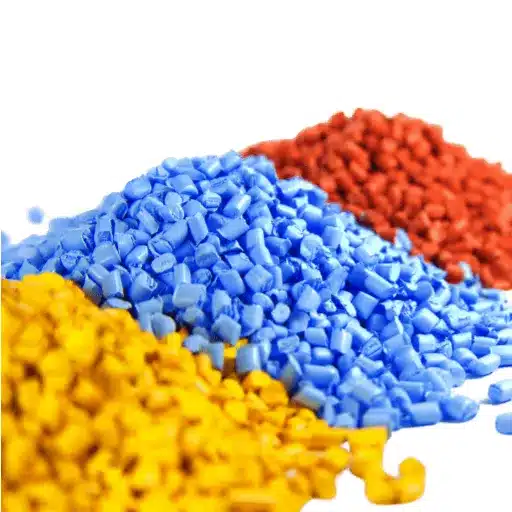
Every painted ABS trim part started as resin pellets. The grade selected at the manufacturing stage determines surface finish quality, solvent sensitivity during painting, and long-term dimensional stability under thermal stress.
High-impact ABS grades contain higher rubber content for toughness. They paint well but may show slightly more solvent sensitivity during refinishing. Plating-grade ABS is formulated with a surface layer optimized for electroplating and painting operations. It delivers smoother as-molded surfaces that require less aggressive sanding before finishing. PC/ABS blends trade some paintability for higher heat deflection temperature, making them the default choice for dashboard components in direct sun paths.
If you are manufacturing or sourcing ABS trim components at volume, the resin grade decision made at the pellet stage directly affects every finishing operation downstream. Yifuhui stocks certified ABS resins from globally recognized manufacturers, including grades with documented paint compatibility and full Certificate of Analysis (COA) traceability. Request a quote for automotive-grade ABS resin, minimum order quantity starts at 25 kg, and every batch ships with COA, MSDS, and applicable compliance documentation.
Conclusion
Painting ABS car trim is not difficult, but it is unforgiving. The plastic will not hide poor preparation the way metal can. Start by confirming your trim is actually ABS and not TPO or PC/ABS. Clean with IPA, not acetone. Sand interior trim gently with 600-grit and a guide coat to preserve texture. Profile exterior trim aggressively with 320 to 400 grit for mechanical bite. Prime with a plastic-specific system. And if the trim lives outside, add a flex additive to your clear coat so the finish survives the thermal cycling that cracks standard automotive clears.
The technicians who get consistent results on ABS trim are not using secret products. They are simply doing each step correctly before moving to the next. Prep is the work. Painting is the reward.
Sourcing ABS resin for automotive or industrial trim manufacturing? Yifuhui supplies branded, batch-certified ABS with full COA and MSDS documentation from our Suzhou warehouse, located minutes from the Port of Shanghai. Request your quote with grade and quantity →